The global magazine and marketplace for classic car enthusiasts, by enthusiasts.


Filter
Classic Sterling for sale - Sterling cars for sale
-

1930 Chrysler 66 Six-Wheel Equipped Royal Sedan
An exceptionally well restored and highly awarded Chrysler 66 Royal Sedan, with only two owners in nearly 97 years.The present owner acquired the car as a complete and remarkably original example and subsequently carried out a no-expense-spared restoration over many years. The restoration was a total body-off, nut-and-bolt rebuild .. -
HORCH 853 ERDMANN & ROSSI SPEZIAL ROADSTER
IntroductionThe Horch 853 Spezial Roadster by Erdmann & Rossi is one of the most iconic and luxurious cars of the 1930s. This beautiful vehicle represents the pinnacle of German automotive engineering and design from the pre-war era.The Horch 853 was introduced in 1935 by the Horch factory, part of Auto Union (later Audi.. -
1935 Ford Pickup
Offered for sale is 1935 Ford Pickup in very good preserved condition. Imported from Spain, bodywork is in lovely condition, only little corrosion. Car needs to be technically commissioned. With the car comes several documents, including an original Spanish title. -
Imperia 8/25 racing/sport car
Imperia 8/25 racing/sport car with Couchard patent slide-valve engine. Fully restored car, the radiator cooling design is very special and unique. Hallot cable braking system. (make an offer or proposal for an exchange) -
Imperia 8/25 1923
Imperia 8/25 1923,Couchard patent slide-valve engine,fully restored rolling chassis,interior still needs finishing.(make an offer or proposal for an exchange) -
MASE CC Sport 1921
Restoration to be finishedRadiator and tank overhauled, etc.Gives with the car: 1 engine, 1 gearbox, 2 radiators, parts, numerous documents.Restauration à finirRadiateur et réservoir révisés, etc,...Donne avec la voiture : 1 moteur, 1 boîte de vitesse, 2 radiateurs, pièces, nombreux documents. -
Benjamin Type B 1923
Car to be restartedGives with the car: 3 engines, parts, numerous documentsVoiture à remettre en route Donne avec la voiture : 3 moteurs, pièces, nombreux documents -
1929 Rolls-Royce 20/25 Estate Car
Extremely unusual well-proportioned estate coachwork from Burbage & SonsThoroughly well sorted benefitting from significant work from ourselvesCharming and practical vehicle accompanied by an interesting early history Coming off test on Christmas Eve 1929, GDP 43 was delivered to coachbuilder Th.. -
1938 BMW 328 Roadster 1938 for sale
1938 BMW 328 Roadster Chassis number 85316 Registration number: TBA €790,000.00 Part of a small collection of rare BMW cars: This 328 was found as a wreck in the late 1960's with the then Czechslovakian title documents going back to 4th November 1970 when it was registered in Bratislava. The registration lists a succe.. -
'Halford Special' 1923 Aston Martin
One of the most advanced race cars of the mid-1920s, the Halford Special was built by engine designer Major Frank Halford using Aston Martin chassis, number ‘1916’. In its original configuration, this chassis was the first Aston Martin built for sale and competed at Brooklands in 1923 but crashed in a Voiturette race in Boulogne the following ye..


Sterling
US, 1909 – 1911
Elkhart Carriage and Motor Car Co, Elkhart, Ind.
The Sterling car succeeded the Elkhart and preceded the Elcar, and the company also made a 4-cylinder assembled car, the Komet, in 1911. The Sterling car was built in five open body styles, ranging in price from $1.500 to $1.850. The Sterling cars used a T-head, 4-cylinder engine of approximately 4-litres’ capacity. The rear springs of the Sterling cars were of the old-fashioned platform design.
GB, 1913
Sterling Engineering & Automobile Co Ltd, Leeds, Yorks.
This Sterling car was a cyclecar powered by an 8hp V-twin JAP engine. Final drive of this Sterling car was by V-belts.
US, 1914 – 1916
Sterling Motor Car Co, Brockton, Mass.
The Sterling car was a small five-seater touring car weighing 1.250lb. The Sterling car had a 4-cylinder engine and was priced at $650, with electric lighting.
US, 1915 – 1923
Sterling/ AMS-Sterling
(1) Sterling Automobile Mfg, Co, Paterson, N.J.: Amston, Conn., 1915 – 1917
(2) Amston Motor Car Co, Amston, Conn., 1917
(3) Consolidated Car Co, Middlefield, Conn., 1917 – 1923
This Sterling car was an assembled car powered by a 4-cylinder, 2.3-litre Le Roi engine with overhead valves. The two-seater roadster Sterling car was listed at $500. One source gives the name of the second make as Royal Amston, but this cannot be confirmed. Later Sterling car models, made by the Consolidated Car Company, used 4-cylinder Le Roi or 6-cylinder Herschell-Spillman engines.
US, 1923 – 1925
Sterling-Knight Motors Co, Cleveland and Warren, Ohio
Introduced in October 1923, the Sterling-Knight car was one of the lesser-known Knight-engined Sterling cars. The 6-cylinder car failed in early 1925 after a total production of about 425 Sterling cars.
Source: Georgano, encyclopedia of motorcar; GMN, GNG, KM
The information is written with the greatest of care. However, if you have any suggested amendments please contact us at office@prewarcar.com


Featured
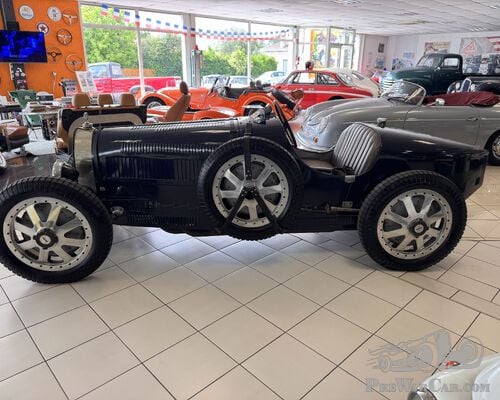
Bugatti 35 B Pur Sang
Bugatti 35 B Pur Sang,importée par un membre délégué de la FFVE il y’a une quinzaine d années.Participation à de nombreux Rallyes Bug..
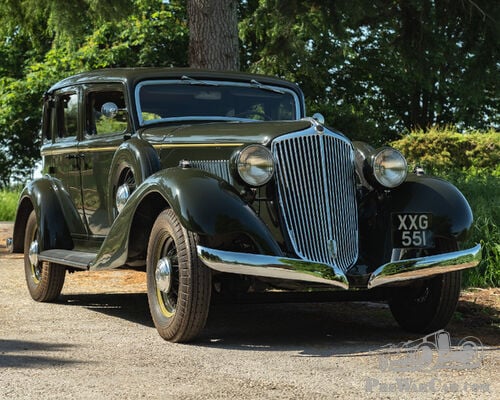
Graham Model 64 Standard Eight 'Blue Streak'
UK Registration No: XXG 551Chassis No: 1801069MOT: ExemptH&H ClassicsKelham Hall | Newark, Nottinghamshire
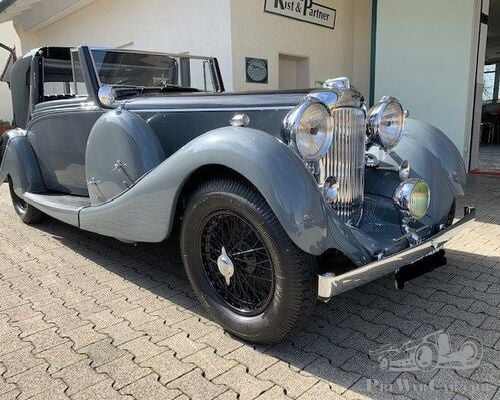
Lagonda LG 45 Coupe de Ville Sedanca by Mayfair
The successor to the M45, the LG45 was built around the same highly capable, competition-proven 4.5-litre Meadows inline-six engine, but featured r..