The global magazine and marketplace for classic car enthusiasts, by enthusiasts.


Filter
Classic A.C., Stoewer for sale - A.C., Stoewer cars for sale
-

1921 AC Empire | Brightwells | Auction Ends: Wed 24th Jun
From a deceased estate; current owner 50+ years; last driven about seven years ago; Anzani engine; bespoke coachwork based on an AC prototype; interesting history file; further details to follow -
1929 AC Acedes 2 seat + Dickey | The Ernie Warren Collection Auction | 13th June 2026
A 1929 AC Acedes Sports two-seat tourer.Reg No. PN 2782.Car No. 14544.Engine No. 2476.Grey and black with red interior.Auto Carriers – hence AC – originally manufactured 3-wheeled vehicles followed by the AC Sociable. Four-wheeled vehicles were soon introduced, and the Company na.. -
AC Royal Six Cylinder Project
1926 AC Royal – Restoration Project with Extensive History We are pleased to offer this charming and unusual 1926 AC Royal six-cylinder, recently reacquired from a private owner. The car was originally part of a collection we purchased in Africa around 10 years ago and was subsequently sold to its most recent keeper, who has sadly passed away. This.. -
1924 Stoewer type D3 roadster
Rare opportunity to buy a vintage 1924 Stoewer type D3 roadster in fully restored condition. More than € 50K were spent in 2018 and 2019 on its restoration . Detailed work invoices come with the car. A video can be sent on request . Price € 64000 ex Eibergen Netherlands imported EEC. -
AC 16 / 66 - 1935 / 6 Cylinder / British Racing Green
AC (Acédès) 16/66 Drophead Coupe, year 1935. Chassis number L34X, engine number UBS.29X. Original British registration: DPC918. Colour: dark British Racing Green combined with a beige leather interior and light brown carpet trimmed with beige borders. The car is fitted with a black vinyl hood and a light brown mohair tonneau..


A.C.
GB, 1908 to date
(1) Autocars and Accessories Ltd, West Norwood, London S.E. 1908-1911
(2) Autocarriers (1911) Ltd, Thames Ditton, Surrey 1911-1922
(3) A.C. Cars Ltd, Thames Ditton, Surrey 1922 to date
This make succeeded the Weller and was a John Weller design developed from a commercial 3-wheeler, the AutoCarrier (hence the initials) with a single-cylinder rear-mounted moiv engine, 2-speed epicyclic gear and tiller steering. These side-by-side two-seater A.C. Sociables were made up to World War 1 and sold for less than £100, but in 1913 the company brought out a 10hp 4-cylinder light car with a 3-speed gearbox in the rear axle; the engine was a 1.100cc Fivet. A modernized version with electrics and a disc transmission brake appeared with the 1½-litre side valve Anzani engine in 1919, the giving way to A.C.’s own power unit in 1925 – the fours were dropped at the end of 1928. Also at the 1919 London show was Weller’s famous 1.991cc single ohc wet-liner six, an advanced power unit for its day. It did not get into production unitl 1922, but it remained in the catalogue until 1963, by which time output had gone up from around 35bhp to 103bhp. Under the aegis of S.F. Edge, the company’s director from 1921 to 1929, A.C.’s were raced, through their main interest was long-distance record work. A 4-cylinder car took 57 records at Brooklands Track in 1921; J.A. Joyce’s 16-valve ohc 1500cc single-seater covered 100 miles in the hour from a standing start in 1922; and Gillet broke the World’s 24-hour Record at Monthlhéry in 1925 on a 2-litre six. The 6-cylinder car of the Hon. Victore Bruce and W.J. Brunell became the first British entry to win the Monte Carlo Rally in 1926. In 1925 4-cylinder cars sold from £300, the cheapest six being £90 dearer, 4-wheel brakes were an optional extra, being standard on the 2-litre by 1927. All these cars retained the rear-axle gearbox, though the disc transmission brake did not last long.
Financial difficulties supervened in 1929, and virtually no cars were made for a couple of seasons, though the 1930 Magna series boasted hydraulic brakes. Th Hurlock brothers bought the company in 1930, and the 2-litre emerges in 1933 as a sporting machine with mechanical brakes and a conventionally-mounted 4-speed gearbox, in 56bhp and 66bhp versions. These cars were made on a bespoke basis, prices starting at around £435. Pre-selector boxes were available from 1934 and standard 1935 versions had synchromesh, while cars sold in 1936 had engines of 60 and 70bhp with an 80bhp sports engine available in a special short-chassis two-seater model. A 90bhp super-charged engine was listed in 1939.
A.C. resumed car production in 1947 with a saloon in the modern idiom. This had a 74bhp engine, and hydro-mechanical (full hydraulic from 1950) brakes, but retained its semi-elliptical springing up to the end of production in 1957. Some 3-wheeled monocars for invalids were made with 250cc B.S.A. motor cycle engines, and in 1953 came the Petite, a 3-wheeler roll-top convertible with rear-mounted 350cc Villiers power unit; despite a price of under £400, this never really became popular and was dropped in 1958. 1954 saw the advent of the Ace sports two-seater, a tubular-framed machine with all-independent suspension designed by John Tojeiro. With an 85bhp A.C. engine it could top the 199mph mark, and was later made also with 2-litre and 2.2-litre Bristol and 2.6-litre Dagenham Ford engines. Front disc brakes were standardized in 1960. In 1963 this car was developed into the Cobra (inspired by the American Carroll Shelby) with disc brakes all round and a 4.7-litre oversquare American Ford V8 engine developing 330bhp.
A Cobra finished 4th at Le Mans in 1964, but between 1965 and 1968 Shelby American Inc were responsible for the marketing of the 7-litre type, all Cobra production being abandoned in the latter year. From 1966, however, A.C. offered a luxury convertible or hardtop with Frua bodywork and a 7-litre Ford V8 engine, available with a 4-speed manual or an automatic gearbox. This 428 series was continued into 1973 at a price of £7.010. A.C. also made a special single-seater 3-wheeler for invalids with single-gear automatic transmission, wheel or handlebar steering, and fiberglass coupé body, powered by a 500cc 4-stroke twin engine.
Source: Georgano, encyclopedia of motorcars. MCS
The information is written with the greatest of care. However, if you have any suggested amendments please contact us at office@prewarcar.com
Stoewer
D, 1899 – 1939
(1) Gebrüder Stoewer, Fabrik für Motorfahrzeuge, Stettin, 1899 – 1916
(2) Stoewer-Werke AG vorm. Gebr. Stoewer, Stettin, 1916 – 1939
The Stoewer car factory developed out of the Stoewer ironworks and was among the pioneers of the German car industry. After manufacturing motor cycles, tricycles and quadricycles for two years, Stoewer turned to cars in 1899. The first Stoewer car had a rear-mounted 2-cylinder engine. 4-cylinder Stoewer cars followed in 1901, and electric Stoewer cars were also produced. Best known were the 2-cylinder Type T Stoewer car (2.280cc and 3/12PS), the 4-cylinder Stoewer P4 (3.052cc and 11/22PS), the Stoewer G4 (1.500cc and 6/12PS) and the 6-cylinder Stoewer P6 (8.820cc and 34/60PS), evolved in the 1905-1907 period all Stoewer cars with shaft-drive. The Stoewer B1 of 6/16PS and the Stoewer B6 of 9/22PS which appeared in 1910 were also built by Mathis under licence. The G4 Stoewer car was the basis for the Stoewer B5, which Stoewer car in 1912 became famous by setting up a record at Brooklands with 67.7mph. The new range of Stoewer cars which appeared in 1913 was also based on successful earlier cars. They were the Stoewer C1 (6/18PS), Stoewer C2 (10/28PS) and C3 Stoewer car (6-cylinder and 19/45PS). Shortly before the outbreak of World War 1 the Stoewer car range was headed by the F4 Stoewer car with a 4-cylinder, 8.8-litre 33/100PS ohc engine. After the war an enormous Stoewer car appeared, the Stoewer D7, using a 6-cylinder 11.2-litre 42/120PS aero engine, as well as some conservative sv 4- and 6-cylinder Stoewer cars with rear wheel and transmission brakes. Front wheel brakes appeared on Stoewer cars in 1925. Stoewer introduced 8-cylinder Stoewer cars in 1928. These were the Stoewer Superior, Stoewer Marschall, Stoewer Gigant and Stoewer Repräsentant with engines ranging from 2-litres and 45bhp to 4.9-litres and 100bhp. The Stoewer car firm re-entered the economy class in 1931 with the V5, a front-driven Stoewer car with a V4 1.188cc engine, followed by the front-drive models R140 (1.369cc), R150 (1.488cc) and R180 (1.769cc). Another 8-cylinder was the front wheel drive Greif V8 with a 2.488cc engine, which was replaced by the conventional 6-cylinder 3.609cc Arcona Stoewer car in 1938. In 1934 the 1½-litre 4-cylinder Stoewer car and 2½-litre V8 Stoewer car were shown at the Brussels Salon by Monsieur Dewaet under the name D.S. (Dewaet-Stoewer). The Greif Junior was built under Tatra licence with an opposed 4-cylinder 1.474cc engine. It succeeded the Röhr Junior. In the middle of the range was the Stoewer Sedina with a 4-cylinder engine of 2.4-litres.
Production of private Stoewer cars was given up at the outbreak of World War 2 in 1939. The Stoewer car factory was destroyed during the war and production of Stoewer cars was not resumed.
Source: Georgano, encyclopedia of motorcar; HON
The information is written with the greatest of care. However, if you have any suggested amendments please contact us at office@prewarcar.com


Featured
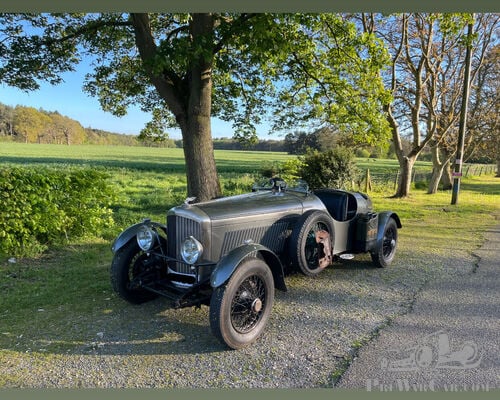
Derby Bentley Special 4-1/4
Sadly i am having to sell on my Bentley special ( Icarus). It is currently a work in progress and still needs finalising/ refining. A great o..
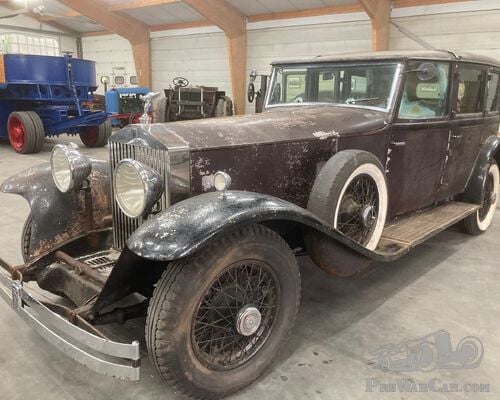
Rolls-Royce
Rolls-Royce Phantom ll chassisnummer 287 AJS. bouwjaar 1932, Links gestuurd, Brewster Keswick Sedance Towncar
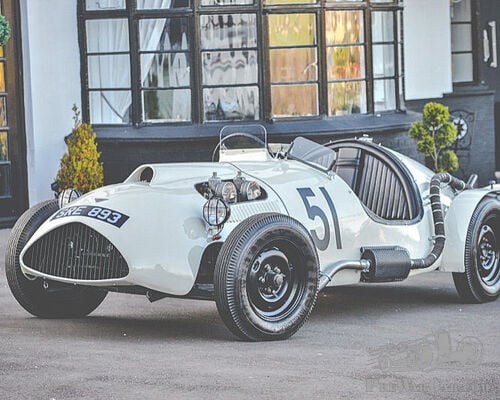
1933 Alvis 3.0 Special - One-Off Alloy Body | Period Competition Car | Featured in “Alvis – A Century of Drivers”
1933 Alvis 3. 0 Special - One-Off Alloy-Body | Period Competition Car | Featured in “Alvis – A Century of Drivers”