The global magazine and marketplace for classic car enthusiasts, by enthusiasts.


Filter
Make a choice:
- Cars
-
Make >>
-
Year >>
-
- Bikes
- Parts & more
-
Make of car >>
-
Manufacturer >>
-
Category >>
- Bicycles & more
-
Year >>
-
Countries


130 years old: Russia’s first motor car
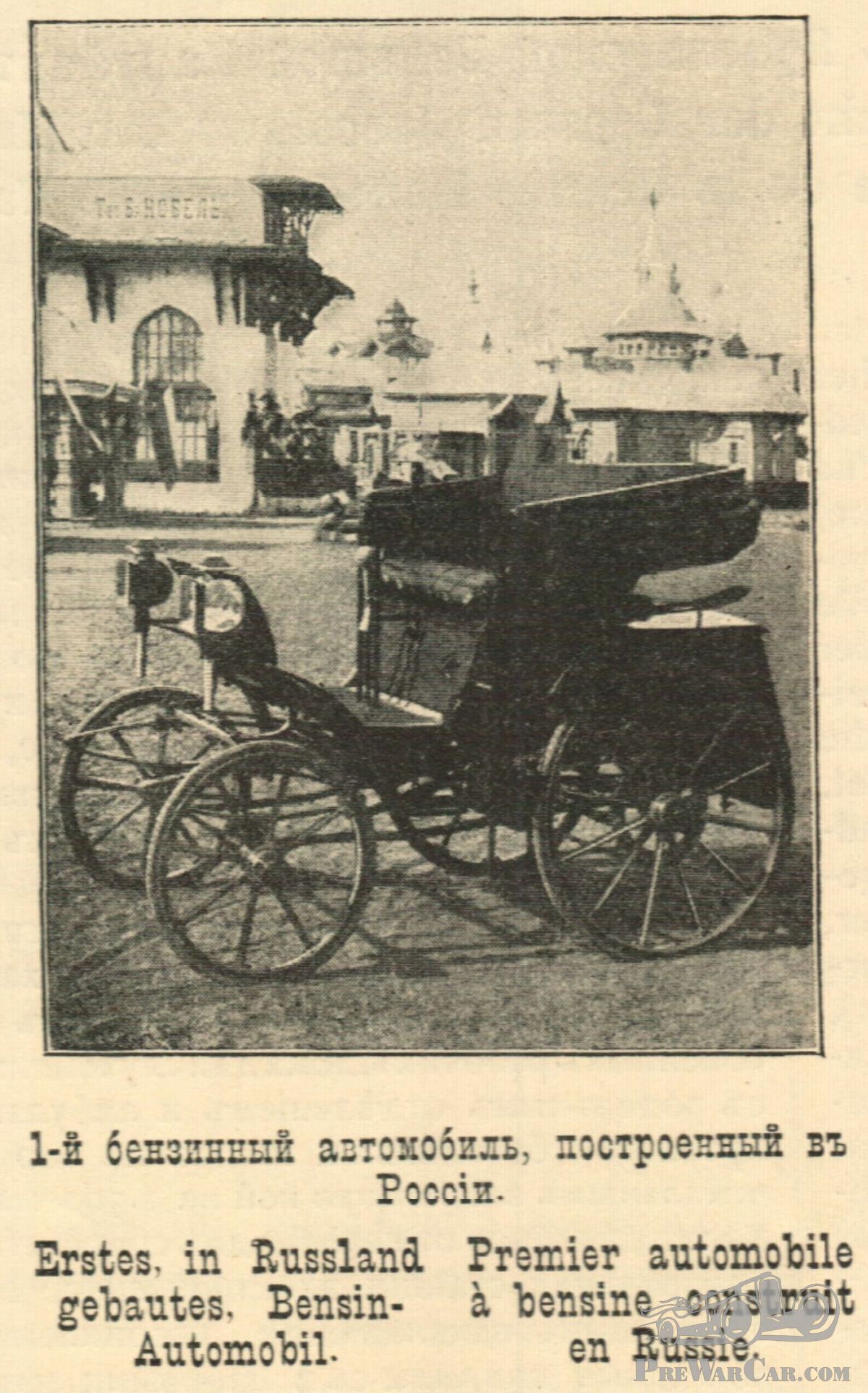
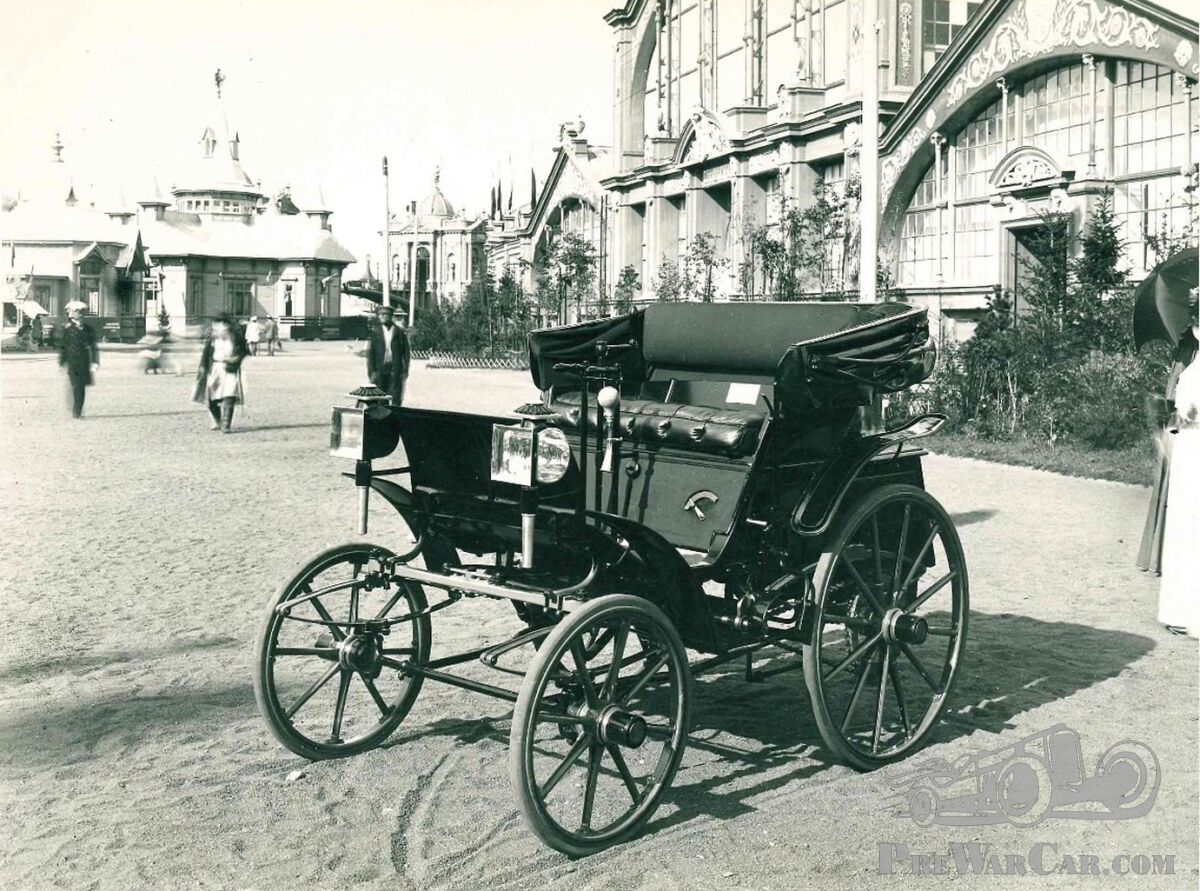


These are strange times. Today, Russia primarily evokes political and military associations, but we have no wish to become involved in those matters. After all, motoring history knows no borders and cannot be erased by current events. We therefore pause to mark a modest but remarkable anniversary: exactly 130 years ago, the first Russian motor car was built.
Only two photographs of this ‘motor carriage’ are known to have survived. The car bears a clear resemblance to a Benz and is generally identified using the modern transliterations of its makers’ names: Yakovlev & Freze. The inventors themselves, and later their descendants, used different spellings in the Latin alphabet: Iakovleff and Frese.
The first test drives took place in April 1896. A few months later, the car made its official debut at the 16th All-Russian Industrial and Art Exhibition in Nizhny Novgorod. There, the fully functioning self-propelled carriage was presented not only to the public, but also to Tsar Nicholas II.
The story behind the car, however, begins several years earlier. For a long time, it was assumed that carriage builder Piotr Frese and engine manufacturer Eugeni Iakovleff met at the 1893 World’s Columbian Exposition in Chicago. They were said to have seen a Benz there and subsequently decided to build something similar themselves. It is an appealing story, but probably not entirely accurate.
Research in Russian sources and part of the family archive of a German-Russian commercial and industrial dynasty instead points towards a third leading figure: Carl Spahn. This German had moved from Bavaria to St Petersburg in 1883 after inheriting a small commercial agency. He quickly made his fortune there and recognised the opportunities offered by the emerging market for motorcycles and motor cars at an early stage. In 1894, his technical trading company concluded agreements with Hildebrand & Wolfmüller and Benz & Cie. These gave Spahn not only exclusive sales rights for St Petersburg and Moscow, but also licences to manufacture their products locally. Between 1894 and 1897, Benz officially supplied nineteen motor cars to Russia, the majority of which had been ordered by Spahn.
To publicise his new activities, in January 1896 he published the first Russian catalogue of Benz motor cars – a copy of which is now in my archive. He also wanted to present a car at the major exhibition in Nizhny Novgorod. There was just one problem: only products made by Russian companies were permitted to be exhibited.
Spahn devised a clever solution. He commissioned the Frese & Co. carriage works to build the chassis and body, while the E. A. Iakovleff engineering works and iron foundry manufactured a 2 hp engine. The result was a motor car built in Russia that satisfied the exhibition’s requirements.
The design was based on an advanced Benz concept combining features of the Velo and Victoria. Remarkably, no such car had yet entered production in Germany. It was not until 1899 that Benz and the French firm Georges Richard began building a comparable model, which became known as the Duc. The Frese & Iakovleff was by no means a straightforward copy, however. Piotr Frese, for example, designed an unusual front suspension in which the wheels turned together with the leaf springs. No other motor manufacturer employed such a construction at the time.
The ambitions therefore extended well beyond this single example. Spahn, Frese and Iakovleff dreamed of series production, while Spahn even drew up plans for a large new factory. The Russian market, however, was not yet ready. Demand for the Benz motor cars already imported remained limited, while French manufacturers introduced more modern models and, later, affordable motorised tricycles. The project therefore came to an end after just one car.
That did not, however, mark the end of Frese as a motor manufacturer. From 1899, Frese & Co. built small numbers of electric vehicles to its own design, as well as motor cars fitted with French De Dion-Bouton engines, once again supplied by Carl Spahn.
Nor did Benz disappear from Russia for good. In 1907, the marque made a convincing return. Within a few years, Benz motor cars had even become among the most popular cars in the country. By then, the modest motor carriage built by Frese & Iakovleff had long since disappeared, but it had been the first to demonstrate that a motor car could also be built in Russia.
Words: Stanislav Kiriletz
Published:
Monday August 17th, 2026
Facebook
LinkedIn
Twitter
WhatsApp
Email
Copy