The global magazine and marketplace for classic car enthusiasts, by enthusiasts.


Filter
Make a choice:
- Cars
-
Make >>
-
Year >>
-
- Bikes
- Parts & more
-
Make of car >>
-
Manufacturer >>
-
Category >>
- Bicycles & more
-
Year >>
-
Countries


A family photo with my grandmother riding in the back
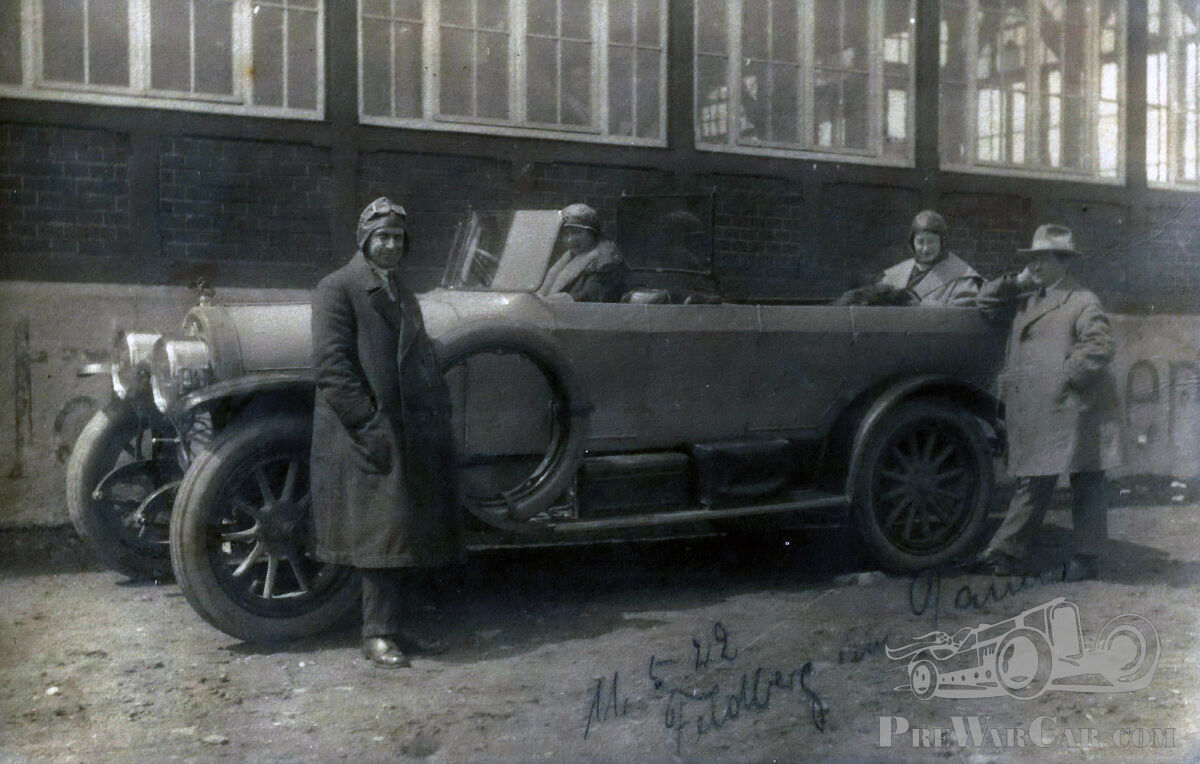

Today’s Friday Lady picture was sent in by one of our readers from the USA. He wrote “I believe this vehicle to be from the teens or early 20s. This is a family photo taken in Germany. My grandmother appears to be the passenger riding in the back of the vehicle. I would very much like to know what year and marque this vehicle is.” There is something written on the bottom of the picture. It is hard to read but we believe it gives the year as 1922.
Who can help with the identification of this PreWarCar and inform us on the make, type and year of manufacturing? Please comment below. Any help would be very much appreciated.
Published:
Friday May 21st, 2021
Facebook
LinkedIn
Twitter
WhatsApp
Email
Copy
Comments
Steve Diggins
25 May 2021, 20:20
I do not see any gas lines coming to the bottom of the headlights.
Read more
Steve Hartwich
24 May 2021, 23:18
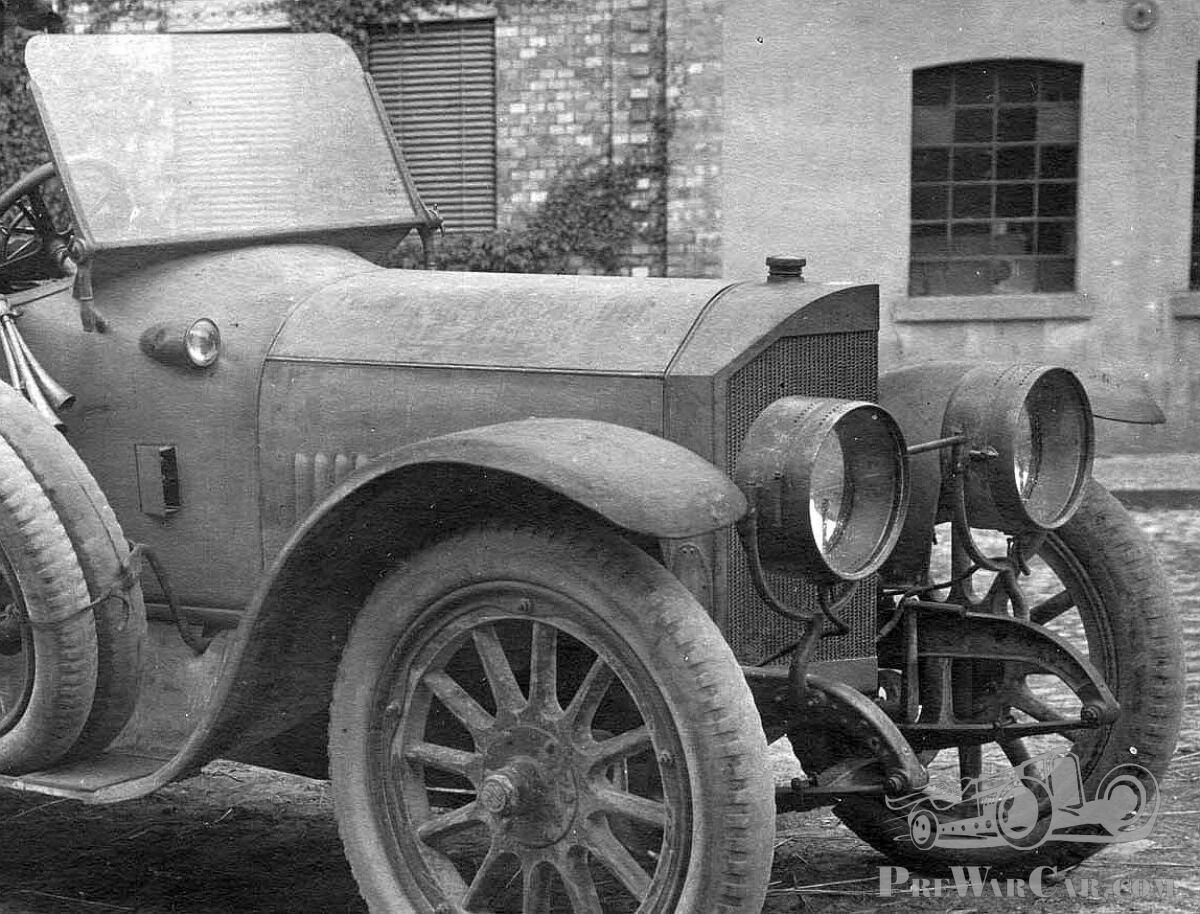
I'm the owner of the photo. I've added this higher resolution photo which I've also lightened. In doing so I see what appears to be an engine crank handle at the front of the radiator. Does this help any further to identify the car? I don't know. I am now looking in the book, Karl Maybach his engines and automobiles, page 87 at a Touring car. Except for the disk wheels and standard headlights the radiator shell and curved windshield point at least somewhat to this model which I believe is a 22/70 PS W3. Everyone, don't give up on this yet. I appreciate your input.
Read more
Michael Schlenger
25 May 2021, 19:50
Sorry, but this car doesn't display any Maybach-specific features. The radiator is flat (those of early Maybachs were slightly pointed), the wheels and hubs are different and Maybachs always had bowl-shaped electrical front-lights, whereas the car features drum-shaped gas-lights. The car you are referring to in the Maybach book on page 87 is a W5 from the second half of the 1920s. The predecessor (W3, 22/70 hp) was built starting in 1922. That was the same year your photo was taken, but this car definitively wasn't new anymore. I stick to the pre-1920 (even pre-WW1) thesis and believe Ariejan has provided the most likely candidate (NSU) so far.
Read more
Michael Schlenger
24 May 2021, 19:02
As for the headlights: I still believe the ones on the car in the picture are standard gas-operated lights of the drum-shaped type which was very common on pre-WW1 cars in Europe. I could provide dozens of photos showing Adlers, Opels etc. featuring similar or even identical front lights. Attached is a photo showing a Benz 18/45 hp whose drum-shaped front-lights are definitively gas-operated. There were different ways of "hiding" the vents, in this case, one can see tiny holes in the body of the lights (another solution were vents on the rear of the body. While electrical lights with drum-shaped body were common in the U.S. after WW1, they weren't in Germany, where this photo was taken (only by the mid-1920s, small drum-shaped electrical lights appear on some cars). So, I am pretty convinced that we are dealing with a pre-WW1 car made be a German manufacturer (probably NSU, like Ariejan has suggested) and still featuring the original gas lights, when the photo was taken in the early 1920s.
Read more
David GREEN
24 May 2021, 10:38
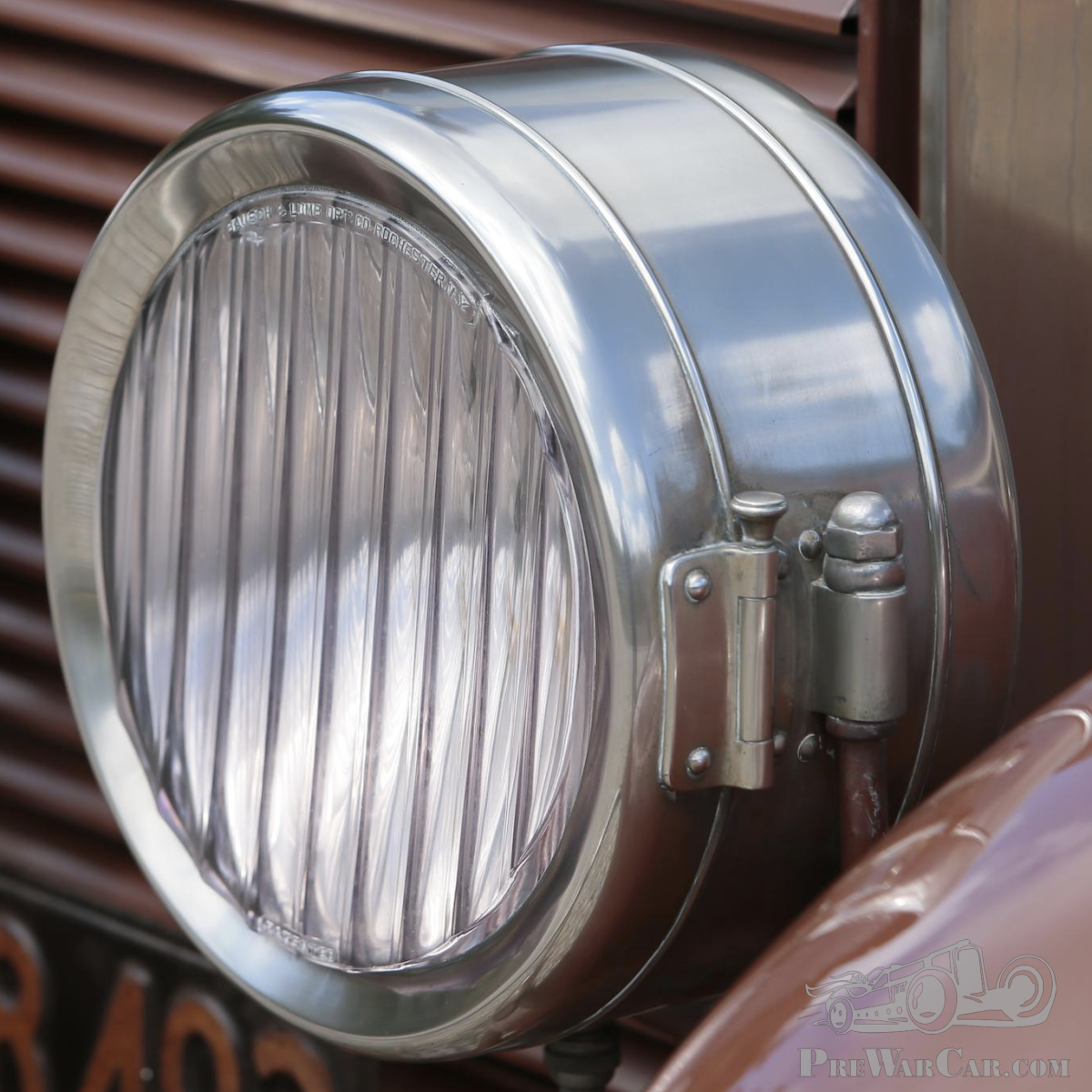
The accompanying photograph is of a Bausch and Lomb electric drum headlamp on a 1925 40/50HP Rolls-Royce sold by Bonhams in 2014. We would argue it is effectively the same as the drum headlamp on the unidentified European car. Bausch and Lomb drum headlights were made in Rochester, New York, and as far as we know, were only made in the US, not Europe, although we stand to be corrected on that matter. Rolls-Royce started in Springfield in 1919 but we are not sure whether US-sourced headlights were sourced straightaway but Bausch and Lomb headlights appeared by 1921.
We note the unidentified European car has two new headlamps in front of a very tired-looking radiator and bonnet, and suggest the lights are not original. The wheels appear to be standard detachable types from the 1920's, possibly with radially split rims and well-based tyres, although again, we stand to be corrected as to date. Once the constraints on dating the headlamps is removed, the car becomes eligible for a post-1914 dating.
Read more
We note the unidentified European car has two new headlamps in front of a very tired-looking radiator and bonnet, and suggest the lights are not original. The wheels appear to be standard detachable types from the 1920's, possibly with radially split rims and well-based tyres, although again, we stand to be corrected as to date. Once the constraints on dating the headlamps is removed, the car becomes eligible for a post-1914 dating.
Steve Diggins
23 May 2021, 23:12
Over here we call those drum headlights. They are common on a number of American cars from the late teens to the late twenties.
Read more
Michael Schlenger
21 May 2021, 18:15
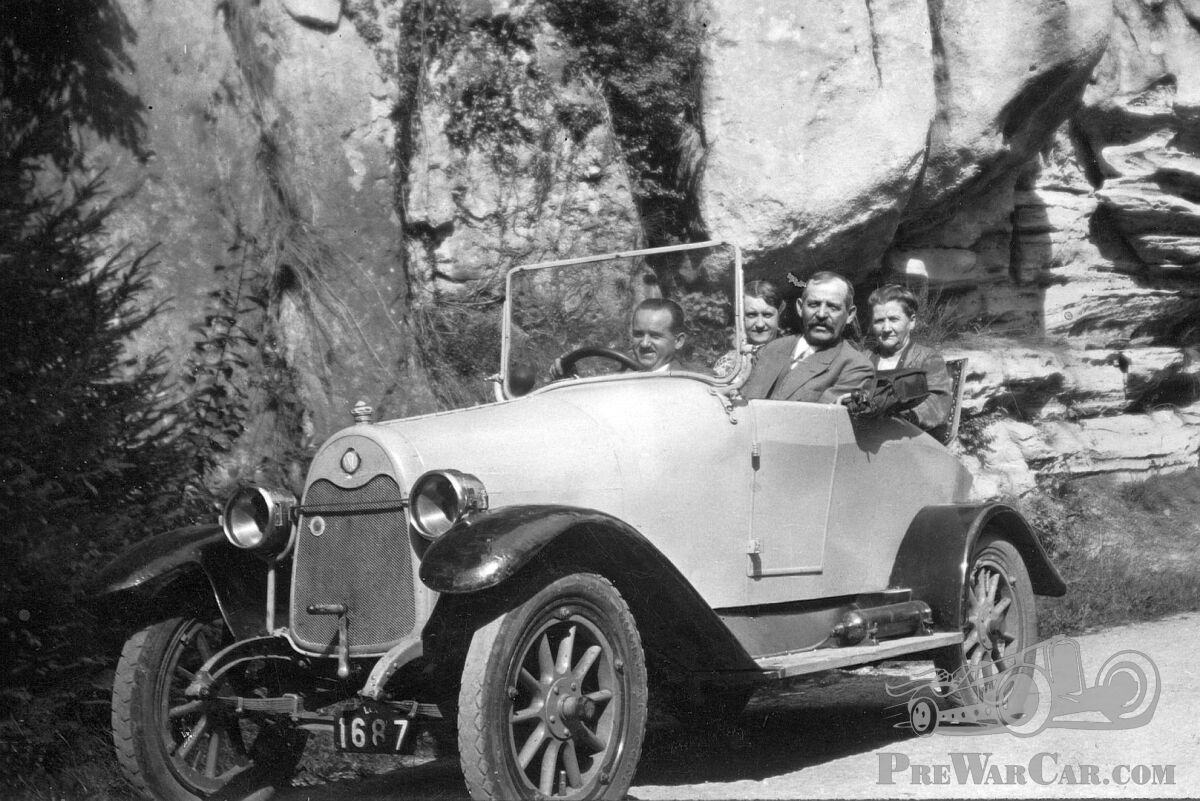
Ariejan could be right with this suggestion. If the car was indeed an NSU from the late 1910s, two models come into consideration: 8/24 hp and 13/40 hp. They had an almost identical (just larger) radiator like the NSU in the attached picture (from my collection) - which was the small 5/15 hp model available back then.
Read more
David GREEN
21 May 2021, 13:44
I don't think the lights are gas. They are cylindrical electrics. The reason they are not gas is that they have no vents. The burners would be in front of the internal mirror and incapable of exhausting. I agree the cut-off gas/electric is 1913-1914, but BENZ were advertising cylindrical electrics as late as 1916. Famously, of course, the US used cylindrical headlamps until well into the 1920's. It's the quick way of telling a Springfield Rolls from an English one.
Read more
Ariejan Bos
21 May 2021, 11:29
I have another suggestion and that is a late '10s NSU. Indeed not Stoewer because of the flat radiator. Neither Presto, which had a very pronounced rad emblem, nor NAG, which had rather flat curved front dumb irons. The emblem has the impression of a square standing on its point, like with NSU. However German cars from the late '10s are poorly documented, so this leaves room for speculation. But NSU is definitely a serious candidate in my opinion.
Read more
Michael Schlenger
21 May 2021, 10:15
The postwar D-Type Stoewers featured v-shaped radiators while the one on this car appears to be flat. What's more, the car still has gas-operated lights, hence it must be a pre-WW1 model.
Read more
Michael Schlenger
21 May 2021, 01:13
Unfortunately, the resolution of the scan is rather low (I'm sure, the original photo provides more details). Anyway, I'd suggest that this car was made by NAG in Berlin and was probably a K-type (available in different sizes) from 1914 or later. But I wouldn't rule out other manufacturers like Presto or Duerkopp, in particular. At any rate, the body style is very typical for German tourers of that era and remained fashionable also in the early 1920s. Yet, the gas-operated lights are an indication that we are dealing with a pre-WW1 car. As for the location, I can confirm, that the photo was made on the "Feldberg" in the "Taunus" mountains northwest of Frankfurt - a popular destination for people from the area until today.
Read more