The global magazine and marketplace for classic car enthusiasts, by enthusiasts.


Make a choice:
- Cars
-
Make >>
-
Year >>
-
- Bikes
-
Location >>
- Parts & more
-
Make of car >>
-
Manufacturer >>
-
Category >>
- Bicycles & more
-
Year >>
-
Countries


The Market; all pre-war cars for sale
Overview of related ads to ad 1896 Ford Quadricycle Replica
-

Ford Model A Tudor 1931
Lovely Ford Model A Tudor build for the European Market , I quess Denmark. So it has a Kilometer per hour speedo.The car is restored around 20 years ago , and used for some weddings and touring.It has a good paint , nice chrome , and the interior is in good condition.The Tudor has traffic and warning lights, a temp gauge as ..1931FordModel ASOLDLocation: Netherlands -
1903 De Dion-Bouton Type N
An extremely rare early example from the turn of the century's largest automobile manufacturer, the De Dion Bouton Company of Paris, France. It was London to Brighton eligible. Powered by a 402 CC single cylinder engine. Presented in pale yellow with wood fenders over black tufted leather upholstery. The recipient of ..1903De Dion-BoutonNSOLDLocation: United States -
Oldsmobile Curved Dash 1903 VCC Dated
A good entry for the London Brighton Veteran Car Run Very good running Curved Dash.Easy to start and drive.VCC datedEquipped with a hood and fenders.1903OldsmobileCurved DashSOLDLocation: Netherlands -
Ford Model A Pickup 1929
This attractive Closed Cab Pickup is an older restoration , but still nice. She runs and drives pretty good.The Pickup has a Dutch (NL) Road registrationPerfect car for promotion attacvities and other commercial plans.This car is now equiped with a 50HP model B engine and shock absorbers for better driving.A real eye-..1929FordModel ASOLDLocation: Netherlands -
1923 FORD T-BUCKET | Offered at No Reserve | Henderson Collector Motor Series Auction | May 6, 2023
This custom 1923 Ford T-Bucket is a unique and powerful vehicle that will turn heads wherever it goes. Finished in striking Red paint with black accents, this car is stylish and aggressive.The car features a roll cage, providing extra safety for the driver and passengers. Under the hood, you'll find a powerful Big Block GM engine capable ..1923FordTSOLDLocation: United States -
1923 FORD T-BUCKET | Offered at No Reserve | Henderson Collector Motor Series Auction | May 6, 2023
1923 Ford T-Bucket finished with a yellow exterior over a tan interior. Powered by a Total Performance Inc. Small Block Chevrolet mated to a 3 speed automatic transmission. Fitted with an Edelbrock 4 Barrel carburetor, Sanderson Headers, and an electric fan. The interior is finished off with Dolphin gauges and an aftermarket radio. Showing 3110 ..1923FordTSOLDLocation: United States -
Comiot Convertible tricycle circa. 1900 | OSENAT'RTS & CARS | Auction on April 16, 2023 - 14.00
Comiot Convertible tricycle circa 1900Engine n°4269 Tricycle convertible into a quadricycle Dutch registration 45 000 - 55 000 € “To choose is to give up.” Mademoiselle Serpolette, the famous French pilot at the handlebar of a Comiot. Non contractual photo. South Austra..1900De Dion-BoutonComiot Convertible tricycle circa. 1900SOLDLocation: France -
1919 Ford Model T Station Bus
1919 Ford Model T Station Bus Chassis number: 3633725 Registration NUmber: BF8671 Just emerged from a Sussex barn & being recomissioned & fettled by noted marque/model T specialist Neil Tuckett. This delightful & quirky old 10 to 12 passenger bus has real stage prese..1919FordModel T Station BusSOLDLocation: United Kingdom -
1909 Ford Model T Touring | Bonhams Two Generations Collection Auction | 29 April 2023
177ci Flathead Inline 4-Cylinder Engine Single Carburetor Approx. 22hp at 1,600rpm 2-Speed Planetary Manual Transmission Transverse Leaf Springs and Solid Axles Front and Rear Rear-Wheel Drum Brakes *Desirable early Ford Model T Touring *Formerly owned in California *A nearly completed sympathetic restoration *Lots of potential for an enthu..1909FordModel T TouringSOLD -
1904 Cadillac Model B Rear Entrance Tonneau | Bonhams Two Generations Collection Auction | 29 April 2023
98.2 cu ins Horizontal Single-Cylinder Engine Single Carburetor 8bhp 2-Speed Planetary Transmission Solid Front Axle with Transverse Leaf Spring Live Rear Axle 2-Wheel Mechanical Brakes *119-year-old quality Veteran car *Formerly in the ownership of Conrad Fletcher *Dependable Four Seater Veteran Car *Potentially eligible for the London to Bri..1904CadillacModel B Rear Entrance TonneauSOLD





Featured
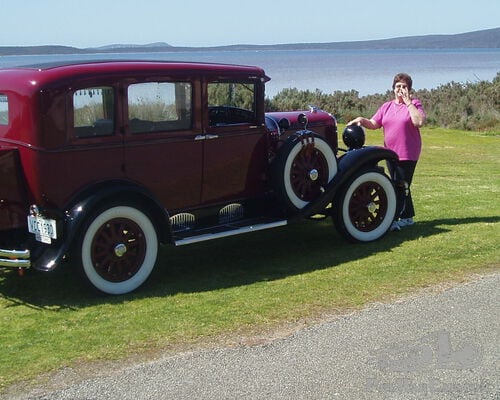
1930 Chrysler 66 Six-Wheel Equipped Royal Sedan
An exceptionally well restored and highly awarded Chrysler 66 Royal Sedan, with only two owners in nearly 97 years.The present owner ..
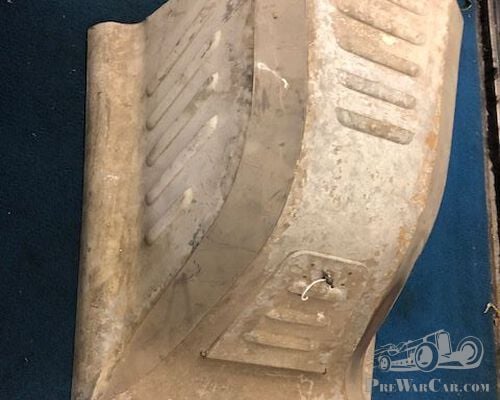
Bonnet in Lovely original condition
This bonnet looks very similar to those used on many Veteran Cars.It is in an excellent original condition with no rust.Please contac..
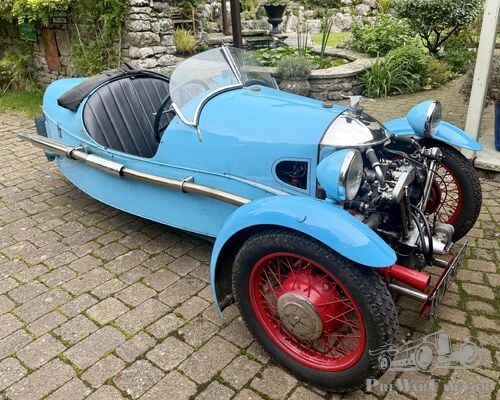
1933 Morgan Three-Wheeler Super Sports, Beetle Back • Show-Specification Car
First registered24 March 1933RegistrationXJ 6336 - original and transferableChassis numberD174Engine numberDTZE 94 H 31..