The global magazine and marketplace for classic car enthusiasts, by enthusiasts.


The Market; all pre-war cars for sale
Overview of related ads to ad 1926 Dodge Roadster
-

Sunbeam 347 cc, Model 1/ 2 1927 for sale
An ‘older restoration’, this 2¾hp sidevalve ‘flat tanker’ comes with Swansea V5 registration document recording the last change of keeper as in 1996. The machine has been on display in a major Austrian motorcycle museum in recent years, although not registered in that country, and is currently resident in Germany. -
Lanchester 21 HP Coupe 1924
Supplied new in 1924 to a Doctor who spent 40 driving the car on his rounds daily. It returned to Europe 10 years ago and underwent a full mechanical re-build by Arthur Archer in Great Dunmow Essex. A vast amount time, effort, and money has been invested in this vehicle and it is mechanically excellent. -
Sunbeam 14/40 HP Five Seat Tourer by Brainsby 1925 for sale
Most chassis carried factory coachwork but this Sunbeam carries coachwork by respected provincial coachbuilders Brainsby of Peterborough. This handsome tourer is presented in grey and black livery with nickel fittings and is equipped with a three-piece opening windscreen, twin side-mounted spare wheels, hood and a full complement of sidescreens, pr.. -
Lancia Dilambda Tourer 1930 for sale
Unlike its revolutionary Lambda V4 predecessor, the Dilambda did not use a stress-bearing body but reverted to a separate chassis. A new design, the latter possessed exceptional torsional rigidity, a virtue necessitated by its independent front suspension. Narrow-angle vee-configuration engines were a Lancia speciality, the Dilambda’s 3,960cc ove.. -
Renault NN Light Van 1925 for sale
By the end of the 1920s Renault had become a massive operation, as prominent in the field of commercial vehicle manufacture as that of cars, and this left-hand drive light van is based on the Type NN chassis. We are advised that the vehicle was restored by Beaufort Restoration Services (UK) Ltd in 1989 at a cost of £38,000 and comes with related b.. -
Rolls-Royce Phantom I, 40/50 HP Cabriolet 1928 for sale
Phantom I chassis number ‘94FH’ was originally delivered with ‘faux cabriolet’ coachwork by Thrupp & Maberly to first owner, one A J Newberry.Restored at date unknown, the car is currently fitted with a Barker-style cabriolet body while other noteworthy features include twin Grebel lights and an additional ‘emergency’ horn. We are a.. -
Wolseley 16/20 HP Five Seat Tourer 1919 for sale
This Wolseley dates from those immediate post-war years and is most handsomely presented in dark green livery with black wings and Rudge-Whitworth wire wheels, the mahogany door cappings adding a pleasing Edwardian flavour. It is equipped with a two-piece, folding, mahogany-framed windscreen and further weather protection is afforded by a beige hoo.. -
Bugatti 30 Tourer by Lavocat et Marsaud 1926 for sale
The car offered here – chassis number ‘4724’ – is one of only two known surviving examples of the Type 30 bodied by favoured coachbuilders Lavocat et Marsaud. According to factory sales records, ‘4724’ was produced in December 1925, invoiced to Dubuisson, of St Quentin, near Lille, presumably the local Bugatti agent, and delivered on 28.. -
Rolls-Royce 20 HP Tourer 1929 for sale
‘This model was introduced to meet requests for a smaller, less expensive car in keeping with the trend after the First World War towards smaller cars for a wider market. Construction was simplified - but standards of workmanship were not compromised.’ - Edward Eves, Rolls-Royce, 75 Years of Motoring Excellence. Chassis number ‘GVO45’ was d.. -
Fiat 503 Saloon 1927 for sale
This FIAT 503 saloon was first registered on 4th April 1928 in Earls Court, London and had five owners up to 1930. The car changed hands again in January 1952 and was next sold (in 1970) to one A Smith, who restored it. Mr Smith owned the car until his death in 2006, when his son sold it to the current owner. Right-hand drive, like many Italian car..


Featured

HORCH 930 V
For SaleHorch 930 VManufacturer: HorchModel and Variant: 930 VBody Type: 4-door sedanChassis Number: ..
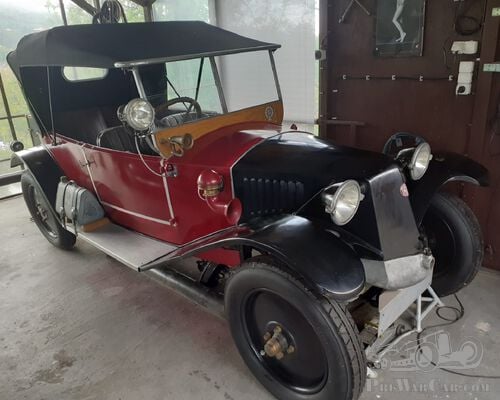
1924 Tatra 11 Roadster – Authentic Survivor with Running Boxer Engine | Rare Opportunity for Discerning Pre-War Collectors
An Exceptional Piece of Automotive HistoryOffered for sale is a remarkably rare 1924 Tatra 11 Roadster, one of the most import..
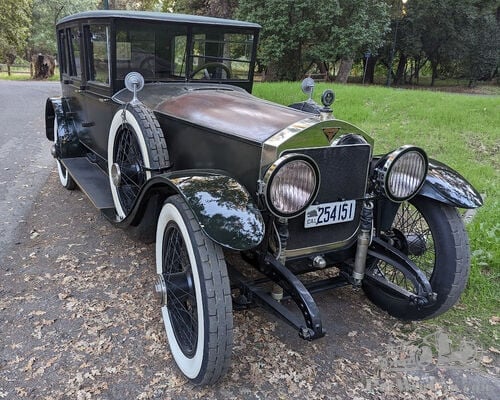
1916 Simplex, Crane model 5
1916 Simplex, Crane MODEL 5CUSTOM MADE HISTORIC PRESERVATION VEHICLE – READY TO TOUR!This Simplex recently completed th..