The global magazine and marketplace for classic car enthusiasts, by enthusiasts.


Filter
Make a choice:
- Cars
-
Make >>
-
Year >>
-
- Bikes
-
Location >>
- Parts & more
-
Make of car >>
-
Manufacturer >>
-
Category >>
- Bicycles & more
-
Year >>
-
Countries


A rare photograph of a Fafnir... or is it?

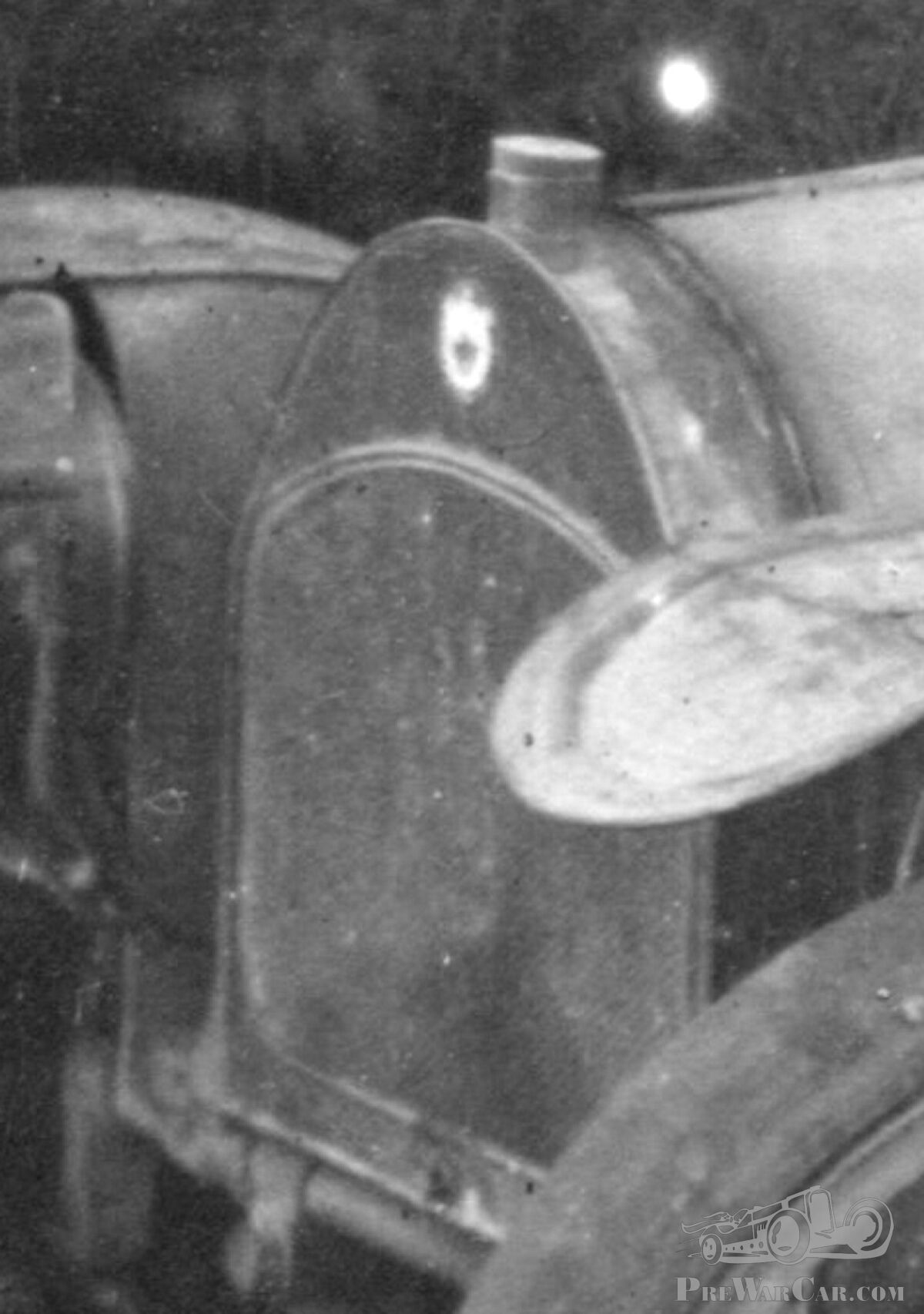


Some time ago I discovered this interesting photo on one of the well-known internet auction houses. Unfortunately, the scan shown in the advertisement was not very good, but the grille gave me hope that I had found one of the rather rare photos of a Fafnir from Aachen. The offer was cheap, the seller's ratings were great, so the "buy now" button was clicked in good spirits.
Full of anticipation, I opened the envelope that I received very quickly after completing the purchase and indeed: even on the really good photo, the car looked exactly like a dragon from Aachen…at first. Just look at the radiator grille! That's definitely Fafnir, isn't it? But at second glance, doubts arose: What kind of front axle construction is that? There was nothing like that with a Fafnir, which was of outstanding quality but built very conventionally. And then the gas cap between the hood and the windshield? Fafnir from the corresponding period had the tank under the seats, or in the case of the rarely ordered special request "larger tank" at the back between the chassis bars. Only The Fafnir Type 472 (and early 476) got a tank on the bulkhead in 1914, but this Type looks completely different and additional the filler neck is located below the hood.
So after you're pretty sure that you identified the car incorrectly, you notice a third difference from the car you were hoping for: the chassis beam tapers in front of the rear wheel. Fafnir chassis did not have this kink. Finally, you should also see the mounting of the rear leaf spring on the outside of the chassis. In the meantime, one is VERY sure that the merry troupe didn't take a seat in an Aachen car and you store the photo in the file box in the 'unknown' folder. At some point you pull out the photo again and ask yourself what kind of car it can be. The radiator looks very similar to that of the early Fafnir, but there were companies that had similar radiator shapes. But what about the front axle? I would estimate the car to be built between 1910 and 1915 and the photo was probably taken in France. Maybe one of our readers knows more about this car with the strange front axle?
Text and photo by Hubertus Hansmann
Published:
Monday February 6th, 2023
Facebook
LinkedIn
Twitter
WhatsApp
Email
Copy
Comments
Ariejan Bos
12 February 2023, 10:10
Robert Hafner
11 February 2023, 12:57
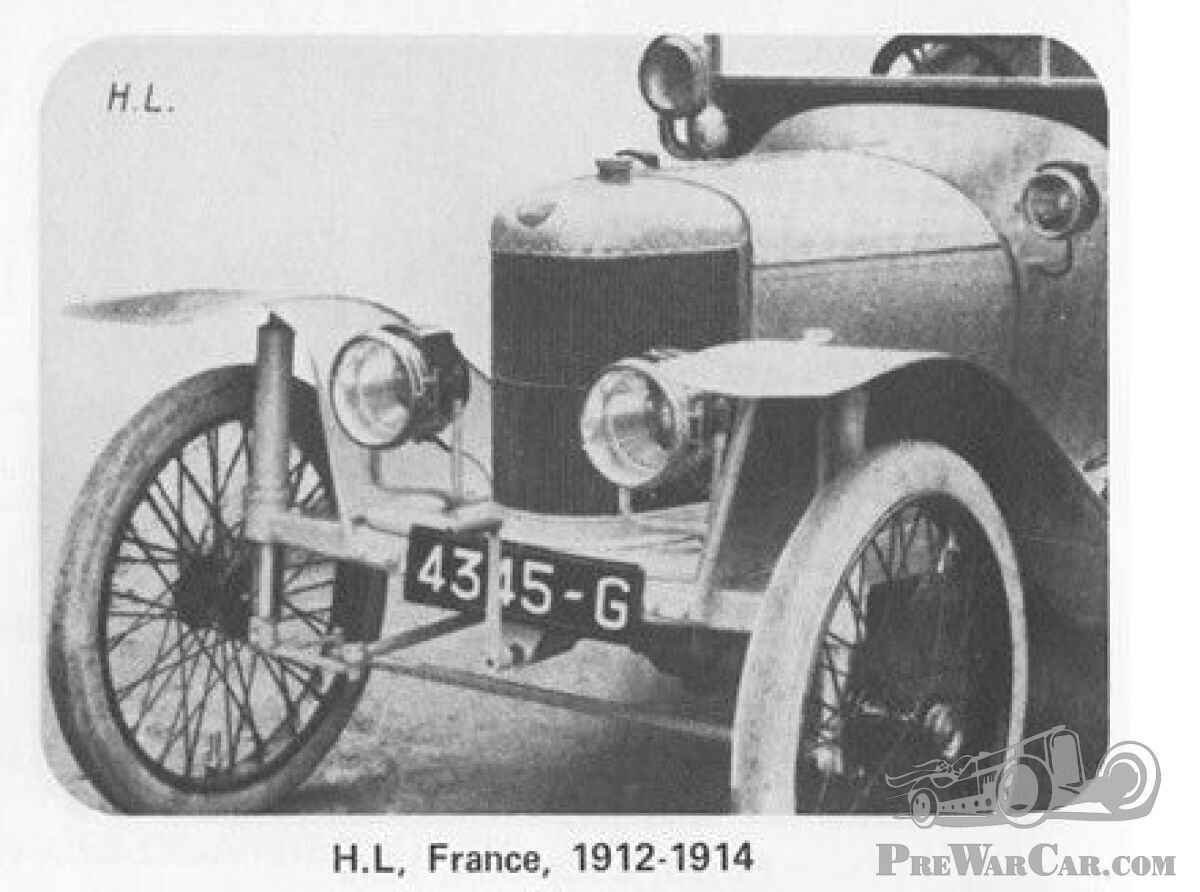
Most probably the car is an H.L. made by Hainsselin et Langlois of St. Cloud, Seine et Oise, France, around 1912.
There is a picture in G.N. Georgano’s Encyclopedia showing such a car. It has the same two-seater bodywork, even with the elevated back seat, but is a little bit less edged and with a rounded bullnose radiator. Seems to be a later model. And the most important point: it has no front axle, but an independent front suspension with enclosed coil springs. Such was used in some French cyclecars, but on a mid-size car it’s very rare (Beck prototype, or of course Lancia, but these look different). This explains the peculiar front view.
Either the earlier models had flat radiators, or the original radiator was exchanged for another one. Generally, the car in your photo is anything else but new. The left headlamp is missing, look at the gaps in bonnet and door, the clumsy hinges etc. So maybe also a different radiator was fitted later to replace a damaged one.
Georgano’s picture can be easily looked up.
Besides Georgano’s, there is only a small notice on Wikipedia under H.L.
In L’Automobiliste No. 52 from 1979 there is a series of front views of 1913 cars, among them one of the H.L. The front suspension and radiator can be seen here more clearly, but the paper is rare.
I can send a copy of this separately if desired.
Read more
There is a picture in G.N. Georgano’s Encyclopedia showing such a car. It has the same two-seater bodywork, even with the elevated back seat, but is a little bit less edged and with a rounded bullnose radiator. Seems to be a later model. And the most important point: it has no front axle, but an independent front suspension with enclosed coil springs. Such was used in some French cyclecars, but on a mid-size car it’s very rare (Beck prototype, or of course Lancia, but these look different). This explains the peculiar front view.
Either the earlier models had flat radiators, or the original radiator was exchanged for another one. Generally, the car in your photo is anything else but new. The left headlamp is missing, look at the gaps in bonnet and door, the clumsy hinges etc. So maybe also a different radiator was fitted later to replace a damaged one.
Georgano’s picture can be easily looked up.
Besides Georgano’s, there is only a small notice on Wikipedia under H.L.
In L’Automobiliste No. 52 from 1979 there is a series of front views of 1913 cars, among them one of the H.L. The front suspension and radiator can be seen here more clearly, but the paper is rare.
I can send a copy of this separately if desired.
Michael Schlenger
07 February 2023, 22:27
If even Ariejan Bos cannot solve the mystery, it must be really a difficult one. I believe I have seen that kind of chassis design before, but cannot remember where. I also considered Belgian manufacturers like Excelsior and Nagant who used similar (however not identical) radiators before WW1. Perhaps Claus Wulff from Berlin can help, since he has an outstanding knowledge of radiator badges from all across Europe (search for "radiatoremblems").
Read more
Ariejan Bos
07 February 2023, 10:16
Of course I had hoped that somebody came up with an answer, because I can't. I found that I had this photo filed as both a Buchet and not a Buchet. At first glance the car is indeed a bit like a Buchet, but at second glance the absence of dumbirons shows that this was a wrong conclusion. The quality of the photo however makes it difficult to get an idea of front axle, suspension and steering gear configuration. Also the logo is not Buchet, as this was just the Buchet name in an oval badge. It would be nice if the logo on the radiator could be made sharper, but this may very well not be possible.
The presence of the cowl filler tube makes it clear for me that we're dealing with a French make, but I'm afraid its identity will remain a mystery until more info will turn up.
Read more
The presence of the cowl filler tube makes it clear for me that we're dealing with a French make, but I'm afraid its identity will remain a mystery until more info will turn up.
Let's not forget, that of the many hundreds of car makes at the time there are still many we haven't a clue of what they looked like. Not to mention all the experimental devices, which sometimes reached the columns of the magazines, but more often probably didn't.
For a long time I'm trying to fill in the gaps, but still I have in my files too many mystery cars without a name and too many names without a face. And a life certainly too short to get it all sorted ... In spite of all this I prefer no name above an incorrect name!