The global magazine and marketplace for classic car enthusiasts, by enthusiasts.


Filter
Make a choice:
- Cars
-
Make >>
-
Year >>
-
- Bikes
-
Location >>
- Parts & more
-
Make of car >>
-
Manufacturer >>
-
Category >>
- Bicycles & more
-
Year >>
-
Countries


Birtles and the Bean: an expedition re-enacted
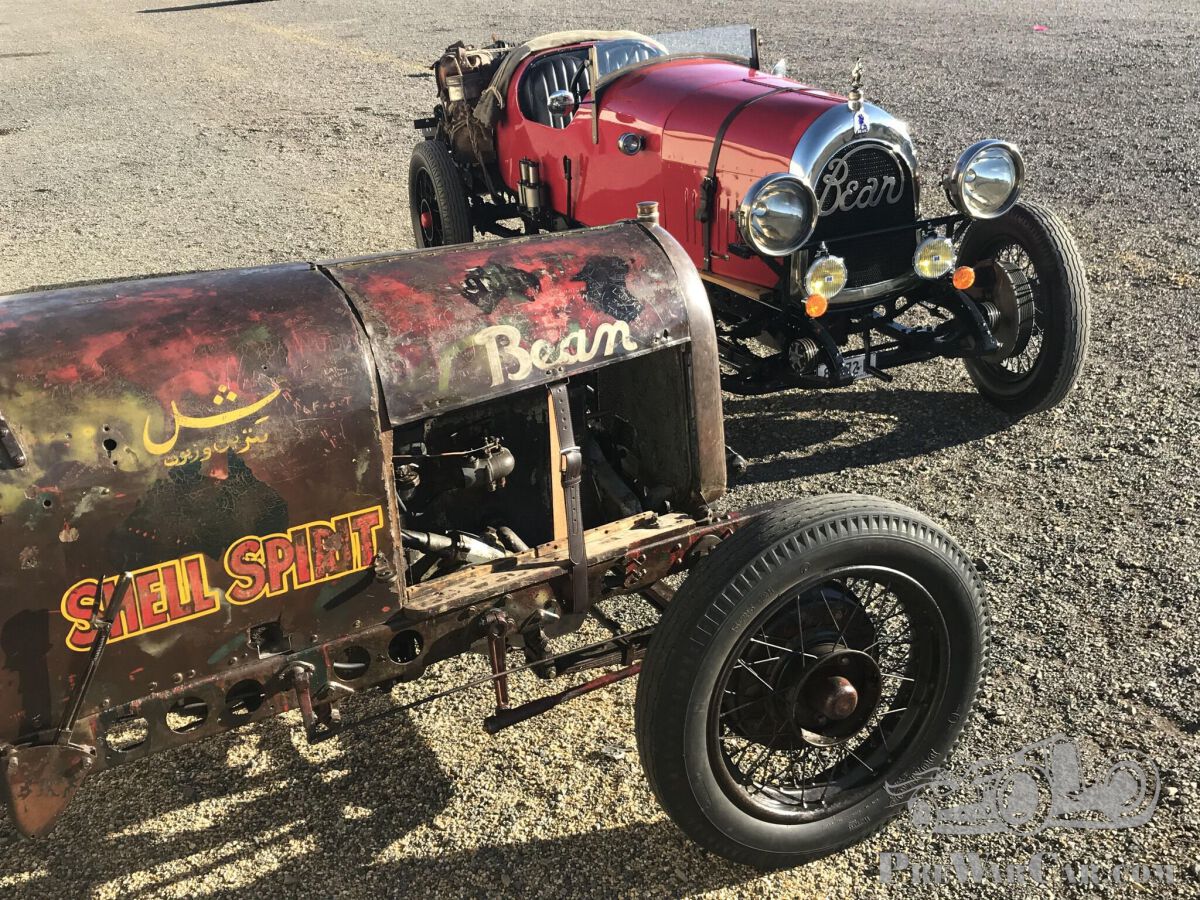
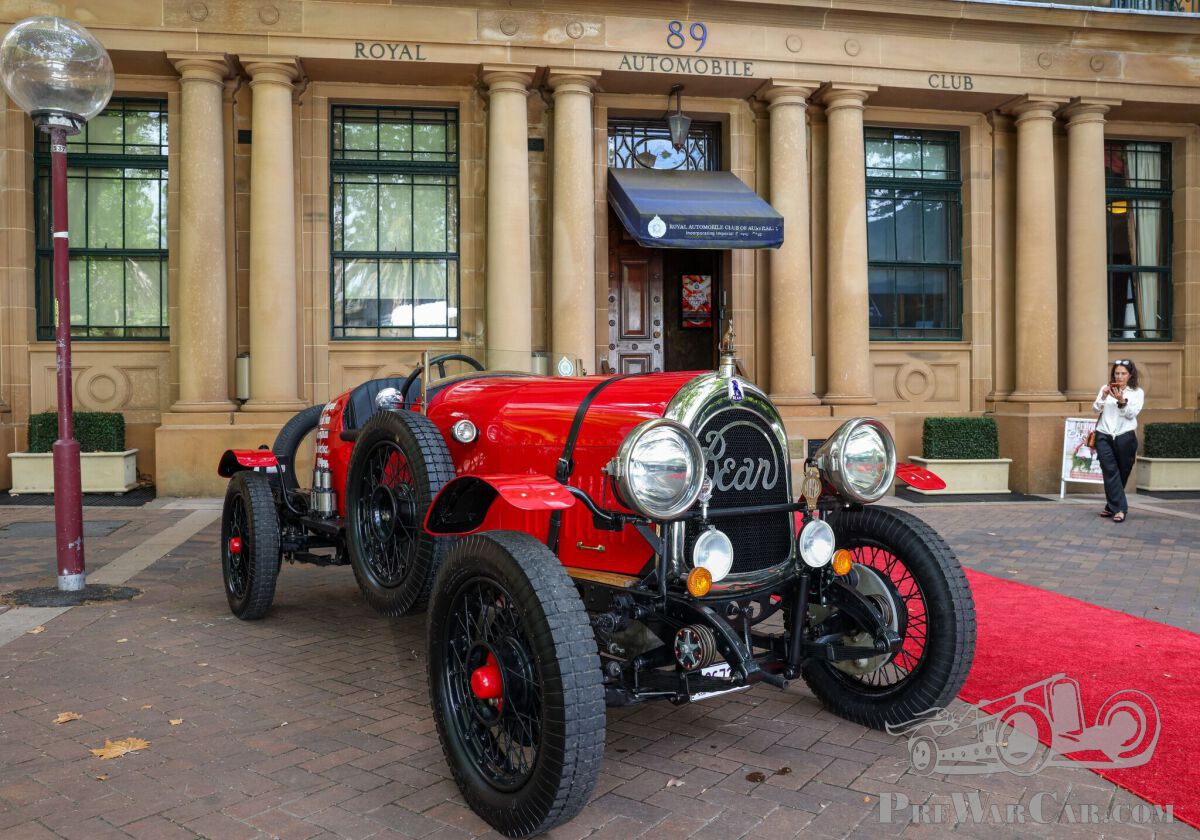


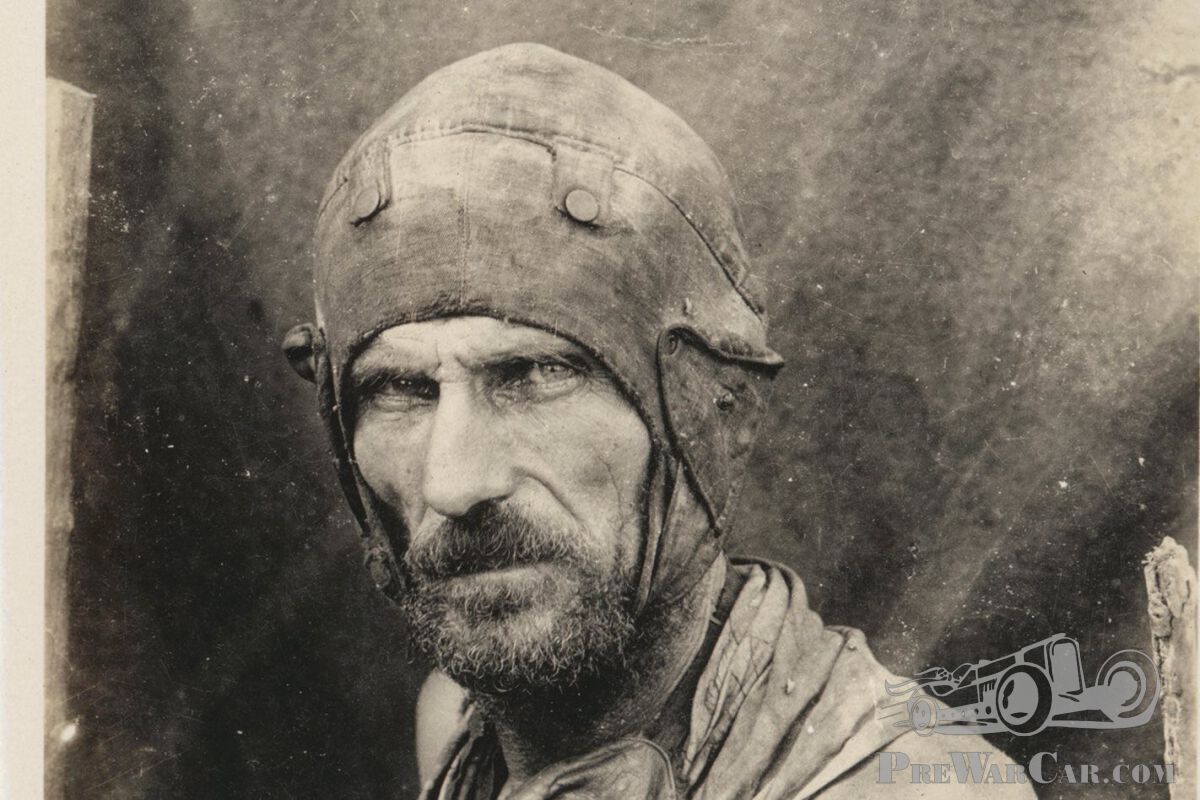
Francis Edwin Birtles (1881-1941) was one of life's extraordinary people. In the portrait held by the National Library of Australia, he glares into the camera, bearded and bedecked in little besides a dust-covered cap and goggles, with a ferocity that is not altogether prepossessing. If Birtles was a hard man, he had to be—the feats he attempted, and completed, required hardiness, determination and a no-nonsense pragmatism.
Birtles was born in rural Victoria and while in his twenties became a keen long-distance cyclist. His rides started to attract press attention and soon he became a minor celebrity. Not averse to publicity, he started to keep written and photographic records of his travels. He progressed to cars in 1911, when the importer of the American Brush asked him to accompany their driver on the first ever trans-Australian motor car journey from Perth to Sydney. Becoming increasingly famous, he was later commissioned to undertake similar endurance drives for Ford and Oldsmobile, but in 1924 things started to get more serious.
Malcolm Henry Ellis was, at the time, political correspondent for Sydney's Daily Telegraph, and, as a loyal subject of King George V., was aggrieved by the tendency of Australian motorists to opt for powerful and rugged American cars over more delicate British ones. In a bid to promote British car sales, he engaged Birtles to accompany him in a drive from Sydney to Darwin and back in a Bean 14hp. The trip was successful, but did not satisfy Ellis, and when he was posted to England to serve as his paper's London correspondent in 1925, he devised a much grander plan. Having come to the view that British light cars actually weren't tough enough for Australia, he met an Australian engineer called Leslie Hinks, who detailed his specifications for the ideal Australian car and told Bean to construct it at his expense. The resulting Imperial Six was a two-ton monster with a 3.8-litre o.h.v. engine designed by Harry Ricardo.
Bean themselves had no faith in the car or expedition, dismissing Hinks as a man "not quite mentally normal," but Birtles and Ellis went ahead regardless, aided by an experienced long-distance motorist, Captain Eric Knowles. Birtles, it should be noted, had a notoriously abrasive personality and absolutely nothing in the way of mechanical sympathy, hence a) the need for a competent driver to accompany the expedition and b) the fact that no one who drove for Birtles once ever wished to do so again.
The trip failed. Knowles fell ill while trying to repair the back axle in Turkey. Birtles and Ellis staggered on through Afghanistan, dehydrated and gripped by malarial fever. In India, a terrible engine knock was traced to two big-end bearings, while Ellis had become a practically cadaverous. Riddled with several diseases, he was taken into hospital and was extremely fortunate to eventually recover. Birtles ploughed on for another 1,200 miles before the Bean finally expired.
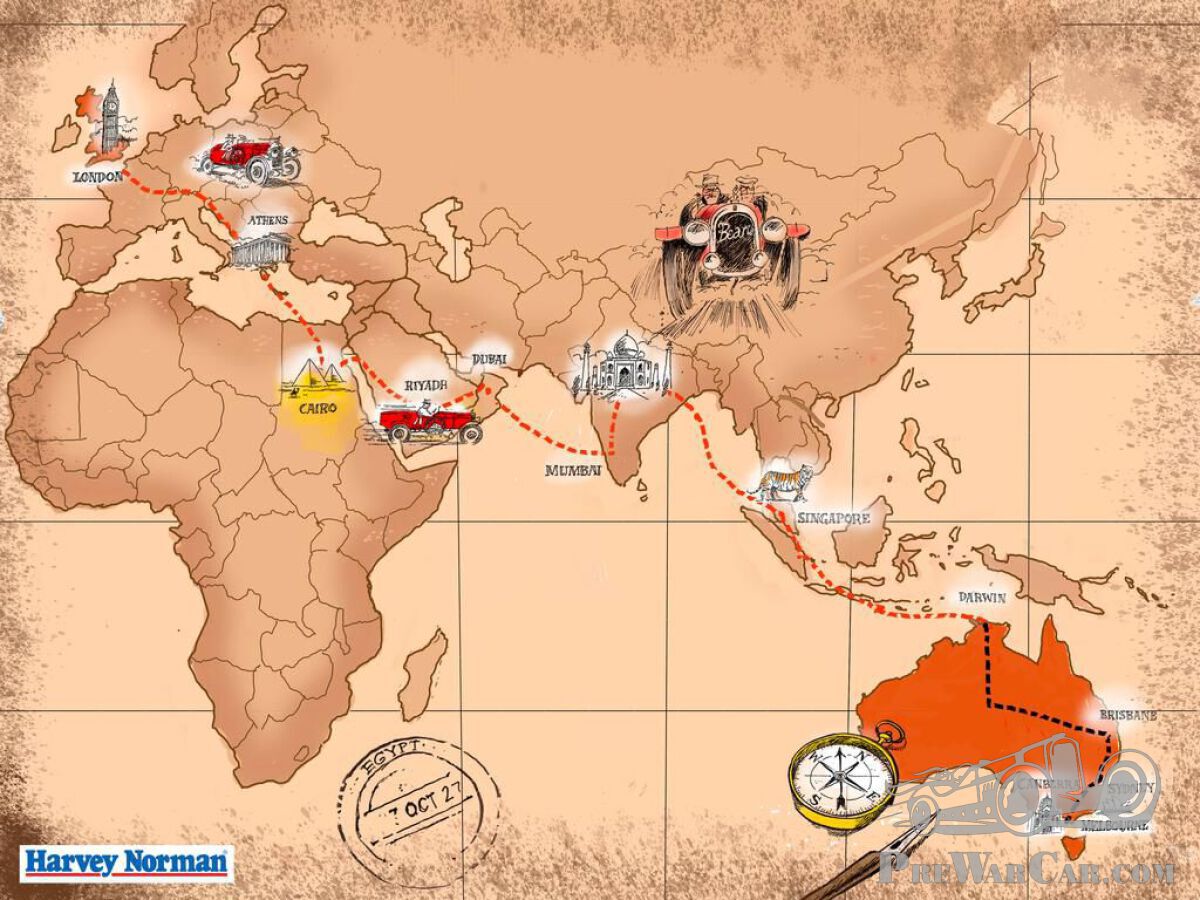
Anyone else might have given up there, but Birtles was not one for being beaten, and in 1927 he attempted once again to become the first person to drive from London to Sydney, contenting himself this time with a specially-prepared Bean 14hp named Sundowner. This time, after months on the road, he was successful, and the car is preserved in the National Museum of Australia.
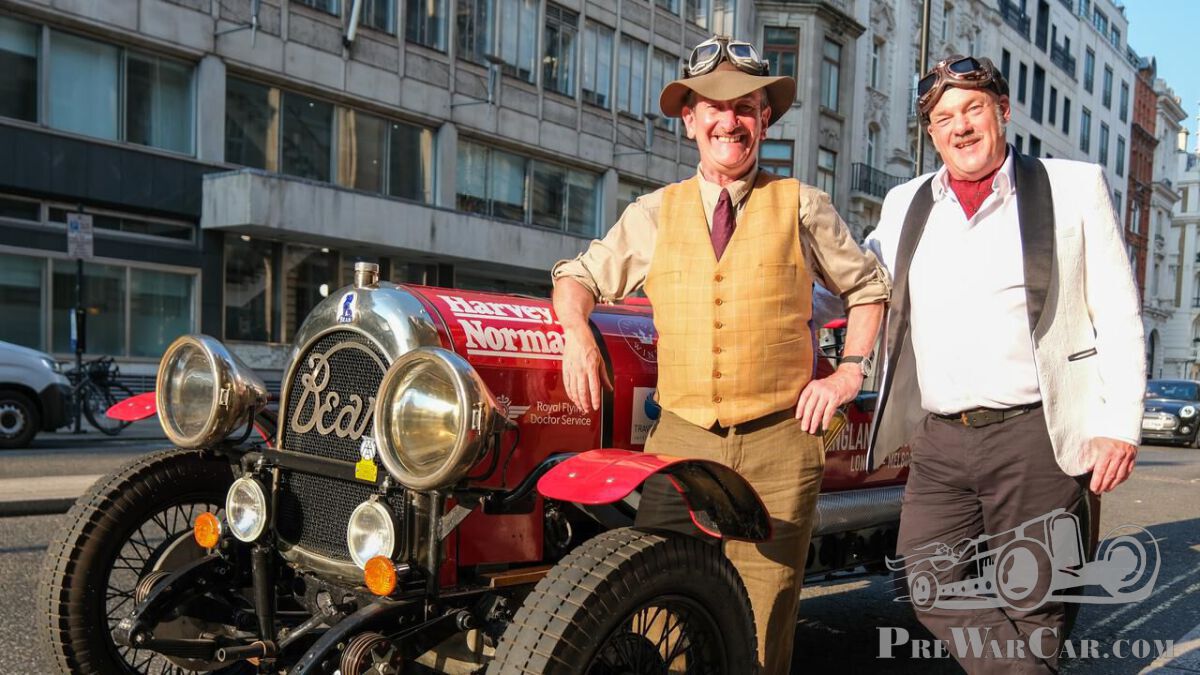
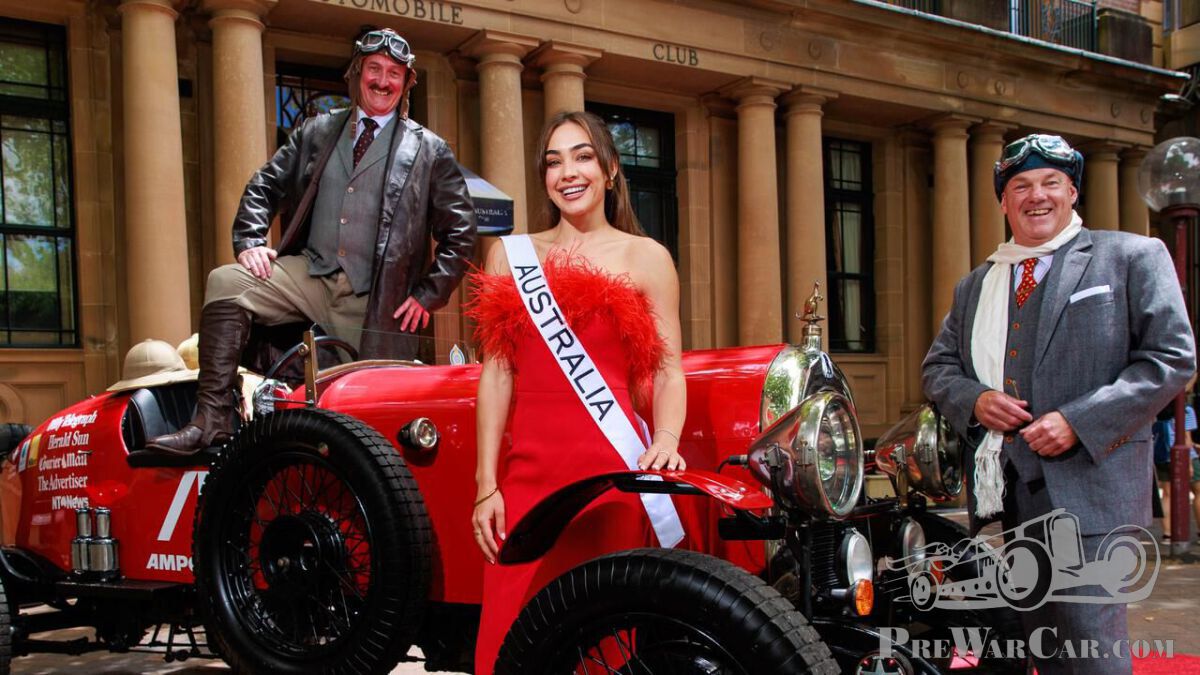
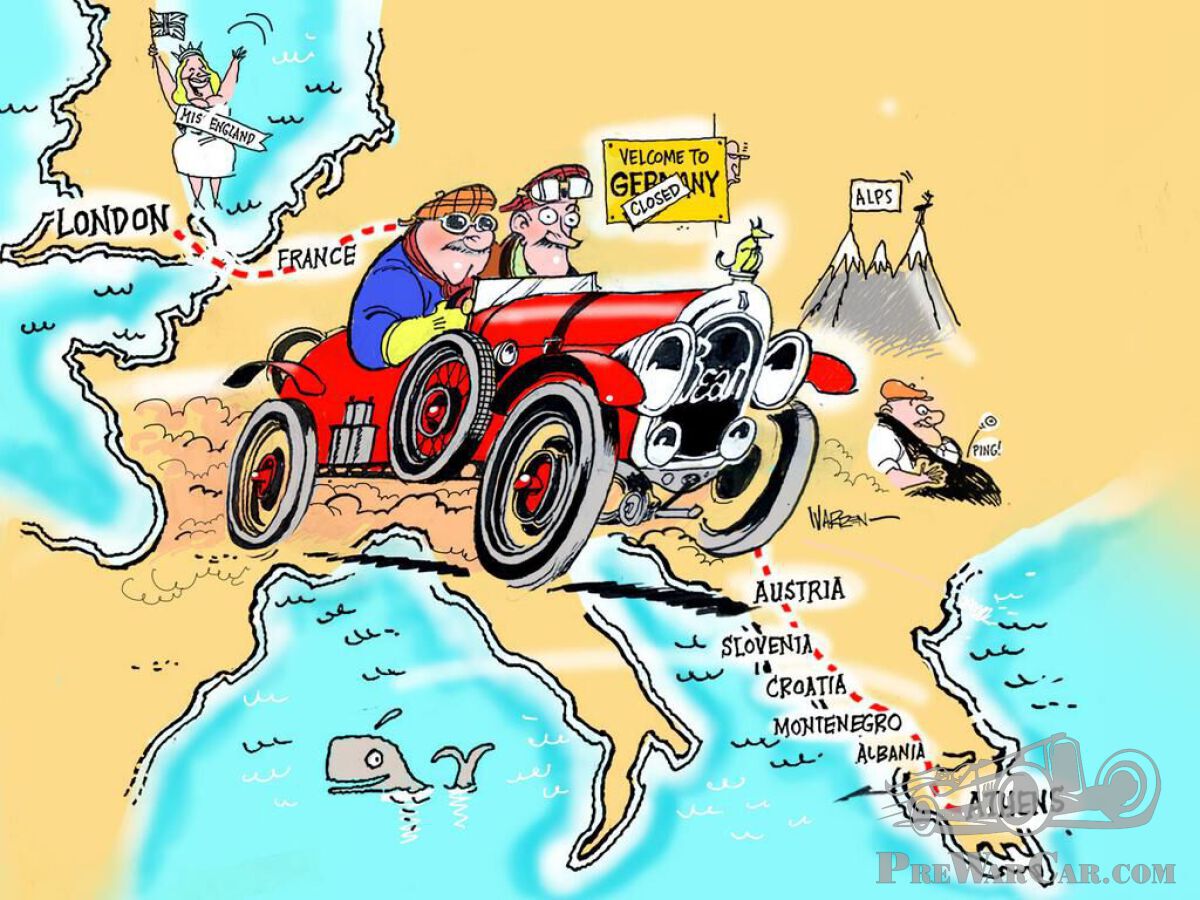
Just how hard could such a drive be? That is what the Daily Telegraph's editor, Matthew Benns, and cartoonist, Warren Brown, are endeavouring to find out. They have taken the wheel of a 1925 14hp and set off some weeks ago from London in a re-enactment of Birtles's landmark drive. On October 16th, they posted the following despatch: "Before too long, we’ve arrived at the border of Albania and Greece, where the Greek customs officers and border guards flock to the Bean for countless photographs. But in the midst of this, Matthew receives a 'phone call from Marios, our shipping agent in Athens—he’s found a container ship that can take the vehicles from the Piraeus to Alexandria—the only catch is it is tomorrow at 9.30 a.m. This means we now have to drive the full length of Greece from Albania to Athens—320 miles in a day—starting now. As Francis Birtles would say: 'My motto’s ‘Chance it!’' And chance it we will..."
Birtles was born in rural Victoria and while in his twenties became a keen long-distance cyclist. His rides started to attract press attention and soon he became a minor celebrity. Not averse to publicity, he started to keep written and photographic records of his travels. He progressed to cars in 1911, when the importer of the American Brush asked him to accompany their driver on the first ever trans-Australian motor car journey from Perth to Sydney. Becoming increasingly famous, he was later commissioned to undertake similar endurance drives for Ford and Oldsmobile, but in 1924 things started to get more serious.
Malcolm Henry Ellis was, at the time, political correspondent for Sydney's Daily Telegraph, and, as a loyal subject of King George V., was aggrieved by the tendency of Australian motorists to opt for powerful and rugged American cars over more delicate British ones. In a bid to promote British car sales, he engaged Birtles to accompany him in a drive from Sydney to Darwin and back in a Bean 14hp. The trip was successful, but did not satisfy Ellis, and when he was posted to England to serve as his paper's London correspondent in 1925, he devised a much grander plan. Having come to the view that British light cars actually weren't tough enough for Australia, he met an Australian engineer called Leslie Hinks, who detailed his specifications for the ideal Australian car and told Bean to construct it at his expense. The resulting Imperial Six was a two-ton monster with a 3.8-litre o.h.v. engine designed by Harry Ricardo.
Bean themselves had no faith in the car or expedition, dismissing Hinks as a man "not quite mentally normal," but Birtles and Ellis went ahead regardless, aided by an experienced long-distance motorist, Captain Eric Knowles. Birtles, it should be noted, had a notoriously abrasive personality and absolutely nothing in the way of mechanical sympathy, hence a) the need for a competent driver to accompany the expedition and b) the fact that no one who drove for Birtles once ever wished to do so again.
The trip failed. Knowles fell ill while trying to repair the back axle in Turkey. Birtles and Ellis staggered on through Afghanistan, dehydrated and gripped by malarial fever. In India, a terrible engine knock was traced to two big-end bearings, while Ellis had become a practically cadaverous. Riddled with several diseases, he was taken into hospital and was extremely fortunate to eventually recover. Birtles ploughed on for another 1,200 miles before the Bean finally expired.
Anyone else might have given up there, but Birtles was not one for being beaten, and in 1927 he attempted once again to become the first person to drive from London to Sydney, contenting himself this time with a specially-prepared Bean 14hp named Sundowner. This time, after months on the road, he was successful, and the car is preserved in the National Museum of Australia.
Just how hard could such a drive be? That is what the Daily Telegraph's editor, Matthew Benns, and cartoonist, Warren Brown, are endeavouring to find out. They have taken the wheel of a 1925 14hp and set off some weeks ago from London in a re-enactment of Birtles's landmark drive. On October 16th, they posted the following despatch: "Before too long, we’ve arrived at the border of Albania and Greece, where the Greek customs officers and border guards flock to the Bean for countless photographs. But in the midst of this, Matthew receives a 'phone call from Marios, our shipping agent in Athens—he’s found a container ship that can take the vehicles from the Piraeus to Alexandria—the only catch is it is tomorrow at 9.30 a.m. This means we now have to drive the full length of Greece from Albania to Athens—320 miles in a day—starting now. As Francis Birtles would say: 'My motto’s ‘Chance it!’' And chance it we will..."
We trust the Bean did everything it could to get its occupants to Piraeus in time, and that they are now speeding happily through Egypt en route for the Persian Gulf. We will follow this expedition with interest and wish Mr. Benns and Mr. Brown every success. Look out for further despatches.
Words: Zack Stiling
Photographs supplied by Mahmoud Ezzeldin
Published:
Wednesday October 23rd, 2024
Facebook
LinkedIn
Twitter
WhatsApp
Email
Copy
Comments


Terry Cockerell
27 October 2024, 23:46
Unfortunately, there are no statues to celebrate Francis Birtles' incredible achievements. He rode bicycles many thousands of miles across and around Australia before transferring to automobiles in 1912. In 1964, at the age of 13, I was given a 1926 12hp Bean roadster, which I began to restore and learn about Francis Birtles. I was very fortunate to meet Alec Barlow in 1965, however he was not interested in talking about the epic Darwin-Melbourne trip in which he accompanied Birtles in a Bean car.
I agree Birtles had a personality that was difficult to deal with, however the statement that "he had nothing in the way of mechanical sympathy" is a gross exaggeration. Birtles disliked timing chains and converted the Sundowner's engine to gear drive for reliability. Actually, Bean engines have two chains, one drives the valve gear and a separate one which drives the magneto and fan.
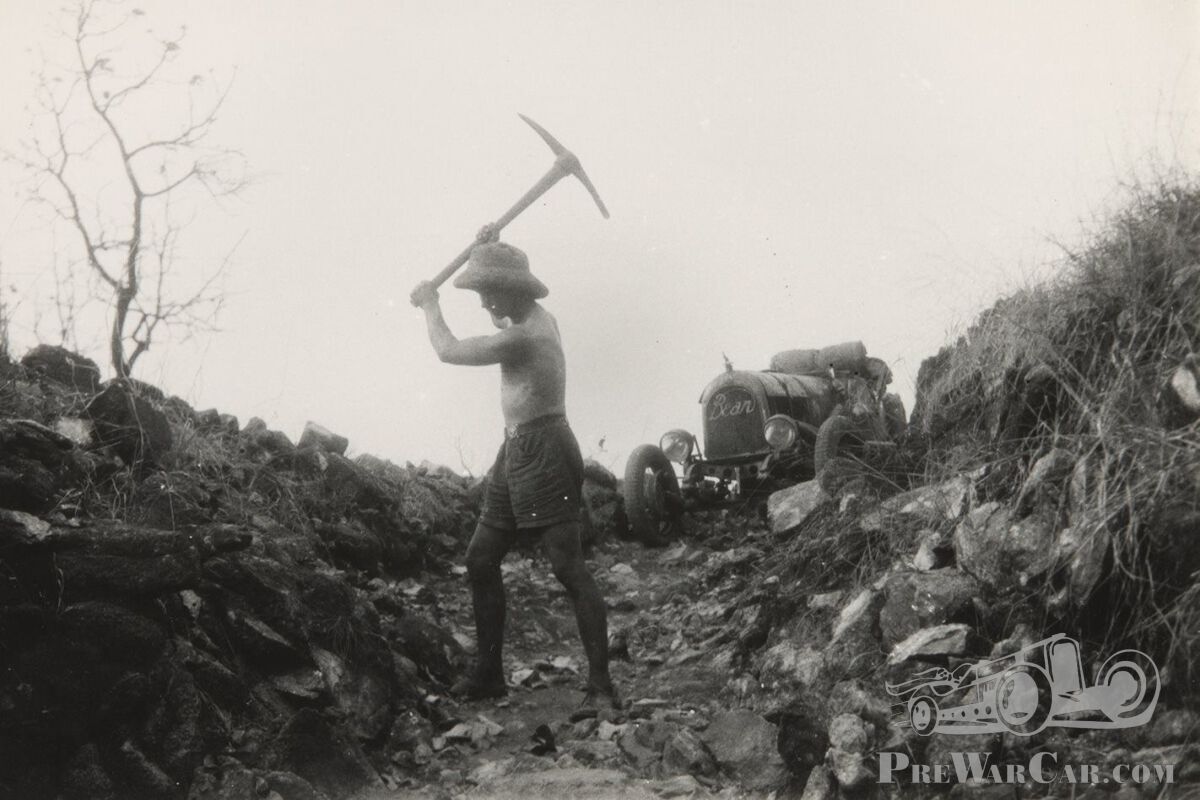
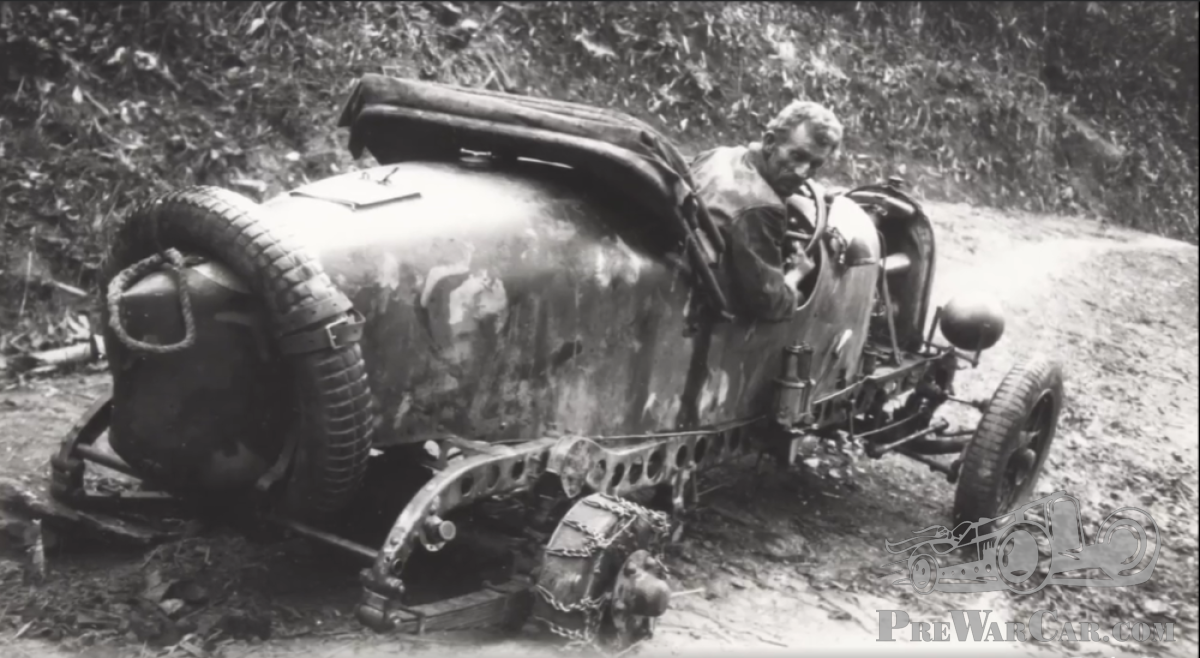
During the epic crossing of the Nagara Hills from India into Burma, Birtles, to obtain a lower first gear, flipped the rear axle and differential assembly which reversed the rotation of the wheels. Consequently, reverse could be used as a lower first gear. Nothing would stop Birtles.
Lang and Bev Kidby left Britain back on 18th April, 2024, and successfully completed the trip in another 14hp Bean Sundowner replica. Corresponding with Lang before the epic trip I wished him well. I suggest interested readers check out Lang and Bev Kidby's website; they are modern-day adventurers and have been on an epic scale.
Read more
I agree Birtles had a personality that was difficult to deal with, however the statement that "he had nothing in the way of mechanical sympathy" is a gross exaggeration. Birtles disliked timing chains and converted the Sundowner's engine to gear drive for reliability. Actually, Bean engines have two chains, one drives the valve gear and a separate one which drives the magneto and fan.
During the epic crossing of the Nagara Hills from India into Burma, Birtles, to obtain a lower first gear, flipped the rear axle and differential assembly which reversed the rotation of the wheels. Consequently, reverse could be used as a lower first gear. Nothing would stop Birtles.
Lang and Bev Kidby left Britain back on 18th April, 2024, and successfully completed the trip in another 14hp Bean Sundowner replica. Corresponding with Lang before the epic trip I wished him well. I suggest interested readers check out Lang and Bev Kidby's website; they are modern-day adventurers and have been on an epic scale.
Iain
27 October 2024, 22:51
I am a direct descendant of John L. Simpson, who accompanied Birtles and Ellis on the Sydney-Darwin-Sydney expedition in the 'Scarlet Runner' 14hp Bean in 1924. The book written by Ellis called "The Long Lead" confirms your comment that Birtles was a difficult man, as was Ellis, though the book is an excellent historical account of the expedition.
I have seen the 'Sundowner' Bean at the National Museum in Canberra and it is fascinating to see. Bets of luck to W.B. and co. on this trip.
Read more
I have seen the 'Sundowner' Bean at the National Museum in Canberra and it is fascinating to see. Bets of luck to W.B. and co. on this trip.
John Turner
27 October 2024, 11:53
A very interesting story, and I remember seeing his Bean in the museum at Birdwood in SA a few years ago. In one of my books I have a picture of Francis Birtles. Back in the '80s and '90s we lived on the Sunshine Coast in Qld, and one of the car club members there by the name of Norm(an) bore an uncanny resemblance to Francis. So one day I remarked upon his likeness to the picture of Francis. He gave me a wry smile and said "Yes, he was my uncle." It's a small world. Wonder if Norm is still around - would love to talk to him again.
Read more
Ken Rogers
23 October 2024, 09:58
Interesting that Birtles had the view that British light cars weren't up to coping with Australia's terrain. For those not au fait with the expedition, they should take a look at the story of two Jowetts, 'Wait' and 'See', which successfully made the journey from west to east Africa in 1926.
Read more
Another trick Birtles used during the crossing of the Nagara hills was to remove the rear wheels, file grooves into the outside of the brake drums then wrap chains around them for traction. As mentioned previously NOTHING would stop Birtles.
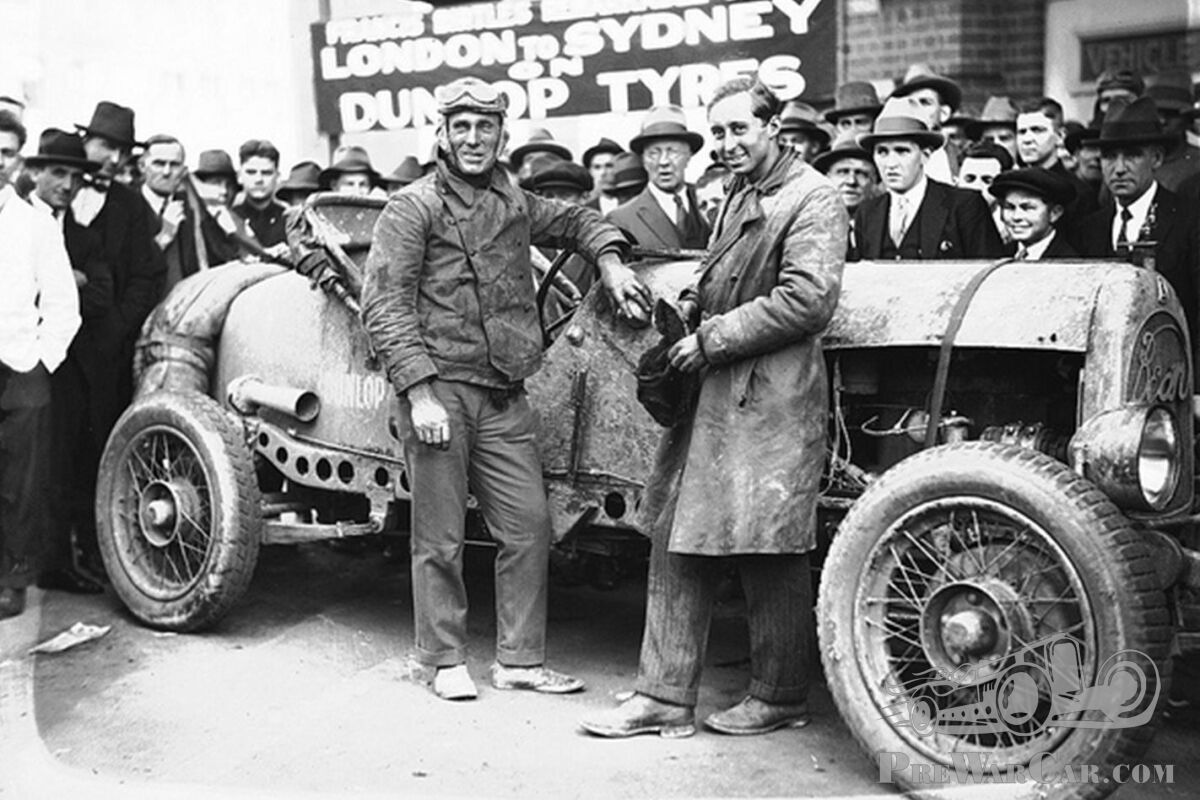
He was alone from London to Bombay then reluctantly took on a passenger by the name of Percy Stollery. Stollery, a Canadian who had been riding a bicycle round the world, became invaluable during the "drive" through the Nagara Hills. There had only been a walking track until then. They dug and hacked their way through. The Bean was anchored to trees as it was driven around dangerous steep hills. I think Birtles may have died without Stollery's help. The crossing of the Nagara hills took about three months incredibly hard work. I believe it can be driven in about two to three hours today.
The iconic Birtles picture, he didn't appear to appreciate the camera in this one.
You can get an idea of the terrane they had to work with in the second picture.
When I heard Warren Brown was contemplating recreating Birtles's epic trip I tried to contact him but unfortunately, he was not interested in discussing Bean cars, especially since I had met Alec Barlow. Regardless I wish him well on the trip.
The fourth picture shows Birtles at the left with Stollery at the right.
Note the incredible number of holes in the chassis to reduce weight. It's a wonder the chassis survived the trip.
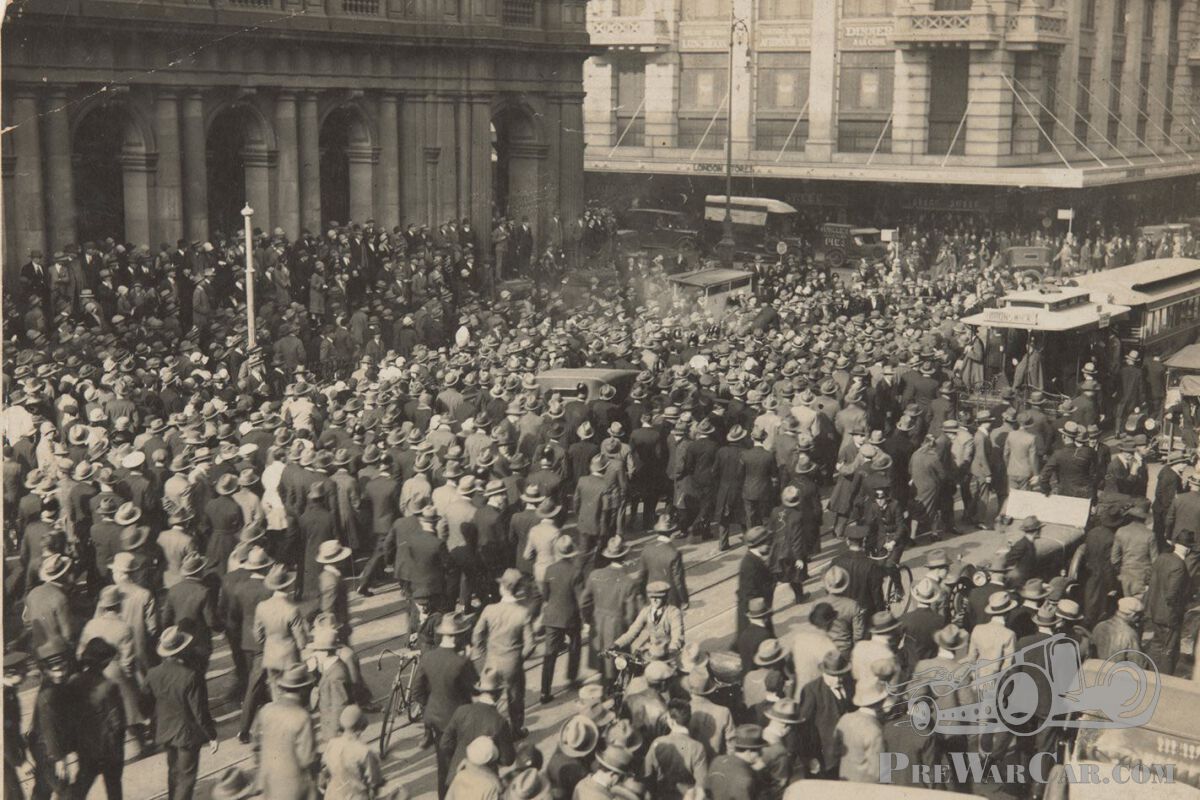
Eventually, when the Sundowner arrived in Melbourne, the police broke up the crowd and told Birtles to move along. There was no civic reception!