The global magazine and marketplace for classic car enthusiasts, by enthusiasts.


Filter
Classic Elcar for sale - Elcar cars for sale
-

Rolls Royce 20HP doctors coupe 1929
Rolls Royce 20HPCarrosserie "coupé docteur" de 1929Chassis GEN81 Intégralement restaurée par un spécialiste Anglais du modeleVoiture tres soignée, carrosserie - sellerie - mecanique en excellent état Part toutes distances, participation a Paris - Pekin sans probleme en 2013 Carte gri.. -
1938 Bentley Petersen 4 ½-Litre Blower Lemans Replica
1938 Bentley Petersen 4 ½-Litre Blower Lemans Replica Chassis Number: GGR64 Registration Number: FGO523 This stunning Bentley 4 ½-Litre Blower recreation was hand-crafted by the marque specialists at Bob Petersen Engineering in the UK, and according to recent correspondence with.. -
1940 Chevolet Master Business Coupe
5-Fenster_Coupe.Sammler-Zustand.Zweifarbige Lackierung in Burgund und Schwarz.einwandfreie Chromteile.Neuer Kabelbaum.Innenraum mit neuer Polsterung.Überholter 235-cui-Reihen-6_Zylinder (3,9 Liter) mit 140 SAE-PS.3-Gang-Schaltgetriebe.Firestone-Weißwandreifen.Teardrop-Fenderskirts. -
1934 Derby Bentley 3 ½ Litre All Weather Tourer by Barker
1934 Derby Bentley 3 ½ Litre All Weather Tourer by Barker Chassis Number: B-169-AE Registration Number: AXM20 A unique and handsome rare all-weather tourer bodied by Barker of London in 1934. The coachwork on this car is particularly distinguised & quite rare with lovely sca.. -
Cadillac 1934 Town Sedan serie 370D V12 Fleetwood Body
Cadillac 370D Town Sedan from Fleetwood with the V12 150HP engine and a wheelbase from 146" only 683 V12 where produced in 1934 by Cadillac This Impressive car has a weight from over 2500KG The Cadillac runs and drives well. Frank Kennis Phone: 00.31.622.420.766 or mail me: info@KennisCars.NL www.KennisCars.NL Classic Car Dealer for Europe Cad.. -
1931 Beverley Barnes 22/90hp Sports Chassis
Technical Specifications:Mark & Model: Beverley Barnes 22/90hp Sports ChassisYear: 1931Registration plate: UnregisteredChassis Number: 603Engine Number: 603Engine Capacity: 2732 ccTransmission: 4-speed ManualMileage:Body style: Rolling chassis.. -
1935 Rolls Royce Phantom 2 Brewster dual cowl tourer
1935 Rolls Royce Phantom 2 Brewster dual cowl tourer Chassis Number: 111TA Regitration Number: BXR2 Off test in March of 1935. This Phantom originally wore a sports Saloon body by Hooper. After being shipped to the USA the current Brewster dual cowl body was installed upon the car which it has now worn f.. -
1939 Derby Bentley Overdrive MX series Drophead Coupe by Vanden Plas.
1939 Derby Bentley Overdrive MX series Drop Head Coupe by Vanden Plas. Chassis number: B105MXRegistration number: WXW40 The best of the best: This ultra desirable Overdrive Derby Bentley was in the long term ownership of Peter Blond, a well known Sothebys director who headed the auction houses car department. D.. -
1937 Bentley ‘Turner Supercharged Special’
Bentley ‘Turner Supercharged Special’, year 1937. Chassis (VIN) number B16KT, engine number A8BJ, original UK registration number DYV 289. Colours: ‘two-tone’ green body and with black wire wheels combined with a ‘two tone’ leather interior with red/green seats and red carpet. The car comes with a dark green soft to.. -
Bugatti type 52 Crosthwaite and Gardener
Bugatti Type 52 tool room copyThis is a Tool Room Copy of the junior electric cars modelled on Type 35s created for Bugattis clients I from 1927-36. There was a short and long chassis versions, the long chassis was 10 cm longer.Renown engineers Crosthwaite and Gardener famous for their Bugatti and Auto Union built this exac..


Elcar
US, 1915 – 1931
(1) Elkhart Carriage & Motor Car Co, Elkhart, Ind.
(2) Elcar Motor Co, Elkhard, Ind.
From 1909 to 1915 the products of the Elkhart Carriage & Motor Car Co were known as Sterlings, but for the 1916 season the car’s name was changed to Elcar. The first Elcar model was a conventional car made in two- and five-seater versions, powered by a 20hp 4-cylinder Lycoming engine of 3-litres capacity. This engine was used by Elcar until the mid-1920s, but the range was increased by a 6-cylinder car with 3.6-litre Continental engine in 1918. A conventional range of Elcar cars was built during the 1920s, all using the 4-cylinder Lycoming or 6-cylinder Continental engine, a number of the former being make as taxicabs. In 1925 the Elcar company branched out into the 8-cylinder field, with a Elcar car powered by a 4.8-litre straight-8 Lycoming engine. In its final form this engine developed 140bhp, making it the third most powerful car engine in America at the time. Production of Elcar cars was never large, reaching a peak in 1919 with 4.000 Elcar units sold. Experiments with the Powell Lever engine came to nothing, though a Lever-powered Elcar 6 with 8in stroke appeared at the 1930 New York show. In their last year, 1931, the Elcar factory was used for the construction of the revived Mercer, which used an Elcar chassis and a 140bhp Continental engine. Only two of these cars were made.
Source: Georgano, encyclopedia of motorcar; KM
The information is written with the greatest of care. However, if you have any suggested amendments please contact us at office@prewarcar.com


Featured
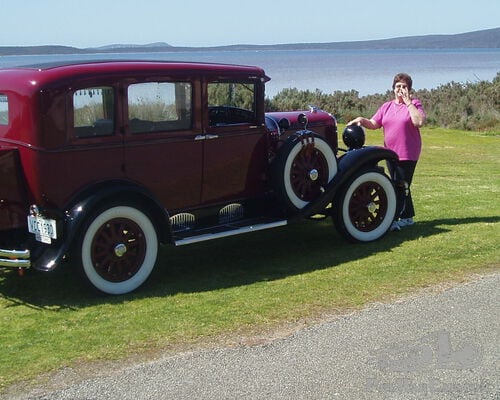
1930 Chrysler 66 Six-Wheel Equipped Royal Sedan
An exceptionally well restored and highly awarded Chrysler 66 Royal Sedan, with only two owners in nearly 97 years.The present owner ..
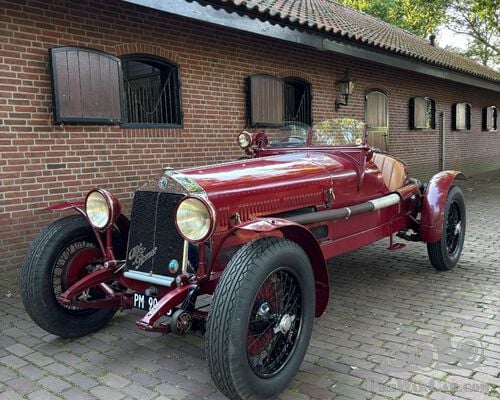
1930 Alfa Romeo 6C 1750 Spider
1930 Alfa Romeo 6C 1750 Spider with complete history from delivery to first owner in 1930 in Firenze till today with copy Libretto/license plate.
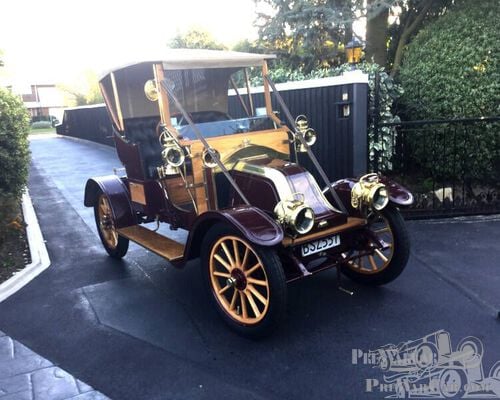
Renault /AX 1913 - named
Purchased fully renovated from New Zealand and imported to the UK. We have owned her for over10 years. Gigi is currently living in France where she..