The global magazine and marketplace for classic car enthusiasts, by enthusiasts.


Filter
Classic G.W.K. for sale - G.W.K. cars for sale
-

1936 Packard 1404 Super 8 956 Club Sedan
1936 Packard 1404 Super 8 956 Club Sedan Chassis Number: 757703 Registration Number: YXS196 Imported to the Uk a decade or so ago as a freshly restored mint car; since then the car has been sparingly but regularly used & is in really really fine condition. -
1939 Alfa Romeo 6C2500
This is a rare pre-war 6C2500 project, one of the first 6C2500 models to be built before Italy was at war.The rolling chassis is complete and partially reconditioned. The engine is the original matching number to the chassis, having had a full reconditioning recently.The car is fitted with a one off Pininfarina cabriolet body orig.. -
1924 Alfa Romeo RM Sport Zagato
This wonderful and rare early Alfa Romeo was one of the first Alfa cars bodies by Zagato. Mechanically restored several years ago, the car is in very good usable condition, keeping a beautiful original look.Please message or phone for more information. -
Jaguar SS 100 3 ½ Litre Recreation
I am offering here the main parts to recreate a SS100..This contains:1 x Chassis to be shortened to match the SS100 1 x Frontaxle with brakes 1 x Rear Axle with brakes1 x Tank unit and rear end of an original SS1001 x Engine I have a Jaguar MK4 or 5 3 1/2 Litre Engine for Sale or a 2 1/2 1 x Paperwork and dono.. -
1916 Simplex, Crane model 5
1916 Simplex, Crane MODEL 5CUSTOM MADE HISTORIC PRESERVATION VEHICLE – READY TO TOUR!This Simplex recently completed the 48th Modoc tour hosted by Rodney Flournoy. This five-day tour took place in the scenic northeast corner of California. The participants drove approximately 300 miles to a variety of beautiful destin.. -
American La France - Speedster
Ehemalige Feuerwehr wurde 2017 in den USA gekauft und 2018 nach Deutschland überführt und anschließend selbst zum zwei-sitzigen Speedster umgebaut. Sämtliche rote Farbe wurde abgebürstet, die Stahlteile mit Klarlack lackiert. Die Antriebszahnräder wurden durch größere ersetzt, so dass eine Reise-Geschwindigkeit von ca. .100 km/h möglich ist. Am .. -
1935 Ford Pickup
Offered for sale is 1935 Ford Pickup in very good preserved condition. Imported from Spain, bodywork is in lovely condition, only little corrosion. Car needs to be technically commissioned. With the car comes several documents, including an original Spanish title. -
1929 Rolls-Royce 20/25 Estate Car
Extremely unusual well-proportioned estate coachwork from Burbage & SonsThoroughly well sorted benefitting from significant work from ourselvesCharming and practical vehicle accompanied by an interesting early history Coming off test on Christmas Eve 1929, GDP 43 was delivered to coachbuilder Th.. -
1924 Rolls Royce 20hp Doctors Coupe
1924 Rolls Royce 20hp Doctors Coupe Registration No: DS9474 Chassis No: GRK6 According to its accompanying copy build sheets, ‘GRK6’ was dispatched as a rolling chassis to Rolls-Royce of America Inc (Springfield, Massachusetts) in July 1924. Originally intended to carry Br..


G.W.K.
GB, 1911 – 1931
(1) GWK Ltd, Datchet, Bucks., 1911 – 1914
(2) GWK Ltd, Maidenhed, Berks., 1914 – 1931
The GWK cyclecar was notable in that it was a successful instance of the application of friction drive. At first, weight was low of the GWK, and the vertical twin-cylinder side-valve Coventry-Simplex engine, which lived at the rear, could push the GWK along at about 35mph. Up to 1914, the GWK was popular because of its economy. Its friction discs were of compressed paper at first, and then after 1919, of cork. By 1921 a four-cylinder 1.368cc Coventry-Simplex engine had replaced the twin in the GWK, and a self-starter had been added increasing the weight. This went up again in 1924, when front-wheel brakes and a 1½-litre engine were fitted on GWK cars. These modern conveniences were offered in order to compete with quantity-produced light cars, but the little Austin Seven was faster, more economical, and already cheaper that the GWK car. The GWK went out of production in 1926. Grice had already departed, in 1920, to make the very similar Unit, and in 1920 he tried to revive the GWK, showing another rear-engined car with friction drive bearing the original name, but this GWK never appeared on the market.
Source: Georgano, encyclopedia of motorcar; TRN
The information is written with the greatest of care. However, if you have any suggested amendments please contact us at office@prewarcar.com


Featured
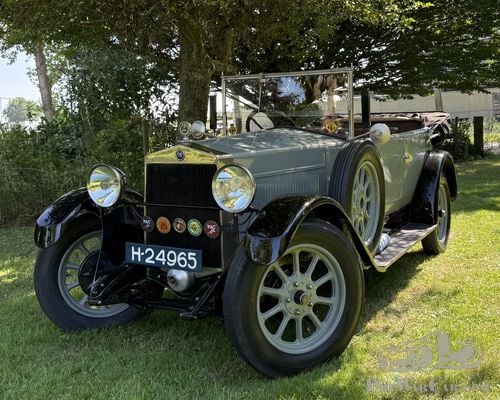
Fiat 509 Torpedo / Spider – Exceptionally Original and Complete
A Rare and Highly Original Example with Long-Term Dutch HistoryOffered for sale is an exceptionally original and remarkably complete Fiat 50..
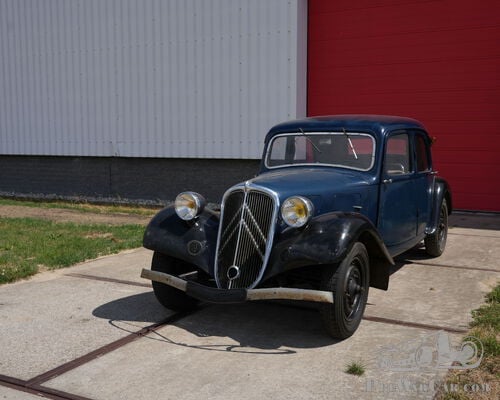
1935 Citroën Traction Avant
Early-production Traction AvantExceptionally original, unrestored conditionRecently part of a major museum collection
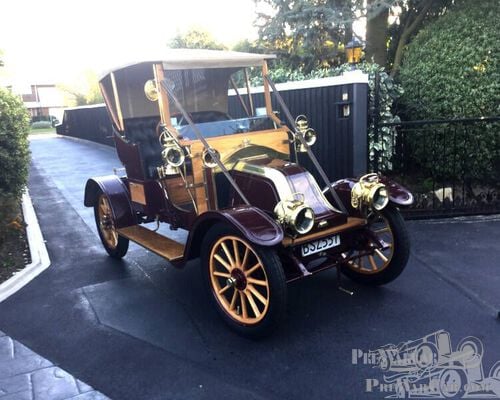
Renault /AX 1913 - named
Purchased fully renovated from New Zealand and imported to the UK. We have owned her for over10 years. Gigi is currently living in France where she..