The global magazine and marketplace for classic car enthusiasts, by enthusiasts.


Filter
Classic Rickenbacker for sale - Rickenbacker cars for sale
-

1934 Mercedes Benz 500 K Spezial Roadster - Rebuild
The most beautiful automobile design of the German pre-war eraHigh-quality, faithful and detailed reconstruction of the Spezial Roadster bodywork on the original rolling chassis of a 500 KCraftsmanship of the highest standard, fully functionalCommission (build) record on the delivery availableComprehensiv.. -
Bugatti Brescia type 23 16 soupapes double allumage
Bugatti roadster Brescia type 23 16 soupapes Proposée à la vente, cette remarquable Bugatti Type 23 “Brescia” représente une opportunité rare d’acquérir un exemplaire à l’historique particulièrement intéressant. Produite à la fin de l’année 1923, cette automobile fait partie des quatre véhicules expédiés neufs en Australie p.. -
REO Model R Speedster 1910
For sale is this nice Reo Model R Speedster. It was built in 1910 and converted to a speedster years ago even before the previous owner bought it. It has the original 4 cylinder engine coupled to a 3 forward 1 reverse gearbox. It spent a good part of its life in sunny Kansas where it was restored by the previous owner who enjoyed it for many yea.. -
1933 Rolls Royce Phantom 2 Tourer.
1933 Rolls Royce Phantom 2 Tourer. Chassis Number: 152MY Registration Number: 825XUT A simply superb car owned for the last couple of decades by an octogenarian lady who now finds access difficult & has decided to relinquish this wonderful car to the next generation. D.. -
1924 Bentley 3 Litre Speed Model 2 Seater By Gurney Nutting
Chassis No:612 Engine No: 628 Current Engine No: U.K. Registration No: NN 8126 Coachwork Sports 2 Seater By Gurney Nutting Chassis No 612 was delivered to A.B.Spencer who specified saloon coachwork by Gurney Nutting. Within two years, however, the car passed to his brother George Spencer who returned the car to Gurney Nutting with instructions to .. -
1929 Lancia Lambda 8th Series Short-Chassis Torpedo
With its monocoque body, four-wheel brakes, independent front suspension and V4 overhead camshaft engine many enthusiasts view the Lancia Lambda as one of the greatest automobiles of all time. With a conventional pedal layout and H-pattern gear selection the Lambda also set the automotive template for years to come. The Lambda was also su.. -
1933 Rolls Royce Phantom 2 Drophead Coupé by Park Ward
1933 Rolls-Royce Phantom II Continental Drophead Coupé Coachwork by Park Ward Registration: BYV 923 Chassis: 55MW Engine: XO25 Vintage & Prestige is proud to offer this spectacular and unusual example of Phantom II DropHead Coupé. Th.. -
Apperson 8-20 mit V8 Motor von 1920
Apperson 8-20 Wir bieten Ihnen diesen Apperson 8-20 mit V8 Motor von 1920 an. Alle wichtigen Teile sind soweit vorhanden. Auch die 2. Motorhaube ist da. Der Motor dreht, das Getriebe schaltet. Melden Sie sich bitte bei Fragen bzw. Interesse. Sie sind herzlich eingeladen.Umsatzsteuer nicht ausweisbar nach § 25A UStG. Z.. -
Packard 120 Sedan 1935
This Packard Sedan is in very good driving condition.Always well maintained, the brakes were overhauled and a new radiator fitted a few years ago.It is an older restoration with some imperfections in the paintwork.The car has enough room for 5 people, and there is room behind the wheel for a tall driver.An impressive .. -
Ford Model A Roadster DeLuxe
Dieser schöne Ford Model A Roadster DeLuxe wurde 2013 von einem Oldtimerliebhaber in den USA gekauft, nach Deutschland verschifft und war seitdem Teil seiner privaten Klassiker-Sammlung.Es handelt sich um das beliebte Modell von 1930 in der eleganten, klassischen Farbkombination in beige-schwarz. Die Zahlreichen Extras verfeinern das toll..


Rickenbacker
US, 1922 – 1927
Rickenbacker Motor Co, Detroit, Mich.
Captain Eddie Rickenbacker was already famous, as a racing driver and a World War 1 aviator, when he began to offer a remarkable car bearing his name the Rickenbacker car. This Rickenbacker car bore his personal symbol of a hat in a ring, and was powered by a small sv 6-cylinder engine, which was very smooth thanks to its two flywheels. This unit of the Rickenbacker car developed 58bhp at 2.800rpm. The chassis frame was boxed and rigid, and there were internal expanding brakes on all four wheels. The 1923 Rickenbacker car was the first cheap car to have front-wheel brakes. The last Rickenbacker cars were 4.4-litre straight-8s of the same design. The engine of the Rickenbacker car gave 107bhp at 3.000rpm in sports form, and was said to propel the Rickenbacker car at 90mph.
The whole Rickenbacker car was exceedingly well made, as well as original, but high quality, low price and unconventionality killed it. The design of the Rickenbacker car was bought by J.S. Rasmussen in Germany and used in two models of the Audi.
Update by Rickenbacker club president Roland Klix: None of the rickenbacker cars up to at least 1926 had 'Boxed' frames. They were, however, very strong and doubled in the engine mounting area. I can not speak for the 1927 models, as no club member has one of these, being extremely rare.
Source: Georgano, encyclopedia of motorcar; TRN
The information is written with the greatest of care. However, if you have any suggested amendments please contact us at office@prewarcar.com


Featured
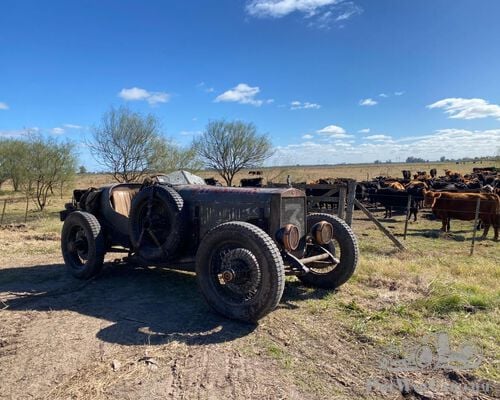
Studebaker 1927 for sale
Authentic race car of the time - Everything is working - All parts of its original mechanics - I have the history of the car - 6 cylinders - Ready ..
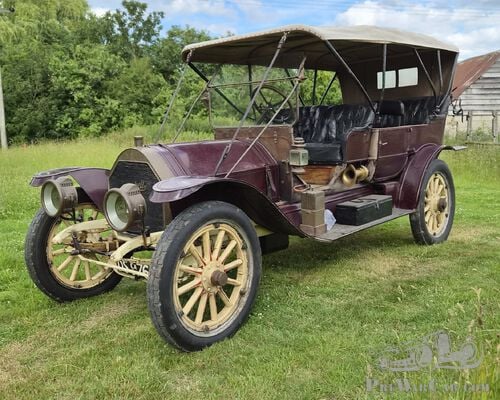
1910 Mitchell Model S - 50HP Six Cylinder
Based in Racine, Wisconsin and being the largest wagon manufacturer in the USA, Mitchell-Lewis produced their first motor car in 1903. Sales grew ..
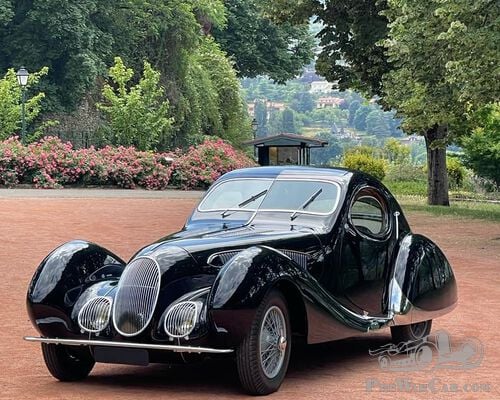
1939 Talbot-Lago T150C “Goutte d’Eau” — Iconic French Coachbuilt Masterpiece
Talbot-Lago T150C ‘Teardrop’ — An Icon of French Automotive Art There are motor cars that define an era. And then there are those tha..