The global magazine and marketplace for classic car enthusiasts, by enthusiasts.


Filter
Classic A.B.C., Albion for sale - A.B.C., Albion cars for sale
-

Walker Special midget race car 1938 flathead V8
Race sprint midget aluminium bodied ,flathead V8 17 stud 60 engine, three speed gear box and reverse (original direct drive gearbox incl. in the sale) electric fuel pumporiginal hand fuel pump still attached to the bodywork,starts on the button great fun to drive, would qualify for quite a few events. comes complete with it's own trailer,.. -
1901 Albion A1 Dogcart 8HP Twin Cylinder - VCC Dated
1901 Albion Model A1 8HP Twin Cylinder Dog CartRegistration No. BS8677Chassis No. 45E Established in 1899 in Finnieston Street Glasgow by Dr Thomas Blackwood Murray and Norman Fulton, the Albion Motor Company were once the largest provider of commercial vehicles in the British Empire. Albion were famed for their relia..


A.B.C.
US, 1906 – 1910
(1) Autobuggy Manufacturing Co, St Louis, Mo. 1906 – 1908
(2) A.B.C Motor Vehicle Manufacturing Co, St. Louis, Mo. 1908 - 1910
Originally known as the Autobuggy, this car was a typical high-wheel motor buggy whose excellent ground clearance made it popular in rural America. Powered by a 10/12hp 2-cylinder engine, it used a system of friction transmission by cone and two bevel wheels, one for forward movement, one for reverse. This gave a maximum speed of 30mph in either direction. Later models included more conventional roadsters with 2-or 4-cylinder air- or water-cooled engines. The company name was derived from the initials of the designer, A.B. Cole.
GB, 1920 – 1926
A.B.C. Motor Ltd, Hersham, Surrey
A.B.C engines for cyclecars (and also complete motorcycles) had been made before the war. The first production cars employed castings, stampings and forgings supplied by Harper Bean Ltd, and were fitted with a 24bhp air-cooled, flat-twin overhead-valve engine of 1.203cc designed by Granville Branshaw. Unfortunately this unit, built down to a cost, was noisy, hard to start, inefficiently lubricated and liable to breakages, especially of the very long, exposed push-rods. However, in conjunction with the car’s low weight, it made the A.B.C. exceptionally fast for its size, being capable of over 60mph with very good acceleration. The A.B.C. handled well, too. By 1925 the engine was quieter and more reliable, having been given more positive lubrication, and stronger valve gear and castings. One drawback remained; because the fuel tank filler was on top of the ‘radiator’, the tank was liable to be topped up with water by garage hands who did not recognize an air-cooled car. About 1500 A.B.C.’s were made. To the end, both electric starters and four wheel brakes were extra.
Source: Georgano Autoencyclopedie, GNG, TRN
The information is written with the greatest of care. However, if you have any suggested amendments please contact us at office@prewarcar.com
Albion
GB, 1900 – 1913
Albion Motor Car Co Ltd, Scotstoun, Glasgow
Still active as a truck manufacturers within the Leyland Group, Albion was founded at the end of 1899 by T. Blackwood Murray and Norman Fulton, late of Arrol-Johnston and their early products were dogcarts with varnished-wood bodywork much in the Arrol-Johnston idiom, with 2-cylinder opposed-piston underfloor engines, low tension magneto ignition, and Murray’s patent governor. Wheel steering replaced the tiller in 1902, and a year later Albion began production of a 16hp vertical-twin which was made for many years, usually with solid tyres, and often with shooting-brake bodywork. ‘Cars for country houses’, especially Scottish ones, were a speciality of the house, though rather less rustic was a side-valve 5.6-litre chain-driven four introduced in 1906. This 24hp model had a seven-year production run. The last Albion passenger car was a 15hp Monobloc four with side valves in a T-head and worm drive, which sold for £475 in 1912. At the end of 1913 Albion elected to concentrade on commercial vehicles, though large shooting brakes using the 15hp engine continues to be made.
Source: Georgano, encyclopedia of motorcar; MCS
The information is written with the greatest of care. However, if you have any suggested amendments please contact us at office@prewarcar.com


Featured
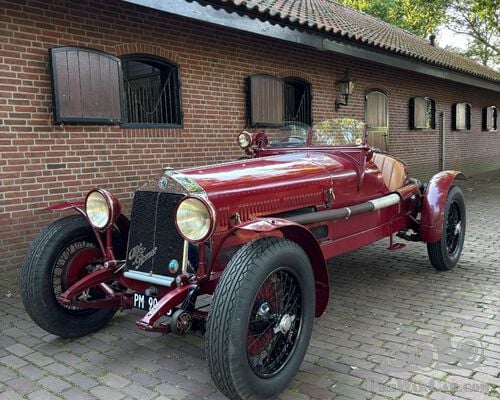
1930 Alfa Romeo 6C 1750 Spider
1930 Alfa Romeo 6C 1750 Spider with complete history from delivery to first owner in 1930 in Firenze till today with copy Libretto/license plate.
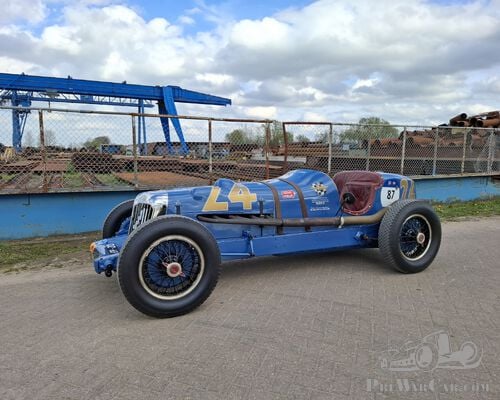
1932 - Graham " Lucenti " Indianapolis
Original participant of the 1932, 1934 and 1935 Indy 500. Best result: finishing 10th overall in the 1934 Indy 500 with driver “Herb” Ardinger...
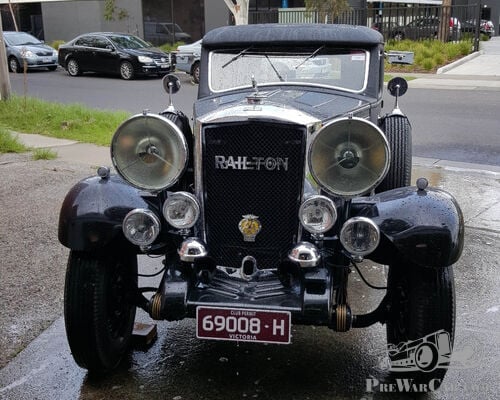
Railton straight 8 sports coupe for rallying REDUCED PRICE run with the bentleys at a fraction of the price
1934 Railton Sports CoupeBuilt for long distance rallyingRebuilt 2017built up at a cost of $160,000AUD, OFFERED FOR SALE AT A ..