The global magazine and marketplace for classic car enthusiasts, by enthusiasts.


Filter
Classic A.B.C., Orient for sale - A.B.C., Orient cars for sale
-

Walker Special midget race car 1938 flathead V8
Race sprint midget aluminium bodied ,flathead V8 17 stud 60 engine, three speed gear box and reverse (original direct drive gearbox incl. in the sale) electric fuel pumporiginal hand fuel pump still attached to the bodywork,starts on the button great fun to drive, would qualify for quite a few events. comes complete with it's own trailer,.. -
1905/6 Orient Buckboard
Build by Waltham , mass. Usa . very original and unrestored , except the engine which is restored and running .Known history back to before ww2 . Last ovner found it in 1950.Eur 25.800


A.B.C.
US, 1906 – 1910
(1) Autobuggy Manufacturing Co, St Louis, Mo. 1906 – 1908
(2) A.B.C Motor Vehicle Manufacturing Co, St. Louis, Mo. 1908 - 1910
Originally known as the Autobuggy, this car was a typical high-wheel motor buggy whose excellent ground clearance made it popular in rural America. Powered by a 10/12hp 2-cylinder engine, it used a system of friction transmission by cone and two bevel wheels, one for forward movement, one for reverse. This gave a maximum speed of 30mph in either direction. Later models included more conventional roadsters with 2-or 4-cylinder air- or water-cooled engines. The company name was derived from the initials of the designer, A.B. Cole.
GB, 1920 – 1926
A.B.C. Motor Ltd, Hersham, Surrey
A.B.C engines for cyclecars (and also complete motorcycles) had been made before the war. The first production cars employed castings, stampings and forgings supplied by Harper Bean Ltd, and were fitted with a 24bhp air-cooled, flat-twin overhead-valve engine of 1.203cc designed by Granville Branshaw. Unfortunately this unit, built down to a cost, was noisy, hard to start, inefficiently lubricated and liable to breakages, especially of the very long, exposed push-rods. However, in conjunction with the car’s low weight, it made the A.B.C. exceptionally fast for its size, being capable of over 60mph with very good acceleration. The A.B.C. handled well, too. By 1925 the engine was quieter and more reliable, having been given more positive lubrication, and stronger valve gear and castings. One drawback remained; because the fuel tank filler was on top of the ‘radiator’, the tank was liable to be topped up with water by garage hands who did not recognize an air-cooled car. About 1500 A.B.C.’s were made. To the end, both electric starters and four wheel brakes were extra.
Source: Georgano Autoencyclopedie, GNG, TRN
The information is written with the greatest of care. However, if you have any suggested amendments please contact us at office@prewarcar.com
Orient
US, 1898 – 1908
Waltham Mfg Co, Waltham, Mass.
The Orient car company made an experimental electric runabout in 1898, but did not put this Orient car into production. Their first petrol-engined Orient cars were motor cycles, tricycles and light runabouts powered by De Dion engines. In 1902 they introduced the Orient Buckboard, a very simple Orient car consisting of two seats on a wooden platform, with a 4hp air-cooled engine geared to the rear axle, and, originally, only one speed. There were no springs on this Orient car, as the wooden platform was said to have enough resilience. The weight was 350lb and the price $375.
Although the simple Buckboard was continued, more sophisticated Orient cars were gradually introduced, including a four-seater version Orient car which in turn became a side-entrance tonneau. Wheel steering and small bonnets to cover the driver’s feet appeared in 1904, although the engine of the Orient car was still at the back, and the Buckboard ancestry remained obvious.
In 1905 a completely new Orient car appeared, known as the Waltham Orient. This Orient car had a 4-cylinder air-cooled 18/20hp engine mounted in front in the conventional manner, friction transmission and shaft drive. A slightly smaller 16hp Orient car model was also made. In 1908 Waltham merged with the C.H. Metz Company, and for the following year the cars were known as Metz.
Source: Georgano, encyclopedia of motorcar; GNG
The information is written with the greatest of care. However, if you have any suggested amendments please contact us at office@prewarcar.com


Featured
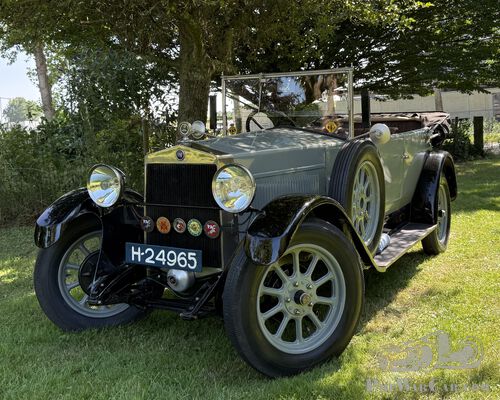
Fiat 509 Torpedo / Spider – Exceptionally Original and Complete
A Rare and Highly Original Example with Long-Term Dutch HistoryOffered for sale is an exceptionally original and remarkably complete Fiat 50..
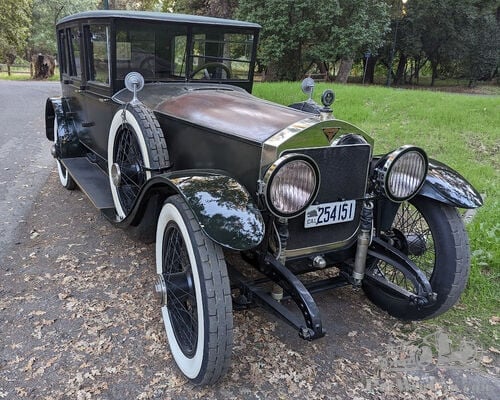
1916 Simplex, Crane model 5
1916 Simplex, Crane MODEL 5CUSTOM MADE HISTORIC PRESERVATION VEHICLE – READY TO TOUR!This Simplex recently completed th..
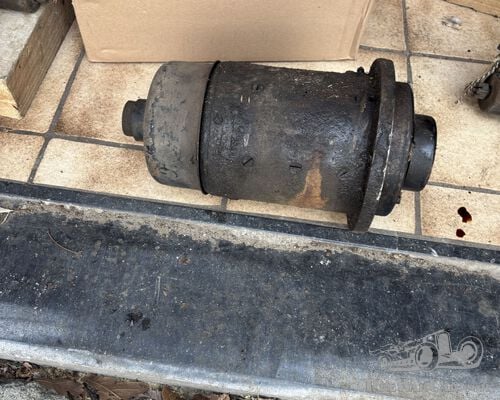
1929 Talbot K74 Limousine – Very comprehensive restoration project
For sale – 1929 Talbot K74 Limousine – Very comprehensive restoration projectAsking price: €19,950 A very rare 1929 Talbot K74..