The global magazine and marketplace for classic car enthusiasts, by enthusiasts.


Filter
Classic A.B.C., Rauch & Lang for sale - A.B.C., Rauch & Lang cars for sale
-

1918 Rauch & Lang Model B26 Brougham | RM Sotheby's | The Hershey Auction
To Be OFFERED AT AUCTION at RM Sothebys' The Hershey Auction event, 7 - 8 October 2026. $150,000 - $175,000 USD One of the finest surviving examples of the Rauch & Lang electric carBeautiful show-quality, AACA First Junior-winning restorationKnown history, with only three long-term caretakers since the 1950s -
Unknown tricycle from around 1900
Unknown tricycle , built around 1900 , one of the oldest vehicles in Germany in unrestored condition .For sale .Who can provide information about the builder ???


A.B.C.
US, 1906 – 1910
(1) Autobuggy Manufacturing Co, St Louis, Mo. 1906 – 1908
(2) A.B.C Motor Vehicle Manufacturing Co, St. Louis, Mo. 1908 - 1910
Originally known as the Autobuggy, this car was a typical high-wheel motor buggy whose excellent ground clearance made it popular in rural America. Powered by a 10/12hp 2-cylinder engine, it used a system of friction transmission by cone and two bevel wheels, one for forward movement, one for reverse. This gave a maximum speed of 30mph in either direction. Later models included more conventional roadsters with 2-or 4-cylinder air- or water-cooled engines. The company name was derived from the initials of the designer, A.B. Cole.
GB, 1920 – 1926
A.B.C. Motor Ltd, Hersham, Surrey
A.B.C engines for cyclecars (and also complete motorcycles) had been made before the war. The first production cars employed castings, stampings and forgings supplied by Harper Bean Ltd, and were fitted with a 24bhp air-cooled, flat-twin overhead-valve engine of 1.203cc designed by Granville Branshaw. Unfortunately this unit, built down to a cost, was noisy, hard to start, inefficiently lubricated and liable to breakages, especially of the very long, exposed push-rods. However, in conjunction with the car’s low weight, it made the A.B.C. exceptionally fast for its size, being capable of over 60mph with very good acceleration. The A.B.C. handled well, too. By 1925 the engine was quieter and more reliable, having been given more positive lubrication, and stronger valve gear and castings. One drawback remained; because the fuel tank filler was on top of the ‘radiator’, the tank was liable to be topped up with water by garage hands who did not recognize an air-cooled car. About 1500 A.B.C.’s were made. To the end, both electric starters and four wheel brakes were extra.
Source: Georgano Autoencyclopedie, GNG, TRN
The information is written with the greatest of care. However, if you have any suggested amendments please contact us at office@prewarcar.com
Rauch & Lang
US, 1905 – 1928
(1) Rauch & Lang Carriage Co, Cleveland, Ohio, 1905 – 1916
(2) Baker, Rauch & Lang Co, Cleveland, Ohio, 1916 – 1922
(3) Rauch & Lang Electric Car Manufacturing Co, Chicopee Falls, Mass., 1922 – 1928
Rauch & Lang were an old-established carriage building firm (founded 1853) when they began to make electric Rauch & Lang cars in 1905. These Rauch & Lang cars followed the usual pattern for such electric vehicles, being mainly closed town cars, although a few open phaeton Rauch & Lang cars were also made. The biggest Rauch & Lang cars were heavier vehicles and included a six-seater limousine with separate outside seat for the chauffeur. Some Rauch & Lang cars had 4-doors, a very unusual feature in electric cars. In 1916 the Rauch & Lang cars became part of the Baker, Rauch & Lane group and production declined. From 1919 onwards the Rauch & Lang cars were sometimes listed as Raulangs, and from 1922 this became the official name of the Rauch & Lang cars.
By this time production of Rauch & Lang cars had been transferred to the Stevens-Duryea factory at Chicopee Falls where the number of private cars made was very small. The factory, which was still turning out a few Stevens-Duryeas, also made petrol and electric taxi-cabs under the name Rauch & Lang cars, and bodies for Stanley Steamers.
Source: Georgano, encyclopedia of motorcar; GNG
The information is written with the greatest of care. However, if you have any suggested amendments please contact us at office@prewarcar.com


Featured
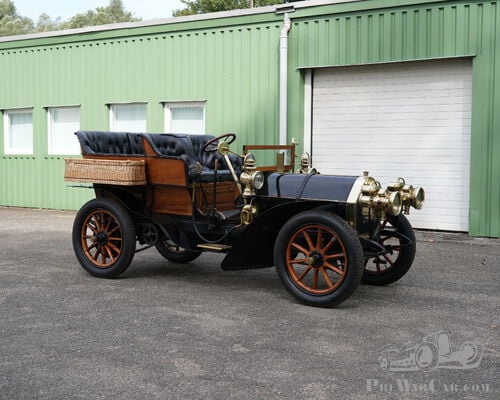
1904 Aster 16/20 HP Four-Cylinder Five-Seat Rear-Entrance Tonneau
Powerful four-cylinder engineFour-speed gearboxChain driveFive seatsMore than €100,000 recently invested
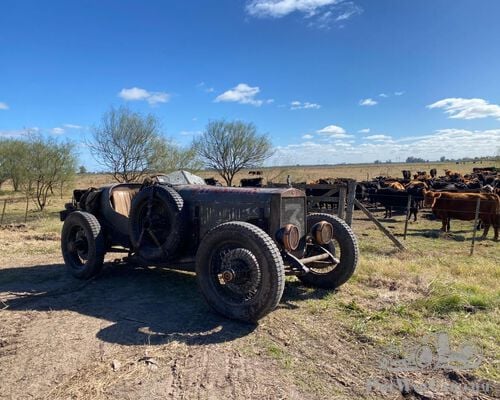
Studebaker 1927 for sale
Authentic race car of the time - Everything is working - All parts of its original mechanics - I have the history of the car - 6 cylinders - Ready ..
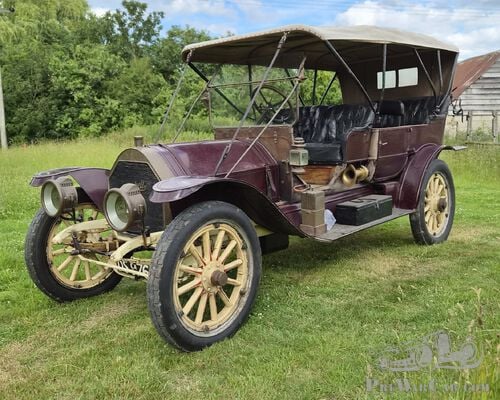
1910 Mitchell Model S - 50HP Six Cylinder
Based in Racine, Wisconsin and being the largest wagon manufacturer in the USA, Mitchell-Lewis produced their first motor car in 1903. Sales grew ..