The global magazine and marketplace for classic car enthusiasts, by enthusiasts.


Filter
Classic Rolland-Pilain, A.C. for sale - Rolland-Pilain, A.C. cars for sale
-

Rolland Pilain
I am selling a 1913 Rolland Pilain RP 10HP in very good condition. It has a standard registration document in my name, and the MOT will be carried out prior to the sale. -
AC 16 / 66 - 1935 / 6 Cylinder / British Racing Green
AC (Acédès) 16/66 Drophead Coupe, year 1935.Chassis number L34X, engine number UBS.29X.Original British registration: DPC918. Colour: dark British Racing Green combined with a beige leather interior and light brown carpet trimmed with beige borders.The car is fitted with a black vinyl hood and a light brown mohair t.. -
Rod Briggs AC6 Special
The 1935 Rod Briggs AC6 Special is an interesting example of a "special"—a vintage competition car built around original pre-war mechanical components but extensively developed over many decades. It is both a working competition machine and a rolling test-bed for the engineering work of Rod Briggs, an acknowledged specialist in pre-1963 AC six-c..


Rolland-Pilain
France, 1906 – 1931
SA des Etablissements Rolland-Pilain, Tours
Unusual among French marques of its period, Rolland Pilain cars made their greatest impact after World War 1. Their first product was a 20hp 4-cylinder model Rolland Pilain cars with a monobloc engine, though smaller 2.2-litre shaft-driven Rolland Pilain cars were available in 1909 and a 3-speed 1½-litre Rolland Pilain 8/10CV in 1910, in which year the Rolland Pilain car company was also experimenting with ‘valveless’ engines and 4-wheel brakes. Though racing was in the doldrums, the Rolland Pilain car company went to the trouble of building a big chain-driven Rolland Pilain car for the 1911 Grand Prix de France, and a complex 1912 range started with a Rolland Pilain 9CV of 1.7-litres and went up to a chain-driven 4-cylinder 60 Rolland Pilain car of 130x270mm. The 6-cylinder Rolland Pilain 18CV had a ‘valveless’ engine, and even in 1913 chain drive was still optional on the biggest fours of 20CV and 24CV Rolland Pilain cars. Only 1.9-litre and 4-litre 4-cylinder Rolland Pilain cars with sv monobloc engines and unit gearboxes were listed in 1914.
These basic types of Rolland Pilain cars, still with pedal-operated transmission brakes, were available again after World War 1, but far more advanced was the 2.2-litre Rolland Pilain 14/16 of 1921, which boasted not only overhead valves and a detachable head, but also front-wheel brakes (hydraulic at the front and mechanical at the rear). This Rolland Pilain car was still catalogued in 1926. Even more ambitious was the 2-litre twin ohc straight-8 GP Rolland Pilain car of 1922, with desmodromic valves, ball-bearing crankshafts and 4-wheel hydraulic brakes. A victory of a Rolland Pilain car at San Sebastian in 1923 was the limit of the success of Rolland Pilain cars on the circuits, but the type found its way into the catalogue as the Type A22 Rolland Pilain car at 90.000fr, and one of the racers also ran with a 2-litre, 6-cylinder cuff-valve Schmid engine. In 1925 came a 2-litre ohv 4-cylinder Rolland Pilain car with 4-wheel mechanical brakes, selling for £725 in England, while a 1½-litre development, the Rolland Pilain D26, was introduced for 1927. In 1929 Rolland-Pilain car, along with several other French firms, tried a Franco-American theme by introducing a range of big luxury chassis with sv Continental engines. Both the 6-cylinder, 3-litre, and the 4-litre straight-8 Rolland Pilain cars had centralized chassis lubrication, though the elegant bodywork of the Rolland Pilain car was marred by the use of artillery wheels. At the 1930 Paris Salon the Rolland Pilain car company shared a stand with the BNC (also going through a Franco-American phase), but this was the end, though the Rolland Pilain car firm’s Paris depot was still advertising spare parts for Bignan as well as Rolland Pilain cars in 1934.
Source: Georgano, encyclopedia of motorcar; MCS
The information is written with the greatest of care. However, if you have any suggested amendments please contact us at office@prewarcar.com
A.C.
GB, 1908 to date
(1) Autocars and Accessories Ltd, West Norwood, London S.E. 1908-1911
(2) Autocarriers (1911) Ltd, Thames Ditton, Surrey 1911-1922
(3) A.C. Cars Ltd, Thames Ditton, Surrey 1922 to date
This make succeeded the Weller and was a John Weller design developed from a commercial 3-wheeler, the AutoCarrier (hence the initials) with a single-cylinder rear-mounted moiv engine, 2-speed epicyclic gear and tiller steering. These side-by-side two-seater A.C. Sociables were made up to World War 1 and sold for less than £100, but in 1913 the company brought out a 10hp 4-cylinder light car with a 3-speed gearbox in the rear axle; the engine was a 1.100cc Fivet. A modernized version with electrics and a disc transmission brake appeared with the 1½-litre side valve Anzani engine in 1919, the giving way to A.C.’s own power unit in 1925 – the fours were dropped at the end of 1928. Also at the 1919 London show was Weller’s famous 1.991cc single ohc wet-liner six, an advanced power unit for its day. It did not get into production unitl 1922, but it remained in the catalogue until 1963, by which time output had gone up from around 35bhp to 103bhp. Under the aegis of S.F. Edge, the company’s director from 1921 to 1929, A.C.’s were raced, through their main interest was long-distance record work. A 4-cylinder car took 57 records at Brooklands Track in 1921; J.A. Joyce’s 16-valve ohc 1500cc single-seater covered 100 miles in the hour from a standing start in 1922; and Gillet broke the World’s 24-hour Record at Monthlhéry in 1925 on a 2-litre six. The 6-cylinder car of the Hon. Victore Bruce and W.J. Brunell became the first British entry to win the Monte Carlo Rally in 1926. In 1925 4-cylinder cars sold from £300, the cheapest six being £90 dearer, 4-wheel brakes were an optional extra, being standard on the 2-litre by 1927. All these cars retained the rear-axle gearbox, though the disc transmission brake did not last long.
Financial difficulties supervened in 1929, and virtually no cars were made for a couple of seasons, though the 1930 Magna series boasted hydraulic brakes. Th Hurlock brothers bought the company in 1930, and the 2-litre emerges in 1933 as a sporting machine with mechanical brakes and a conventionally-mounted 4-speed gearbox, in 56bhp and 66bhp versions. These cars were made on a bespoke basis, prices starting at around £435. Pre-selector boxes were available from 1934 and standard 1935 versions had synchromesh, while cars sold in 1936 had engines of 60 and 70bhp with an 80bhp sports engine available in a special short-chassis two-seater model. A 90bhp super-charged engine was listed in 1939.
A.C. resumed car production in 1947 with a saloon in the modern idiom. This had a 74bhp engine, and hydro-mechanical (full hydraulic from 1950) brakes, but retained its semi-elliptical springing up to the end of production in 1957. Some 3-wheeled monocars for invalids were made with 250cc B.S.A. motor cycle engines, and in 1953 came the Petite, a 3-wheeler roll-top convertible with rear-mounted 350cc Villiers power unit; despite a price of under £400, this never really became popular and was dropped in 1958. 1954 saw the advent of the Ace sports two-seater, a tubular-framed machine with all-independent suspension designed by John Tojeiro. With an 85bhp A.C. engine it could top the 199mph mark, and was later made also with 2-litre and 2.2-litre Bristol and 2.6-litre Dagenham Ford engines. Front disc brakes were standardized in 1960. In 1963 this car was developed into the Cobra (inspired by the American Carroll Shelby) with disc brakes all round and a 4.7-litre oversquare American Ford V8 engine developing 330bhp.
A Cobra finished 4th at Le Mans in 1964, but between 1965 and 1968 Shelby American Inc were responsible for the marketing of the 7-litre type, all Cobra production being abandoned in the latter year. From 1966, however, A.C. offered a luxury convertible or hardtop with Frua bodywork and a 7-litre Ford V8 engine, available with a 4-speed manual or an automatic gearbox. This 428 series was continued into 1973 at a price of £7.010. A.C. also made a special single-seater 3-wheeler for invalids with single-gear automatic transmission, wheel or handlebar steering, and fiberglass coupé body, powered by a 500cc 4-stroke twin engine.
Source: Georgano, encyclopedia of motorcars. MCS
The information is written with the greatest of care. However, if you have any suggested amendments please contact us at office@prewarcar.com


Featured
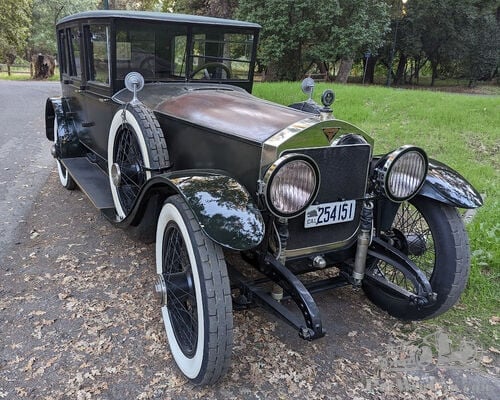
1916 Simplex, Crane model 5
1916 Simplex, Crane MODEL 5CUSTOM MADE HISTORIC PRESERVATION VEHICLE – READY TO TOUR!This Simplex recently completed th..
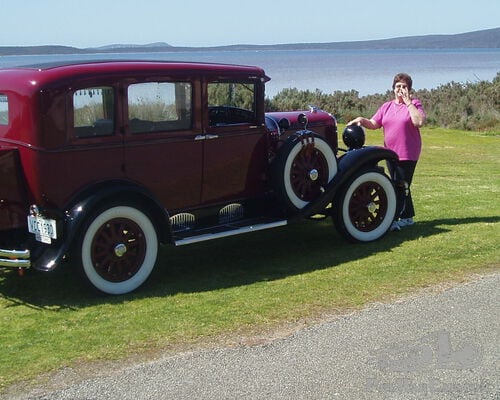
1930 Chrysler 66 Six-Wheel Equipped Royal Sedan
An exceptionally well restored and highly awarded Chrysler 66 Royal Sedan, with only two owners in nearly 97 years.The present owner ..
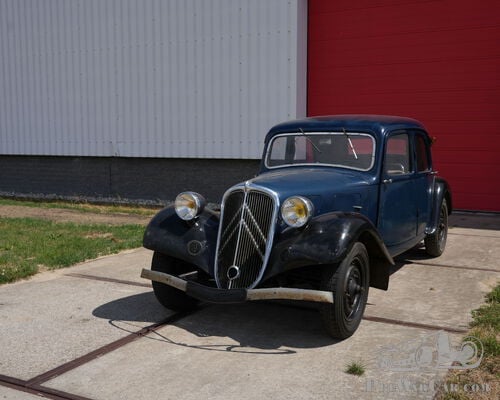
1935 Citroën Traction Avant
Early-production Traction AvantExceptionally original, unrestored conditionRecently part of a major museum collection