The global magazine and marketplace for classic car enthusiasts, by enthusiasts.


Filter
Classic Ahrens Fox, Rauch & Lang for sale - Ahrens Fox, Rauch & Lang cars for sale
-

1918 Rauch & Lang Model B26 Brougham | RM Sotheby's | The Hershey Auction
To Be OFFERED AT AUCTION at RM Sothebys' The Hershey Auction event, 7 - 8 October 2026. $150,000 - $175,000 USD One of the finest surviving examples of the Rauch & Lang electric carBeautiful show-quality, AACA First Junior-winning restorationKnown history, with only three long-term caretakers since the 1950s -
1930 Ahrens-Fox Model M-X-2 Pump and Hose Car | RM Sotheby's | The Hershey Auction
To Be OFFERED AT AUCTION WITHOUT RESERVE at RM Sothebys' The Hershey Auction event, 7 - 8 October 2026. Offered Without Reserve | $100,000 - $140,000 USD Originally delivered to the Detroit Fire DepartmentRestored by noted fire truck expert Andy Swift’s Firefly RestorationsImpressively equipped and presentedA t..


Ahrens Fox
US, 1910 – 1977
The Ahrens-Fox Fire Engine Company, Ohio
This was a Fire truck manufacturer, founded in 1910 by John P Ahrens and Charles H Fox and built its first motorized fire engine in 1911. By the end of the following year production of horse-drawn fire apparatus ceased completely. Since then, over 1500 pieces of fire apparatus were built until 1977. Ahrens-Fox fire engines were recognizable by the chromed sphere above the pump that held air and smoothed the outgoing pressure fluctuations from the piston pump.
During the year 1913 only, Ahrens-Fox built a 44 hp (following then-actual rating practice) automobile. Like at rival American LaFrance, the idea was to sell these cars to bigger fire brigades as a car of duty for their chiefs. Also like at ALF, it was not successful for Ahrens-Fox either, although for Ahrens-Fox the results were more consequential; there was only one model, a huge six-cylinder called the E-C Battalion Roadster. It was guaranteed to go faster than 50 mph, and featured a four speed gearbox. A small pickup bed was added for some items that were thought to be useful for the head of a fire brigade, and was included in the base price. Only six of these roadster-pickups were built during 1913; it seems all stayed in Cincinnati. Ahrens-Fox abandoned the idea and never returned to it.
Source: Wikipedia
The information is written with the greatest of care. However, if you have any suggested amendments please contact us at office@prewarcar.com
Rauch & Lang
US, 1905 – 1928
(1) Rauch & Lang Carriage Co, Cleveland, Ohio, 1905 – 1916
(2) Baker, Rauch & Lang Co, Cleveland, Ohio, 1916 – 1922
(3) Rauch & Lang Electric Car Manufacturing Co, Chicopee Falls, Mass., 1922 – 1928
Rauch & Lang were an old-established carriage building firm (founded 1853) when they began to make electric Rauch & Lang cars in 1905. These Rauch & Lang cars followed the usual pattern for such electric vehicles, being mainly closed town cars, although a few open phaeton Rauch & Lang cars were also made. The biggest Rauch & Lang cars were heavier vehicles and included a six-seater limousine with separate outside seat for the chauffeur. Some Rauch & Lang cars had 4-doors, a very unusual feature in electric cars. In 1916 the Rauch & Lang cars became part of the Baker, Rauch & Lane group and production declined. From 1919 onwards the Rauch & Lang cars were sometimes listed as Raulangs, and from 1922 this became the official name of the Rauch & Lang cars.
By this time production of Rauch & Lang cars had been transferred to the Stevens-Duryea factory at Chicopee Falls where the number of private cars made was very small. The factory, which was still turning out a few Stevens-Duryeas, also made petrol and electric taxi-cabs under the name Rauch & Lang cars, and bodies for Stanley Steamers.
Source: Georgano, encyclopedia of motorcar; GNG
The information is written with the greatest of care. However, if you have any suggested amendments please contact us at office@prewarcar.com


Featured
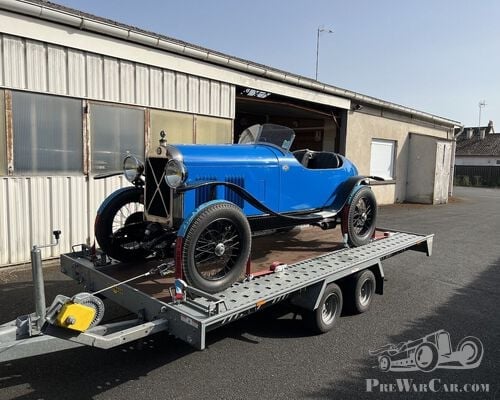
Salmson VAL 3 Séries 7
1927 Salmson VAL3 Series 7. Completely restored a few years ago, in very good overall condition, both bodywork and mechanics. Bordino-style bodywor..
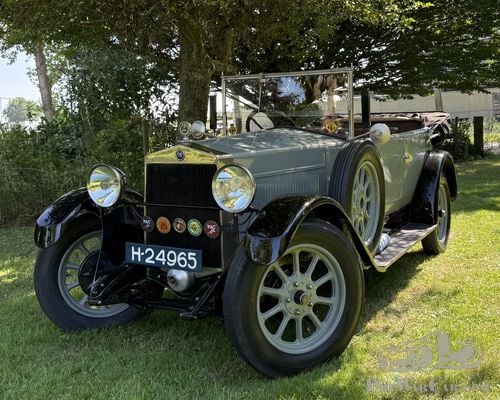
Fiat 509 Torpedo / Spider – Exceptionally Original and Complete
A Rare and Highly Original Example with Long-Term Dutch HistoryOffered for sale is an exceptionally original and remarkably complete Fiat 50..
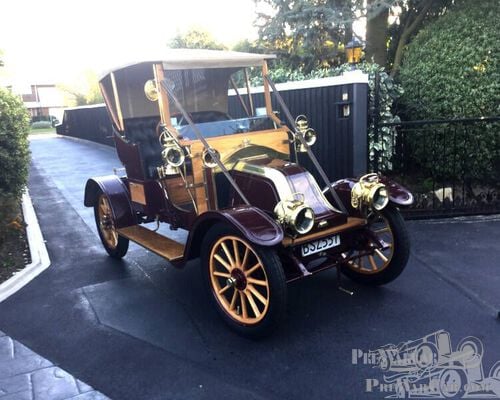
Renault /AX 1913 - named
Purchased fully renovated from New Zealand and imported to the UK. We have owned her for over10 years. Gigi is currently living in France where she..