The global magazine and marketplace for classic car enthusiasts, by enthusiasts.


Filter
Classic Albion, Du Pont for sale - Albion, Du Pont cars for sale
-

1901 Albion A1 Dogcart 8HP Twin Cylinder - VCC Dated
1901 Albion Model A1 8HP Twin Cylinder Dog CartRegistration No. BS8677Chassis No. 45E Established in 1899 in Finnieston Street Glasgow by Dr Thomas Blackwood Murray and Norman Fulton, the Albion Motor Company were once the largest provider of commercial vehicles in the British Empire. Albion were famed for their relia.. -
1929 Du Pont Model G Two-Passenger Speedster by Merrimac | RM Sotheby's | The Monterey Auction
To Be OFFERED AT AUCTION at RM Sothebys' The Monterey Auction event, 13 - 15 August 2026. $800,000 - $1,200,000 USD One of the most beautiful American automobiles of its generationOne of three two-passenger “taper tail” models with an external spareOne of two of these with a rumble seat; the only example with a folding ..


Albion
GB, 1900 – 1913
Albion Motor Car Co Ltd, Scotstoun, Glasgow
Still active as a truck manufacturers within the Leyland Group, Albion was founded at the end of 1899 by T. Blackwood Murray and Norman Fulton, late of Arrol-Johnston and their early products were dogcarts with varnished-wood bodywork much in the Arrol-Johnston idiom, with 2-cylinder opposed-piston underfloor engines, low tension magneto ignition, and Murray’s patent governor. Wheel steering replaced the tiller in 1902, and a year later Albion began production of a 16hp vertical-twin which was made for many years, usually with solid tyres, and often with shooting-brake bodywork. ‘Cars for country houses’, especially Scottish ones, were a speciality of the house, though rather less rustic was a side-valve 5.6-litre chain-driven four introduced in 1906. This 24hp model had a seven-year production run. The last Albion passenger car was a 15hp Monobloc four with side valves in a T-head and worm drive, which sold for £475 in 1912. At the end of 1913 Albion elected to concentrade on commercial vehicles, though large shooting brakes using the 15hp engine continues to be made.
Source: Georgano, encyclopedia of motorcar; MCS
The information is written with the greatest of care. However, if you have any suggested amendments please contact us at office@prewarcar.com
Du Pont
US, 1920 – 1932
(1) Du Pont Motors Inc, Wilmington, Del., 1920 – 1923
(2) Du Pont Motors Inc, Moore, Pa., 1923 – 1932
E. Paul du Pont’s company built quality cars in limited numbers, total production being 537 vehicles of all Du Pont types. First of the line was a Du Pont 4.1-litre sv four with their own engine, selling for $2.600, but this gave way to proprietary-engined sixes, initially powered by Herschell-Spillman. The 1925 Du Pont Model D had a 6-cylinder 5-litre Wisconsin engine with overhead valves that developed 75bhp, a constant-mesh gearbox, and Lockheed hydraulic brakes to all four wheels. Its successor, the Du Pont Model E, could be had with a supercharger, but the best-known, and best, Du Pont was the Du Pont Model G speedster introduced in 1928. With its narrow straight wings copied from the Amilcar, Woodlite headlamps and grille concealing the radiator, the last a pioneering feature, the Du Pont Model G was not a good-looking car, but it was a very effective one. Like all the DuPont speedsters it had four forward speeds. The 5.3-litre, sv straight-8 engine, by Continental, gave 114bhp at 3600rpm with catalogued modifications. With the latter, 100mph was guaranteed. In the 1929 Le Mans 24 Hours race the Du Pont Model G proved itself faster than the other American entries, Stutz and Chrysler. Touring bodywork was, of course, available on the Du Pont car, and in 1931 came the long wheelbase (12ft 2 in) Du Pont Model H, built in a Stearns Knight frame. The later Du Pont cars were assembled in the Indian motorcycle factory at Springfield, after E. Paul du Pont had acquired this concern.
Source: Georgano, encyclopedia of motorcar; TRN
The information is written with the greatest of care. However, if you have any suggested amendments please contact us at office@prewarcar.com


Featured
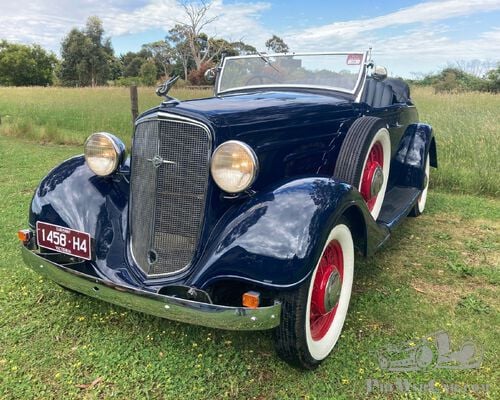
1934 Chevrolet Standard Roadster
1934 Chevrolet Standard Roadster This vehicle was delivered to Australia from Chevrolet and the body was manufactured by Holden Body Works w..
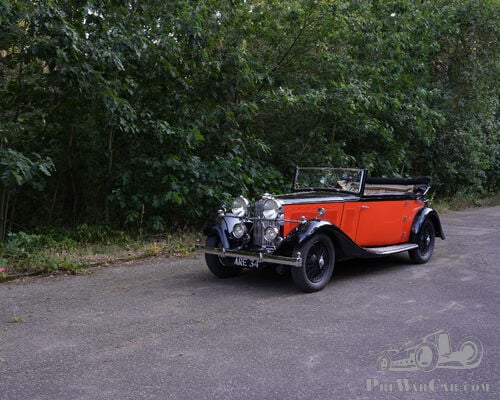
1934 Talbot AV105 Three Position Drophead Coupé
Registration no. ARE 34Chassis no. 35488 Much supporting paperworkRestored exampleVery usa..
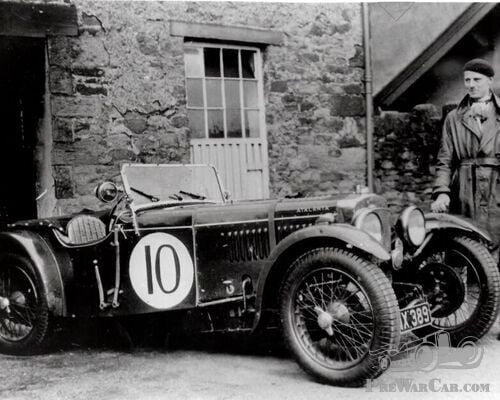
Fraser Nash TT Replica
AHX 389 ( chassis no. 2073, engine no. 10367).An important and correct short-chassis TT Replica with known history from new. Ex. H. P..