The global magazine and marketplace for classic car enthusiasts, by enthusiasts.


Filter
Classic Albion, Flint for sale - Albion, Flint cars for sale
-

Flint 1925/26 touring-car
Was on the road 8 month ago , but now it stands not running. It need total restoration . Top is very bad.It has Danish registration document . Lots of documentations goes with car.There are some extra parts with the car : trunk , extra rim , cyl.head , trunk-rag , and more. -
1901 Albion A1 Dogcart 8HP Twin Cylinder - VCC Dated
1901 Albion Model A1 8HP Twin Cylinder Dog CartRegistration No. BS8677Chassis No. 45E Established in 1899 in Finnieston Street Glasgow by Dr Thomas Blackwood Murray and Norman Fulton, the Albion Motor Company were once the largest provider of commercial vehicles in the British Empire. Albion were famed for their relia..


Albion
GB, 1900 – 1913
Albion Motor Car Co Ltd, Scotstoun, Glasgow
Still active as a truck manufacturers within the Leyland Group, Albion was founded at the end of 1899 by T. Blackwood Murray and Norman Fulton, late of Arrol-Johnston and their early products were dogcarts with varnished-wood bodywork much in the Arrol-Johnston idiom, with 2-cylinder opposed-piston underfloor engines, low tension magneto ignition, and Murray’s patent governor. Wheel steering replaced the tiller in 1902, and a year later Albion began production of a 16hp vertical-twin which was made for many years, usually with solid tyres, and often with shooting-brake bodywork. ‘Cars for country houses’, especially Scottish ones, were a speciality of the house, though rather less rustic was a side-valve 5.6-litre chain-driven four introduced in 1906. This 24hp model had a seven-year production run. The last Albion passenger car was a 15hp Monobloc four with side valves in a T-head and worm drive, which sold for £475 in 1912. At the end of 1913 Albion elected to concentrade on commercial vehicles, though large shooting brakes using the 15hp engine continues to be made.
Source: Georgano, encyclopedia of motorcar; MCS
The information is written with the greatest of care. However, if you have any suggested amendments please contact us at office@prewarcar.com
Flint
US, 1902 – 1904
Flint Automobile Co, Flint, Mich.
The Flint was a light two-seater runabout with a rear-mounted single-cylinder engine and no mudguards. The Flint was designed by A.B.C. Hardy who was later general manager of Marquette and then Chevrolet. Flint is sometimes erroneously called the Hardy after the designer.
US, 1923 – 1927
Flint Division, Locomobile Co of America, Long Island City, N.Y., 1923 – 1924, Elizabeth, N.J., 1924 – 1927, Flint, Mich., 1924 – 1926
Fitted with a 7-bearing crankshaft and a steel tube for added reinforcement, the Flint occupied an important niche in William C. Durant’s car empire. With its 6-cylinder Continental engine and a price of less than $2.000 for the closed models, Flint was popular in its class and as many as 3.000 Flint cars were sold in a year. Lockheed hydraulic 4-wheel brakes came with the 1925 Flint model, and during the company’s last two years there were two big sixes of 3.8-litres and 4½-litres, as well as the 2.8-litre ‘Flint Junior’. A compact six Flint with rear wheel brakes only.
Source: Georgano, encyclopedia of motorcar; GNG, KM
The information is written with the greatest of care. However, if you have any suggested amendments please contact us at office@prewarcar.com


Featured
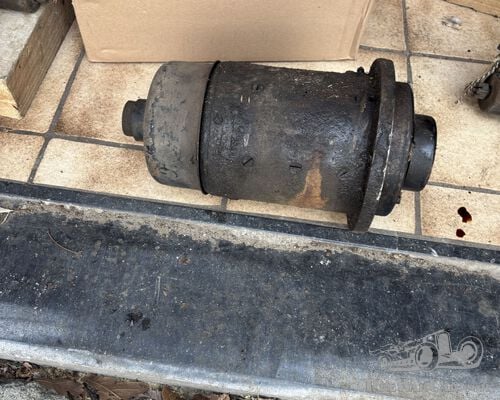
1929 Talbot K74 Limousine – Very comprehensive restoration project
For sale – 1929 Talbot K74 Limousine – Very comprehensive restoration projectAsking price: €19,950 A very rare 1929 Talbot K74..
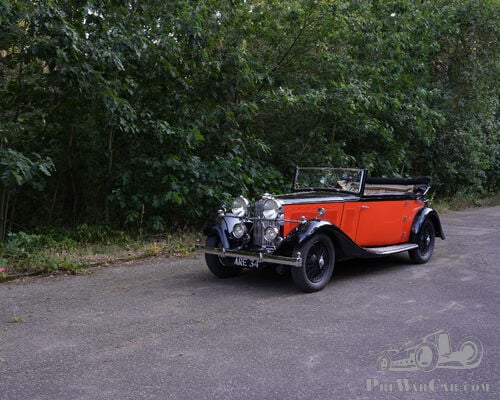
1934 Talbot AV105 Three Position Drophead Coupé
Registration no. ARE 34Chassis no. 35488 Much supporting paperworkRestored exampleVery usa..
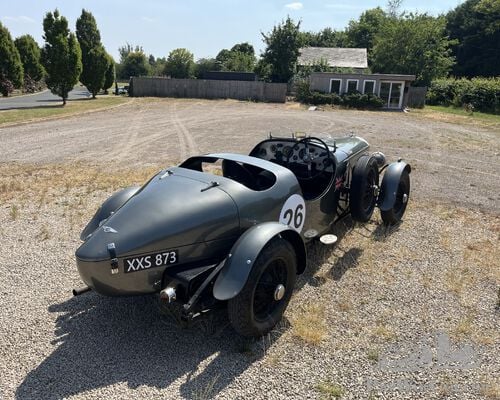
Derby Bentley Special 4-1/4
Sadly i am having to sell on my Bentley special ( Icarus) A great opportunity to be able to buy a Derby special to finish with your own touch..