The global magazine and marketplace for classic car enthusiasts, by enthusiasts.


Filter
Classic Albion, Premier for sale - Albion, Premier cars for sale
-

1907 Premier Model 24
Right out of our Titanic Museum display, representing the cars from that era. We chose this car because of it's quality and beauty, it is the type of car that is a pleasure to look at. This 1907 Premier Model 24 Runabout is a prime example from this rarely seen marque that continues to benefit from an older, high-quality concours-level restorati.. -
1901 Albion A1 Dogcart 8HP Twin Cylinder - VCC Dated
1901 Albion Model A1 8HP Twin Cylinder Dog CartRegistration No. BS8677Chassis No. 45E Established in 1899 in Finnieston Street Glasgow by Dr Thomas Blackwood Murray and Norman Fulton, the Albion Motor Company were once the largest provider of commercial vehicles in the British Empire. Albion were famed for their relia..


Albion
GB, 1900 – 1913
Albion Motor Car Co Ltd, Scotstoun, Glasgow
Still active as a truck manufacturers within the Leyland Group, Albion was founded at the end of 1899 by T. Blackwood Murray and Norman Fulton, late of Arrol-Johnston and their early products were dogcarts with varnished-wood bodywork much in the Arrol-Johnston idiom, with 2-cylinder opposed-piston underfloor engines, low tension magneto ignition, and Murray’s patent governor. Wheel steering replaced the tiller in 1902, and a year later Albion began production of a 16hp vertical-twin which was made for many years, usually with solid tyres, and often with shooting-brake bodywork. ‘Cars for country houses’, especially Scottish ones, were a speciality of the house, though rather less rustic was a side-valve 5.6-litre chain-driven four introduced in 1906. This 24hp model had a seven-year production run. The last Albion passenger car was a 15hp Monobloc four with side valves in a T-head and worm drive, which sold for £475 in 1912. At the end of 1913 Albion elected to concentrade on commercial vehicles, though large shooting brakes using the 15hp engine continues to be made.
Source: Georgano, encyclopedia of motorcar; MCS
The information is written with the greatest of care. However, if you have any suggested amendments please contact us at office@prewarcar.com
Premier
US, 1903 – 1925
(1) Premier Motor Mfg Co, Indianapolis, Ind.
(2) Premier Motor Corp, Indianapolis, Ind.
The Premier car started life as a conventional machine made on modern lines, with a pressed-steel frame, mechanically-operated inlet valves, and shaft drive. A four-cylinder air-cooled Premier car was made in 1905. The designer of the Premier car was G.A. Weidely, who made his name with proprietary engines. A line of conventional water-cooled big fours and six-cylinder Premier cars followed, starting with a 24/28hp Premier car in 1907. From 1913, sixes alone were built, the ‘Premier 48’ at $3.250 having a capacity of over 8 litres. The special racing Premier cars of 1916 had a twin ohc, 4-cylinder, 16-valve engine reminiscent of the Peugeot. The touring Premier car of 1919 – 1920 was notable mainly for its use of the Cutler-Hammer Magnetic Gear Shift, an electric transmission system controlled by a lever mounted on the steering wheel. The ohv 4.8-litre engine of the Premier car was an unusually advanced six, with aluminium block, crankcase and pistons, and iron liners.
GB, 1906 – 1907; 1912 – 1913
Premier Motor Co Ltd, Birmingham
The Premier car company were concessionaires for the Italian Marchand car, and the 1906 4-cylinder Premier car was, in fact, a Marchand. Towards the end of 1906 Premier cars launced a short-lived two-seater of their own design powered by a 10/12hp Aster engine, but no further Premier cars appeared until the cyclecar boom of 1912. This brought two distinct designs of Premier cars: the PMC Motorette 3-wheeler with a rear-mounted 6hp single-cylinder engine driving the rear wheel by chains; and the more conventional Premier car, a 4-wheeler using an 8hp 2-cylinder engine, and chain drive.
D, 1913 – 1914
Justus Christian Braun Premier – Werke AG, Nuremberg
After producing the Kaiser cars this firm offered a new model in 1913 under the name of Premier. This Premier car was a two-seater sports car with a 1.030cc 4/12PS engine. This Premier car was also built in the company’s Austrian factory at Eger and was marketed as the Omega.
Source: Georgano, encyclopedia of motorcar; TRN, GNG, HON
The information is written with the greatest of care. However, if you have any suggested amendments please contact us at office@prewarcar.com


Featured
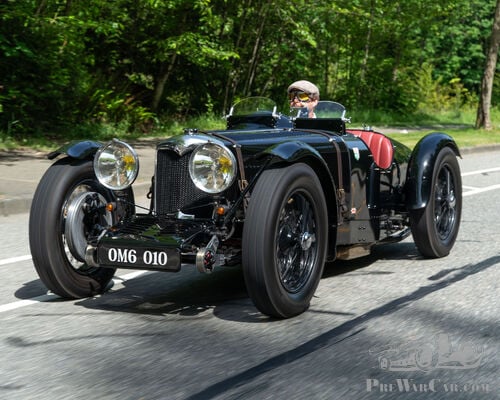
Riley 14/6 Special 1933
The ExperienceStep into the golden age of British motoring. This 1933 Riley 14/6 Special is a masterclass in pre-w..
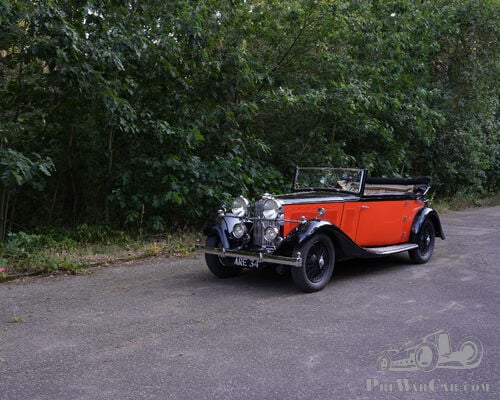
1934 Talbot AV105 Three Position Drophead Coupé
Registration no. ARE 34Chassis no. 35488 Much supporting paperworkRestored exampleVery usa..
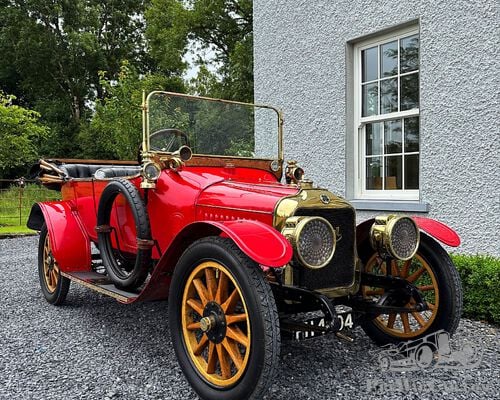
1914 Brasier
1914 Brasier Tourer 9ABrasier were a French manufacturer who were in business from 1901 until 1930, when the company became victim of the gr..