The global magazine and marketplace for classic car enthusiasts, by enthusiasts.


Filter
Classic Alfa Romeo, Hotchkiss for sale - Alfa Romeo, Hotchkiss cars for sale
-

1932 Alfa Romeo 8c Monza Tool Room Reconstruction.
Alfa Romeo 8c Monza Tool Room Reconstruction. Chassis Number: PS24110 Regsitration Number: Upon request for qualified buyers. PLEASE WATCH THE YOU TUBE VIDEO OF JAY LENO DRIVING IT This Alfa Romeo was first ordered & purchased by noted collector.. -
1930 Alfa Romeo 1750GT Bidée Spider
1930 Alfa Romeo 1750GT Bidée Spider Chassis Number: 8613270 Registration Number: 1OAU761 (Belgium). Built & exported to Belgium in 1930. In 1934 this Alfa suffered an accident & was then rebodied by Belgian coachbuilder Bidée into the stunniing little spider we find toda.. -
1937 Alfa Romeo 2300B Pescara
This ultra rare 1937 6C2300B Pescara was imported into the UK in 1961 from Tripoli, and bought by its previous owner in auction in 1973a rare matching numbers Pescara model with its original old log book and V5 registration.The original suspension components are stamped with PE (for Pescara) following by the correct part numbers. -
1923 Alfa Romeo RL Sport
1923 Alfa Romeo RL SportVIN 7087, Engine 7087This car will be on the PreWarCar.com stand at Salon Retromobile 2026 - Pavillion 7.3, stand B011 Most probably the oldest Alfa Romeo RL in existence, Villa d ' Este entrant in 2024Period racing historyChassis shortened in period (192.. -
1931 Alfa Romeo 8C 2300 Zagato Spider
1931 Alfa Romeo 8C 2300 Spider, Chassis 2111006 Ex-Works Alfa Corse and Scuderia FerrariTazio Nuvolari’s Coppa Ciano race-winning car1932 & 1934 Mille Miglia, and 1932 Targa Florio entrant6,500-hour, £805k Jim Stokes restoration to 1932 Mille Miglia specificationRetains original engine and peri.. -
1929 Alfa Romeo Zagato style 6C 1750 SS
This Alfa Romeo 6C 1750 ran in the 2001 Mille Miglia. It is currently going through the FIVA certification. Price has just been reduced to $750,000.00 US from $800, 000. 00 Can help with shipping. Car needs nothing to run smoothly in vintage events having been recently serviced. Will consider trade/ cash with interesting postwar car like.. -
1930 Alfa Romeo 6C 1750 Turismo
Technical Specification Mark & Model: Alfa Romeo 6C 1750 TurismoYear: 1930Registration plate: Guernsey registeredChassis Number: 0412325Engine Number: 0412352Engine Capacity: 1752 ccTransmissions: 4-speed manualBody style: 2-door tourerInterior color: RedExt.. -
1931 Alfa Romeo 6C 1750 James Young DHC Turismo
This attractive 1931 Alfa Romeo 6C, chassis no. 0412364, has remarkably been in current ownership since 1958, an impressive 67 years! It is in superb running order with a full engine rebuild (including the fitting of new conrods) being completed by ourselves over the past two years. This is a matching numbers car, still carrying its original and.. -
1933 Alfa Romeo 8c Monza
1933 Alfa Romeo 8c Monza Chassis Number: TBARegistration Number: TBA An original matching numbers Alfa 8c Monza with a newer Monza style body on the original chassis shortened some years ago by noted expert Paul Grist. A well known & nicely patinated car that absolutely looks the part & goes equally wel.. -
1939 Alfa Romeo 6C2500
This is a rare pre-war 6C2500 project, one of the first 6C2500 models to be built before Italy was at war.The rolling chassis is complete and partially reconditioned. The engine is the original matching number to the chassis, having had a full reconditioning recently.The car is fitted with a one off Pininfarina cabriolet body orig..


Alfa Romeo
Italy, 1910 to date
(1) A.L.F.A. (Anonima Lombardo Fabbrica Automobili), Milan, 1910 – 1914
(2) SA Italiana Ing. Nicola Romeo & C, Milan, 1914 – 1930
(3) SA Alfa Romeo, Milan, 1930 – 1942
(4) Alfa Romeo SpA, Milan, 1942 to date
(5) Alfa Romeo SpA, Pomigliano d’Arco, Naples, 1971 to date
A.L.F.A. (Anonima Lombardo Fabbrica Automobili) was founded in 1909 by Cav. Ugo Stella, formerly managing director of the Società Italiana Automobili Darracq, to manufacture a completely new range of Italian cars at Portello on the outskirts of Milan where, since 1906, small French Darracq cars had been assembled.
By 1910 the last Darracq had left the factory, and production commenced of a sturdy range of Alfa cars designed from scratch by Cav. Giuseppe Merosi, a native of Piacenza, who had been Chief Technician with Bianchi in Milan.
The first Alfas were a 24hp 4.1-litre car, later known as the 20/30hp, and a 12hp, 2.4-litre, which became the 15/20hp. Both were well made, with side-valve 4-cylinder monobloc engines and shaft drive. In 1913 the sports 6.1-litre 40/60hp appeared with push-rod overhead valves operated by two camshafts in the crankcase. A one-off 4½-litre Grand Prix car was built in 1914 with a 4-cylinder twin ohc engine, but it never ran in international races.
In 1915 the factory was taken over by the industrialist Nicola Romeo, and after World War 1 the pre-war models were marketed as Alfa Romeos. The 20/30 ES Sport of 1921-22 was successful in Italian races, as was a special racing 40/60 driven by Campari, which scored the firm’s first victory at Mugello in 1920. A 6-cylinder luxury side-valve car called the G1 was not a success, but Merosi’s best remembered designs followed it; the 3-litre 6-cylinder push-rod ohv touring, sports and racing RL series cars which first appeared in 1921 and went into production in 1922. A racing version won the 1923 Targa Florio. The similar 4-cylinder 2-litre type RM was marketed in 1923-26, but the pointed radiator sports 22/90hp RLSS and the touring 21/70hp RLT, which had a flat radiator, were sold until 1927.
In 1924 Alfa Romeo won the very first Grande Epreuve they ever entered, an unparalleled achievement, when Campari was victorious in the 1924 French Grand Prix at Lyons in the new straight-eight supercharged P2 car, designed by Vittorio Jano, who came from Fiat. In 1925 Alfa Romeo were declared World Champions.
Jano took over from Merosi in 1926 and his first touring and sports car designs soon became world famous, these having single and twin overhead camshaft 6-cylinder engines, first in 1.500cc and then in 1.750cc form. When supercharged, these cars won all the great sports car races in the period 1928-1930, with the exception of Le Mans.
The latter omission was rectified from 1931 to 1934 when victory at Le Mans each year went to Jano’s next sports car design, which had a 2.3-litre straight-eight supercharged engine with a central drive to the overhead camshafts. This engine also powered the successful Grand Prix Alfa Romeo of 1931, known as the Alfa Romeo‘Monza’ model and raced for the factory by Scuderia Ferrari. In 1932 this engine, in 2.65-litre form, powered the Alfa Romeo Type B P3 Monoposte G.P. car, which proved virtually unbeatable and bore affinities with the Alfa Romeo Type A racing car of 1931 powered by two 1.750cc engines side by side. In 1933 Alfa Romeo came under State ownership and the Alfa Romeo Monopostos were withdrawn from racing until right at the end of the season. Ferrari continued F.O. racing with Alfa Romeo Monzas enlarged to 2.6 litres.
The Alfa Romeo Monopostos in 2.9-litre form were not powerful enough against the Mercedes and Auto Unions, although Chiron won the 1934 French G.P. for Alfa Romeo, whilst Nuvolari quite unexpectedly won the 1935 German G.P. in an Alfa Romeo 3.8-litre Monoposto fitted with Dubonnet independent front suspension. From 1936 to 1939 Alfa Romeo fielded independently sprung straight-eight, V-12, and V-16 cars in G.P. racing, but against the German cars only isolated victories in smaller races were attained, usually through the skill of Nuvolari. In 1935 Ferrari built two big bi-motore racing cars, with one Alfa Romeo P3 engine under the bonnet and another in the tail.
Some 2.9 P3 engines were put into all-independently sprung chassis in 1937-1939 to make expensive but exceedingly fast prestige sports cars. In sportscar racing Alfa Romeos won every Mille Miglia from 1928 to 1938 inclusive, except in 1931.
In 1934 Jano’s unsupercharged 6-cylinder twin ohc 2.3-litre car replaced the 1750 and 8C 2300, and, developed by Bruno Treviso, it later became the 2500 of 1939 and the early post-war years. It was recplaced in 1950 by the 4-cylinder 1900. This marked an important change in Alfa Romeo policy. Previously the touring Alfas had been expensive and semi-bespoke machines, whereas the 1900 and its successors were unitary construction saloons whose production has risen to about 30.000 units per annum at the present time. In 1954 was introduced the famous 1300ccc Giuletta, designed by Orazio Satta. From it were derived the successful 1600 Giulia and the 6-cylinder 2600, introduces in 1962. For 1968 the 1600s were replaced by the 1750 series, actually 1.779cc, available as a saloon(Berlina), coupé (1750 GT Veloce) or open sports (1750 Spider Veloce).
The remarkable Colombo-designed supercharged 1½-litre 8-cylinder Monoposto known as the Alfa Romeo ‘158’ was introduces in 1938 for voiturette racing. After the war it was eligible for the Grand Prix formula, and by remaining unbeaten in Grandes Epreuves in 1946-1948 and 1950 until mid-1951, it set up a record unequalled by any other G.P. design. In 1946 Alfa Romeo took the first three places in the G.P. des Nations at Geneva, and repeated this finishing order in 1947 in the Italian G.P., the G.P. d’Europe at Spa and the Swiss G.P.. The most successful drivers during these years were Jean-Pierre Wimille, Achille Varzi and Count Felice Trossi, but the deaths of all three took place before the 1949 season and Alfa Romeo withdrew from racing as they had done in 1933. The Alfa Romeo 158s returned to the tracks in 1950 with Giuseppe Farina and Juan Manuel Fangio as their star drivers, and after victories in every race the cars ran in, Farina was declared World Champion. In 1951 Fangio was World Champion on the 400bhp Alfa Romeo Type 159, though the cars had to concede their first defeat, by and unblown 4½-litre Ferrari.
At the end of the season Alfa Romeo withdrew from G.P. racing, and although the works Disco Volante sports racing 2½- and 3-litre cars of 1952-1953 were generally unlucky in racing, the Alfa Romeo Giulias have had G.T. successes in recent years.
Competition activities were resumed in 1967 with the Alfa Romeo T33, a rear-engined 2-litre 4ohc V8 with hemispherical combustion chambers, fuel injection, alternator ignition, and a 6-speed all-synchromesh gearbox. Until 1969 a tubular trellis frame was used, replaced for 1970 by an orthodox platform, and the disc brakes were mounted inboard. This Alfa Romeo T33 was catalogued at 9.750.000 lire but was primarily used by the Autodelta racing team; later cars had 2½-litre and 3-litre engines. In 1971 Alfa Romeos won the BOAC 1.000 Kilometers, the Targa Florio and the Watkins Glen 6 hours, but in 1972 they were powerless against the all-conquering Ferraris. In the touring-car range, the six disappeared in 1969, and in 1970 the fuel-injected dry-sump 2.6-litre V8 engine was applied to a conventional front-engined coupé, the Alfa Romeo Montreal.
Other new 1972 models were the Alfa Romeo 2000, an updated 1750, and the 1.750cc Alfa Romeo Alfetta saloon with 122bhp engine, a 5-speed De Dion transaxle, double wishbone independent front suspension, and inboard disc brakes. It was the angular rear-end treatment of Alfa Romeo’s new economy saloon. The Alfasud, made in the Naples factory opened during 1971. This car had a 1.186cc flat-4 engine with cogged-belt drive for its twin overhead camshafts, hypoid bevel drive to the front wheel, all-disc brakes, and four forward speeds.
Source: Georgano, encyclopedia of motorcar; PMAH
The information is written with the greatest of care. However, if you have any suggested amendments please contact us at office@prewarcar.com
Hotchkiss
France, 1903 – 1955
(1) Hotchkiss et Cie, St. Denis, Seine, 1903 – 1936
(2) Automobiles Hotchkiss, St. Denis, Seine, 1936 – 1955
The American Benjamin Berkeley Hotchkiss set up his ordnance Horchkiss car factory at St. Denis in 1867; the Hotchkiss cars were the result of an arm slump. The work of Terrasse, these first Hotchkiss cars were T-headed fours with pair-cast cylinders, 5-ball-bearing crankshafts, low-tension magneto ignition, round honeycomb radiators, 4-speed gearboxes, and the famous Hotchkiss drive by live axle and open propeller shaft. Initially cylinder capacities of Hotchkiss cars were 4.6-litres and 7.4-litres, but the Hotchkiss car company’s first racers of 1904 were 17.8-litre monsters notable for their aiv and chain drive. Though their 1905 successors conformed once more to touring-car practice, they were even bigger Hotchkiss cars, with 18.815cc and an alleged 130bhp. Hotchkiss’s last racing season was 1906 with their Grand Prix Hotchkiss cars had 16.3-litre L-head units and quick-detachable wire wheels. Though these Hotchkiss cars were unsuccessful, Hotchkiss sold 167 cars that year, with gate change standardized, and a choice of five Hotchkiss car models: a short-lived 4.2-litre petrol brougham, fours of 18, 30 and 42hp, and their first six. The last-mentioned Hotckiss car was the large V-type that evolved into a 9½-litre machine and was still being offered in 1912 as a Hotckiss car. Chassis price was £1.000 and it was capable of 60mph.
The slump following the Agadir crisis led to the abandonment of ball-bearing crankshafts on Hotchkiss cars; at the same time there was a move towards smaller Hotchkiss cars with the 3.1-litre T-type, with side valves in an L-head and high-tension magneto ignition. Two years later came something even smaller and more modern, the 12/16hp Hotchkiss X-type with 2-bearing crankshaft and three forward speeds at £390. Soon monobloc engines spread up the range to the 3.7-litre Hotckiss AB of 1912. From 1911 there were some smaller L-head sixes, the 4.678cc Hotchkiss X6 and the 5½-litre Hotchkiss AC6; 1912 sales were a record 598 Hotchkiss cars. Electric lighting was available from 1913, and all the 1914 Hotchkiss car models – the 2.6-litre Hotchkiss AG, the 4-litre Hotchkiss AF, the 5.7-litre Hotchkiss AC, and the 6-cylinder Hotchkiss AC6 – had semi-elliptic suspension all round.
The wartime demand for Hotchkiss machine guns led to the establishment of a branch factory under the Englishman Harry Ainsworth, this subsequently making engines for W.R. Morris until it was absorbed by him in 1923. At home Hotchkiss sold off their surplus works capacity at Lyons and concentrated on a revised Hotchkiss car again, the AF with full electrics and a horseshoe-shaped radiator in place of the traditional round one. Its successor, the Hotchkiss AH of 1921, had cantilever rear springs and torque tube drive, and a year later came the Hotchkiss AL with ohv, and a detachable head; front-wheel brakes were added for 1923. There was also a prototype luxury Hotchkiss car at the 1921 Paris Salon; this Hotchkiss AK had a 6.6-litre 6-cylinder ohc engine, dual ignition, 4-speed unit gearbox, servo-assisted 4-wheel brakes, and a cruciform-braced frame, but it never went into production.
The return of Ainsworth to St. Denis in 1923, coincided with the construction of a new Hotchkiss car factory and a more realistic type of car, the 2.4-litre 12CV Hotchkiss AM, with 4-cylinder sv engine, 4-speed unit box, four-wheel brakes, wire hwwls, and Hotchkiss drive once more. Between 1924 and 1928 it was the Hotchkiss car company’s staple product, selling at the rate of over a thousand a year and offering a 70mph performance at a modest outlay. It persisted until 1932, acquiring ohv in 1926 and rod-operated brakes in 1928, and its engine was used in some Morris-Léon Bollées. Even better was the Hotchkiss AM80 of 1929, largely the work of Bertarione. This was a short-stroke (80x100mm), 7-bearing ohv 3-litre six that owed a good deal to the AM2, though early cars featured torque tube drive; it was to be the basis from which all subsequent Hotchkisses were evolved. A silent 3rd gearbox featured on 1931 Hotchkiss car models, Hotchkiss drive reappeared in 1932, and 1933 improvements included Bendix brakes, cruciform-braked frames, down-draught carburetors and mechanical fuel pumps. Hotchkiss AM80 engines were also fitted to Sizaire Frères and Tracta cars.
The 1933 Hotchkiss car range was expanded both up and down, with new Hotchkiss 12CV (2-litre) and 13CV (1.3-litre) fours for the economy market, and an 85mph fast tourer, the 100bhp 3½-litre Hotckiss AM80S, for the enthusiast. This Hotchkiss car was based on the car with which Vasselle won the 1932 Monte Carlo Rally. Hotchkiss cars repeated this success in 1933 and 1934: in the latter year the Hotchkiss cars collected two Glazier Cups in the Alpine Trial. There were further wins in the Monte Carlo in 1938 and 1939; on the latter occasion a Grand Sport Hotchkiss car tied with a 3½-litre Delahaye. Radiators were moved forward on the 1934 Hotchkiss cars, and the 3-litre gave way to a 2.650cc 15CV that was not a success and lasted only one season. The 1935 Hotchkiss cars had synchromesh and integral boots, and at the top of the 3½-litre 20CV range was the twin-carburettor Hotckiss Paris-Nice, a 115bhp sports car capable of 95mph. Hydraulic brakes appeared in 1936 on Hotchkiss cars (to be quietly dropped halfway through 1937). The sports 20CV engine was now giving 125-130bhp and when allied to a short 9ft 2in wheelbase resulted in the Hotchkiss Grand Sport, a true 100mph saloon.
By 1938 the horseshoe radiator on the Hotchkiss car was now a wire-mesh grille, but despite the exigencies of French rearmament programmes the Hotchkiss car company managed to deliver 2.751 Hotchkiss cars that year, made up of the two fours, the reinstated 3-litre Hotchkiss 680, and the 3½-litre Hotchkiss 686 in various forms, including seven-seater limousines with the single-carburettor 100bhp engine. Hotchkiss also came to the rescue of the ailing Amilcar concern, helping to make the Grégoire-inspired 1.185cc Compound, a small fwd saloon with unitary construction in Alpax; this was sold in England, though not in France, as a Hotchkiss car. A 1.3-litre ohv development, the Hotchkiss B67, was ready for production when France collapsed in the summer of 1940.
Hotchkiss never really recovered from World War 2, though Peugeot were briefly interested in the Hotchkiss car company and Hotchkiss 686 cars won the first two post-war Monte Carlo Rallies of 1949 and 1950. The Hotchkiss 12CV and Hotchkiss 20CV were back in production, unchanged, by 1946, but the first year’s output was a miserable 117 Hotchkiss cars. Hydraulic brakes and independent front suspension did not appear until 1949 on Hotchkiss cars (though Hotchkiss had experimented with the latter in 1937), and a Cotal electric gearbox became a factory option. The 1951 Hotchkiss car models were ‘facelifted’ with V-screens, recessed headlamps and auxiliary coil rear suspension, but in the meantime there had been an expensive mistake: the acquisition by Hotchkiss of the rights to the Grégoire flat-4. This ingenious device was a development of the 1938 Amilcar theme featuring all-round independent suspension and a 4-speed overdrive gearbox, as well as front wheel drive. Production Hotchkiss car models with 2.2-litre engines were said to achieve 95mph and 30mpg, but the teething troubles were endless, and Hotchkiss only managed to make 250 Hotchkiss cars in the end. There was a shutdown in 1952 and the price of recovery was a merger with Delahaye that led inevitably to concentration on commercial vehicles. The old Hotchkiss cars 13CV and 20CV received another facelift in time for the 1954 Paris Salon, but his was their swansong, though medium-powered trucks continued to be made until 1970, along with a version of the American Jeep built under licence.
GB, 1920
Hotchkiss et Cie, Coventry, Warwickshire
Hotchkiss of Coventry, a British offshoot of the famous French Hotchkiss car firm, was set up during World War 1 to make engines in Britain. Their units became best known as the motive power for Morris and BSA light cars, but before they were taken over by William Morris, Hotchkiss experimented with a small car of their own. The Hotchkiss car consisted of their 1.080cc air-cooled V-twin ohv engine installed with a 3-speed gearbox in a pre-war Morris Oxford chassis. It never went into production.
Source: Georgano, encyclopedia of motorcar; MCS, TRN
The information is written with the greatest of care. However, if you have any suggested amendments please contact us at office@prewarcar.com


Featured
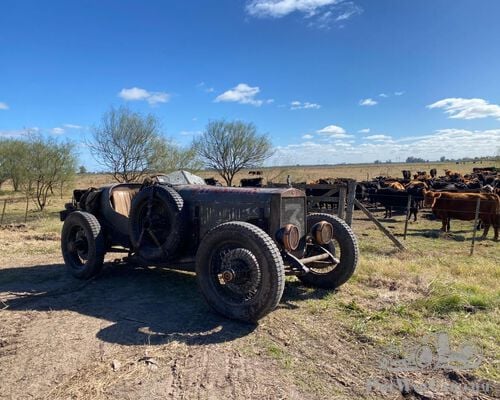
Studebaker 1927 for sale
Authentic race car of the time - Everything is working - All parts of its original mechanics - I have the history of the car - 6 cylinders - Ready ..
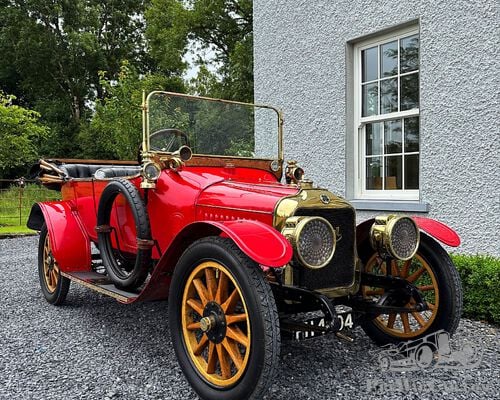
1914 Brasier
1914 Brasier Tourer 9ABrasier were a French manufacturer who were in business from 1901 until 1930, when the company became victim of the gr..
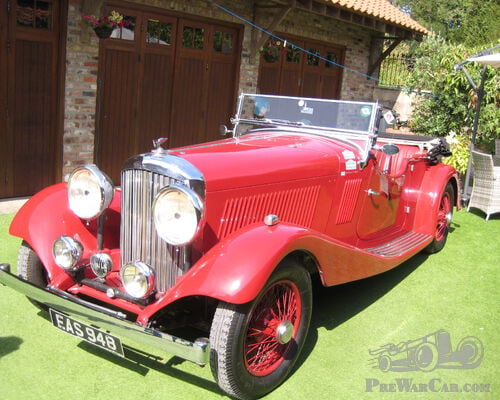
1935 Bentley 3.5 ltr. VDP 4str. Tourer
Chassis B 123 CW was first registered 14th March 1935, and in the late eighties underwent a " body-off" restoration and fitted with VANDEN PLAS