The global magazine and marketplace for classic car enthusiasts, by enthusiasts.


Filter
Classic Alldays for sale - Alldays cars for sale
-

American La France - Speedster
Ehemalige Feuerwehr wurde 2017 in den USA gekauft und 2018 nach Deutschland überführt und anschließend selbst zum zwei-sitzigen Speedster umgebaut. Sämtliche rote Farbe wurde abgebürstet, die Stahlteile mit Klarlack lackiert. Die Antriebszahnräder wurden durch größere ersetzt, so dass eine Reise-Geschwindigkeit von ca. .100 km/h möglich ist. Am .. -
1935 Ford Pickup
Offered for sale is 1935 Ford Pickup in very good preserved condition. Imported from Spain, bodywork is in lovely condition, only little corrosion. Car needs to be technically commissioned. With the car comes several documents, including an original Spanish title. -
1929 Rolls-Royce 20/25 Estate Car
Extremely unusual well-proportioned estate coachwork from Burbage & SonsThoroughly well sorted benefitting from significant work from ourselvesCharming and practical vehicle accompanied by an interesting early history Coming off test on Christmas Eve 1929, GDP 43 was delivered to coachbuilder Th.. -
1924 Rolls Royce 20hp Doctors Coupe
1924 Rolls Royce 20hp Doctors Coupe Registration No: DS9474 Chassis No: GRK6 According to its accompanying copy build sheets, ‘GRK6’ was dispatched as a rolling chassis to Rolls-Royce of America Inc (Springfield, Massachusetts) in July 1924. Originally intended to carry Br.. -
1938 BMW 328 Roadster 1938 for sale
1938 BMW 328 Roadster Chassis number 85316 Registration number: TBA €790,000.00 Part of a small collection of rare BMW cars: This 328 was found as a wreck in the late 1960's with the then Czechslovakian title documents going back to 4th November 1970 when it was registered in Bratislava. The registration lists a succe.. -
'Halford Special' 1923 Aston Martin
One of the most advanced race cars of the mid-1920s, the Halford Special was built by engine designer Major Frank Halford using Aston Martin chassis, number ‘1916’. In its original configuration, this chassis was the first Aston Martin built for sale and competed at Brooklands in 1923 but crashed in a Voiturette race in Boulogne the following ye.. -
Marmon Type 70 Sedan 1930 for sale
Marmon-Roosevelt straight eight sedan. Model 97, Type 70. The body was built by Hayes Corp. Roosevelt is the companion make to Marmon, nevertheless the Marmon label is featured on the car. The car makes a striking impression with it's six wire wheels and handsome headlights. It runs and drives but it requires work. The restoration is older and .. -
5 ROVERS in the BICYCLE COLLECTORS ONLINE AUCTION
5 ROVER BICYCLES in the BICYCLE COLLECTORS ONLINE AUCTIONhttps://auction.onlinebicyclemuseum.co.uk -
1921 Ansaldo type 4C rolling chassis
1921 Ansaldo type 4C rolling chassis. Complete engine and gearbox no 17634 and chassis no 1763. All components are in excellent condition including the 5 original wirespoked wheels and three of the beaded edge tyres. Good radiator. Suitable project to build a Special from. OHC engine. € 18500 negotiable. .. -
Chenard & Walcker Model G
The Chenard & Walcker is a 1905 Model G, equipped with a 5-liter, four-cylinder engine producing 20 horsepower, enabling the car to reach a top speed of approximately 85 km/h | 50 mp/h. The body is a Double Phaeton and was crafted by the renowned coachbuilder Jean-Henri Labouredette. In addition to the radiator b..


Alldays
GB, 1898 – 1918
Alldays and Onion Pneumatic Engineering Co Ltd, Birmingham
The firm’s first car was the Traveller, a wheel-steered quadricycle made in private and commercial forms. The rear end was unsprung, and power was provided by a 4hp De Dion single-cylinder engine. A shaft-driven light car, also single-cylindered, followed in 1903, but the company really made its name with the 1.6-litre vertical-twin side valve 10/12 which lasted from 1905 to 1913. This car was popular with commercial travelers and also did well in formula events at the hill-climbs of the period. A 16hp 4-cylinder car joined the range in 1906, and in 1908 the Enfield Autocar Co was acquired.
Thereafter the range was rationalized; most models were sold under both brand-names, the Alldays contribution being the well-established twin and fours of 14hp and 20hp, all shaft-driven. A 30/35hp six was listed from 1911 to 1914, compressed-air starters were optional in 1911, and in 1913 came the 990cc V twin Midget cyclecar with air cooling and shaft drive, at £138 10s. An 1.100cc 4-cylinder version with bullnose radiator appeared in 1914 and was popular at £175. Pair-cast side valve fours rated at 12/14, 16/20 and 25/30hp completed the immediate pre-war range. A further phase of rationalization after World War I resulted in the Enfield-Allday cars.
Source: Georgano, encyclopedia of motorcar; MCS
The information is written with the greatest of care. However, if you have any suggested amendments please contact us at office@prewarcar.com


Featured
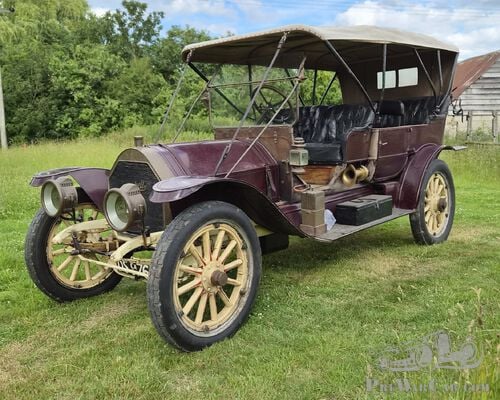
1910 Mitchell Model S - 50HP Six Cylinder
Based in Racine, Wisconsin and being the largest wagon manufacturer in the USA, Mitchell-Lewis produced their first motor car in 1903. Sales grew ..
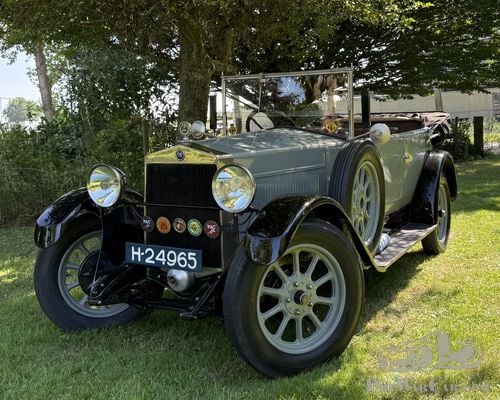
Fiat 509 Torpedo / Spider – Exceptionally Original and Complete
A Rare and Highly Original Example with Long-Term Dutch HistoryOffered for sale is an exceptionally original and remarkably complete Fiat 50..
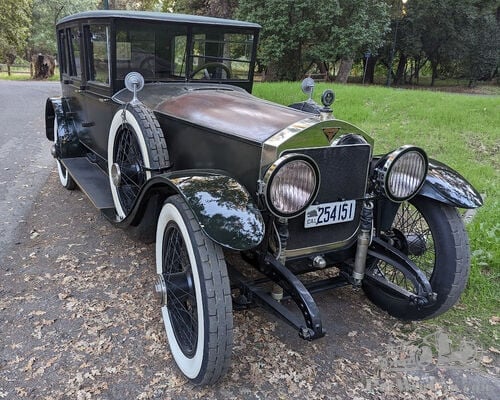
1916 Simplex, Crane model 5
1916 Simplex, Crane MODEL 5CUSTOM MADE HISTORIC PRESERVATION VEHICLE – READY TO TOUR!This Simplex recently completed th..