The global magazine and marketplace for classic car enthusiasts, by enthusiasts.


Filter
Classic Alta for sale - Alta cars for sale
-

Chenard & Walcker Model G
The Chenard & Walcker is a 1905 Model G, equipped with a 5-liter, four-cylinder engine producing 20 horsepower, enabling the car to reach a top speed of approximately 85 km/h | 50 mp/h. The body is a Double Phaeton and was crafted by the renowned coachbuilder Jean-Henri Labouredette. In addition to the radiator b.. -
1939 Rolls Royce Wraith James Young Razor Edge Saloon
1939 Rolls Royce Wraith James Young Razor Edge Saloon Chassis Number: WEC72 Registration Number: 39D25 (Ireland) £200k spent upon the restoration of this car to make it in effect a brand new Rolls Royce Wraith being delivered 86 years late!!! Simply.. -
1936 Bentley Derby 4.25 Sedanca by Thrupp & Maberly
1936 Bentley Derby 4.25 Sedanca by Thrupp & Maberly Chassis number: B-36-GA Registration Number: CXE213 A stunningly beautiful car which wows onlookers wherever it is seen, this 4.25 Litre Derby Bentley Sedanca Coupe has fabulous and possibly unique aluminium Sedanca coachwork by Thrupp and Maberly... -
Cadillac V16 - Series 452 - 1930 - Imperial Sedan 4330
Offers invited a round € 200.000 - This ONE of 4 Survivors of Serie 4330 body style - book C.W. Cummings - 2014) ***excellent driving car, the V16 gives you a special experience, no other car has***https://www.prewarcar.com/a-stately-cadillac-v16-in-the-netherlandsBuilt; no 9 of 50 - Engine no. 700163Lengt.. -
1925 Lancia Lambda 5th Series Torpedo
With a monocoque body, four-wheel brakes, independent front suspension and V4 overhead camshaft engine, many enthusiasts view the Lancia Lambda as one of the great and innovative automobiles of all time. The Lambda was also successful in competition with privately entered cars finishing fourth and fifth behind the works OMs in the first Mille Mi.. -
1930 Bentley Speed Six
1930 Bentley Speed Six Chassis Number: SB2774 Engine Number: SB2772 Reistration Number: GH8974 New to market & freshly restored to perfection. This car has over the past two years been fully rebuilt & built up as a LeMans style tourer by noted Rolls Royce &.. -
Renault NN Torpedo Commerciale (1926)
Highlights Complete, coherent, unmodified exampleExcellent base for a full restorationAttractive 1920s torpedo body styleVery accessible entry priceIdeal for workshops or enthusiasts looking for a rewarding project Restoration project – Complete car – Solid base but major work r.. -
Société des Automobiles Pilain
The 1911 Pilain is the Type 4.0, equipped with a four-cylinder engine and a single Zenith carburetor. This car has undergone a comprehensive restoration over the past few years. Since the original body was too deteriorated to restore, it was decided to install an alternative body. The current elegant body is sourced from a Bianchi, which perfect.. -
Lane Model 15 | Steam car
This unique steam car is a completely original 1909 Lane Model 15, offering a highly distinctive design that sets it apart from most other steam vehicles. It is the only surviving Lane Model 15 in existence. Experts consider the Lane to be one of the finest steam cars of the early automotive era, produced between 1900 and 1910. Lan.. -
1934 Railton -Hudson Original Alpine Trials Racer
By 1933, Railton built a variety of the larger versions which were powered by Hudson. The Hudson engine and chassis were built in the US and exported to England for Railton. This 1934 Railton is one of the two original Alpine Trials cars sponsored by Railton and driven by Habmit Davids. Both cars not only completed the trials but also..


Alta
GB, 1931 – 1954
Alta Car and Engineering Co, Kingston-upon-Thames, Surrey
Geoffrey Taylor commenced building cars in his fathers stables in 1928, choosing the name as a contraction of Alberta, a place which he liked the sound of. Most ambitiously, laboriously and ingeniously, he fabricated his own engine, with aluminium block, and shaft-driven twin camshafts over a hemispherical head. An A.B.C. frame was used, and production frames were obtained from Rubery Owen. Leaf suspension was by Jonas Woodhead. 85mph could be achieved, or 110mph with a Roots-type ‘blower’ and attendant fits of temperament. The Alta cars were run in trials, sprints and races – the class record for the Brooklands Mountain circuit was broken bij Alta in 1934. Sidelines, such as Austin Seven aluminium cylinder heads, helped the finances. In 1935 the Alta 1.074cc model was augmented by versions in 1.496cc and 1.961cc, with chain-driven camshafts. For 1937 independent coil suspension was adopted, and weight considerably reduced. A supercharged Alta 2-litre could churn out 180bhp, and many competition successes were gained. Well-known exponents of this period included G. Abecassis, Beadle, R. Cowell, R.Eccles, S.C.H. Davis, G. Hartwell, H. Hunter, R. Jackson, C. Mortimer, Miss D. Stanley-Turner, J. Wakefield and E. Winterbottom.
In World War 2 the Alta firm manufactured aeroplane components and did prototype work. In 1945 a brave engine design was announced for the Alta ‘GP-‘model, using a Meehanite block casting, with light alloy crankcase and head, the whole tied together with long studs. The chassis was rubber suspended. The car’s debut was inauspiciously delayed until 1948. Although George Abecassis in particular tried very hard, there were constant minor troubles, sometimes attributable to the two-stage supercharging. The 2-litre version of this engine, however, especially when running unblown in Heath’s Formula 2 H.W.M. team, was a model of reliability.
In 1951 Alta issued their own Formula 2 car, using the G.P. chassis, which though lightened and improved for 1952, never really made a mark. In 1954 this Alta car was developed further to 2½-litres, for the new Formula 1, but the only car completed stayed in the works. The engine, however, was used in various other models, including the Connaught, which gave Tony Brooks the first all-British Grand Prix win in 1955 since Seagrave in the 1920s.
Road cars never really interested the Alta firm, although a saloon Alta 2-litre was offered briefly after the war. In entering the monoposto lists, the tiny Alta company was always fighting an uphill battle against those with greater resources, and eventually Alta concentrated more and more on specialized engineering work.
GR, 1968 – 1970
Alta Inc, Athens
This was yet another version of the German Fuldamobil 3-wheeler, with 198cc ohv single-cylinder engine and 4-speed gearbox
Source: Georgano, encyclopedia of motorcar; DF, MCS
The information is written with the greatest of care. However, if you have any suggested amendments please contact us at office@prewarcar.com


Featured
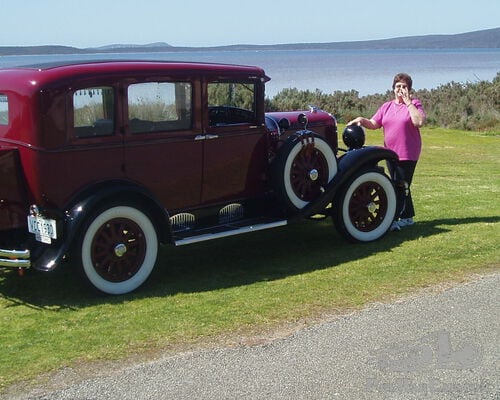
1930 Chrysler 66 Six-Wheel Equipped Royal Sedan
An exceptionally well restored and highly awarded Chrysler 66 Royal Sedan, with only two owners in nearly 97 years.The present owner ..
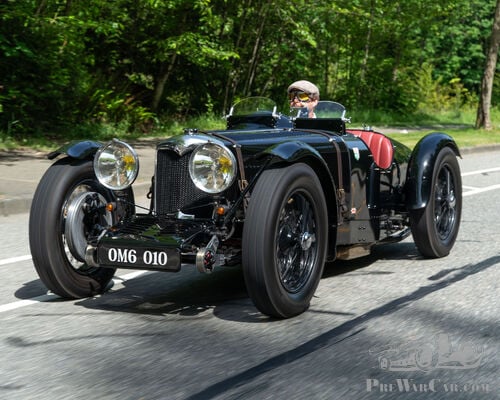
Riley 14/6 Special 1933
The ExperienceStep into the golden age of British motoring. This 1933 Riley 14/6 Special is a masterclass in pre-w..
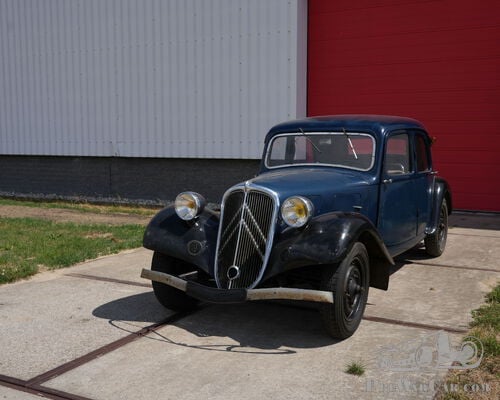
1935 Citroën Traction Avant
Early-production Traction AvantExceptionally original, unrestored conditionRecently part of a major museum collection