The global magazine and marketplace for classic car enthusiasts, by enthusiasts.


Filter
Classic Alvis, MG for sale - Alvis, MG cars for sale
-

1933 Alvis 3.0 Special - One-Off Alloy Body | Period Competition Car | Featured in “Alvis – A Century of Drivers”
1933 Alvis 3. 0 Special - One-Off Alloy-Body | Period Competition Car | Featured in “Alvis – A Century of Drivers” Far from a typical “special”, this is a genuine period-bodied, coach-built competition car with fully traceable provenance—placing it firmly in a different league to the vast majority of Alvis specia.. -
1936 Alvis Speed 25 Charlesworth Saloon
Technical SpecificationMark & Model: Alvis Speed 25 Charlesworth SaloonYear: 1936Registration plate: UK registeredTransmissions: Manual 4 speedBody style: 4 door saloonInterior color: Original brown leatherExterior color: BlackSeating capacity: 4/5Whee.. -
MG PB - 1936 - Mille Miglia Eligible
Beautiful MG PB – Excellent Condition and Rich in HistoryOffered for sale: a special and very fine MG PB, a rare classic that is in lovely condition both technically and cosmetically.This MG is a pleasure to drive and comes with an extensive history file filled with invoices, photographs, and documentation.The car underwent .. -
Alvis Speed 25 Special 1935
An impressive and fast Alvis Special.Built in the early 1990s on an Alvis Firebird chassis with the engine and gearbox from the powerful Alvis Speed 25.Beautiful long-tail body, constructed on a tubular frame, with bucket seats, a well-equipped dashboard, and a luggage box behind the seats.In 2024, the Speed 25 engine was compl.. -
1938 MG VA 4 seat Tourer | The Ernie Warren Collection Auction | 13th June 2026
A 1938 MG VA 4 seat Tourer, Reg No. JMC 154, in burgundy -
1930 MG 18/80 SPORTS SIX MK 2
1930 MG 18/80 SPORTS SIX MK 2 Chassis Number: 2/A0331 Registration Number: MG1021 A rare MG car (one of 501 examples made) with the larger 2.5 litre six cylinder engine. This car was the university motors demonstration car in 1930 as assorted original correspondence attests to. .. -
MG TB Tickford
Dieser MG TB ist eine seltene Tickford Variante. Es wurden insgesamt 379 TB gebaut, davon laut Produktionsaufzeichnungen lediglich 48 Stück mit der Tickford-Karosserie. Aktuell sollen weltweit noch ca. 30 Exemplare existent sein. Dieses spezielle Fahrzeug mit der Karosserienummer 0403 wurde als eines der letzten fertiggestellt am 20 Juni 1939 mit d.. -
1938 MG VA Tickford Drophead Coupe
Details: Oldtimer Australia is delighted to offer for sale a 1938 MG VA Tickford Drophead Coupe by Salmons & Sons, affectionately known as Vera.This car is understood to have been manufactured in August 1938 and was delivered to its first owner in the UK shortly thereafter. There is a copy of a document titled: MG VA Cars 1937 1939 . .. -
1933 MG J4 replica
This J2 has been rebuilt to precise J4 specification and is as close to a factory J4 as you are likely to get. Simply a magnificent MG J4 restoration after a complete re-commissioning in our own workshop. See photos.Model Type: MG J4 replicaStyle: 2-seat sports/racingYear: 1933Registrat.. -
MG TB
Fresh from a challenging 1000 Miglia 2017, this thoroughbred sports car is one of the only 379 examples built by the Abingdon company, UK registered for the first time on 12 July 1939. In addition to the eye-catching green “cycle wing” body and the very elegant matching interior, this vehicle is equipped with all the period accessories and has been..


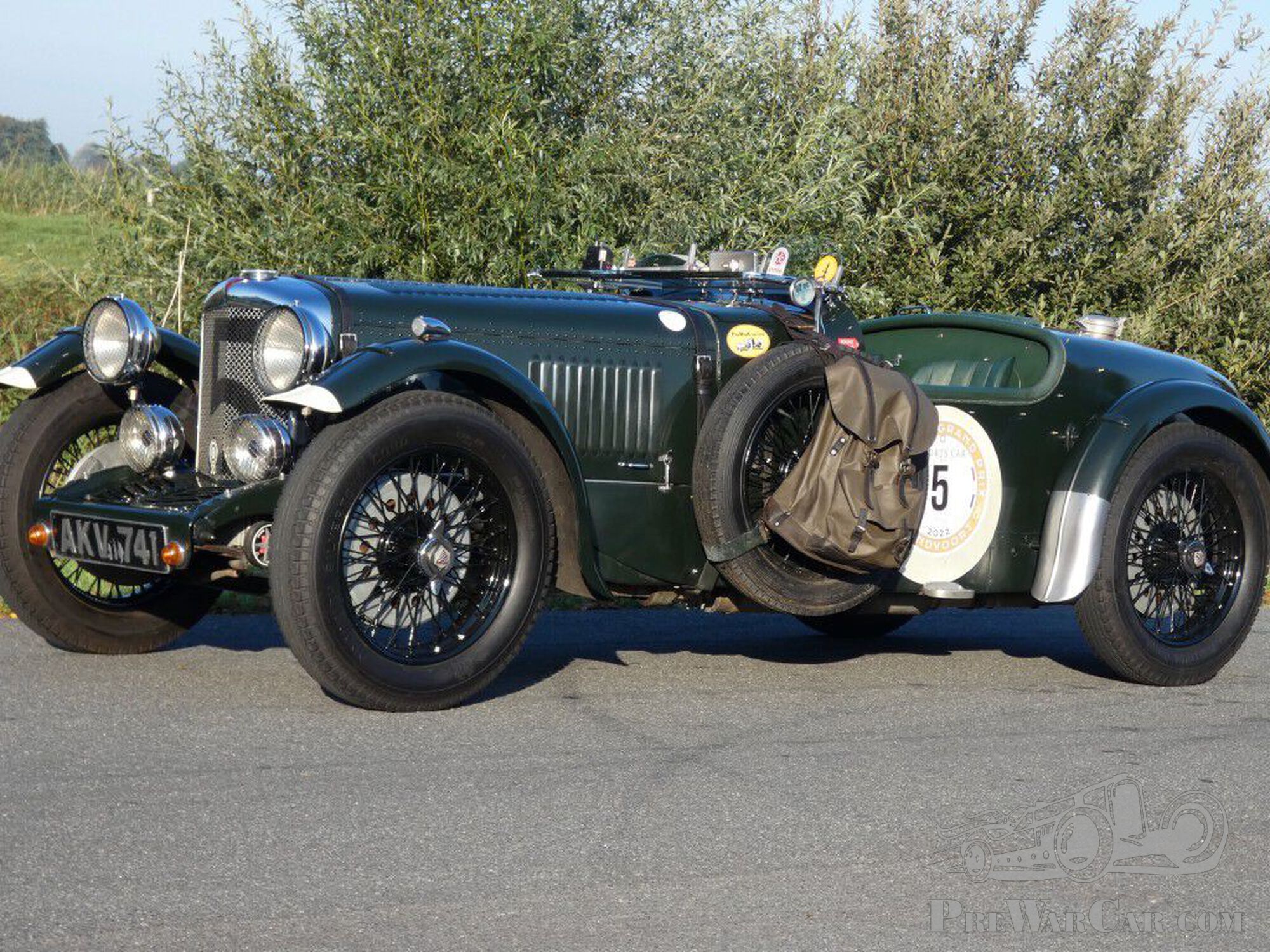


Alvis
GB, 1920 -1967
(1) T.G. John Ltd, Coventry, Warwickshire, 1919 – 1937
(2) Alvis Car & Engineering Co Ltd, Coventry, Warwickshire, 1921 – 1937
(3) Alvis Ltd, Coventry, Warwickshire, 1937 – 1967
From its beginning, the name of Alvis has connoted high quality, long life and better-than-average performance. The first production Alvis set the trend. Those responsible for it were T.G. John, formerly of Siddeley-Deasy, and G.P.H. de Freville, who had worked for D.F.P. and had designed aluminium pistons bearing the name of Alvis for them. Their 10/30hp light car, current until 1922, used an extremely efficient 4-cylinder sv engine of 1.460cc made by Alvis, a 4-speed gearbox and attractive aluminium bodies by Morgan or Charlesworth. It was available in two-seater, four-seater or Super Sports form. The last-named as the first Alvis to have the famous ‘duck’s back’ body. Though noisy and expensive, the aLVIS ‘10/30’ was immensely popular among sporting motorists. In 1921, 322 examples were sold and by the following year the Alvis company employed 350 people. At the end of 1919, the new-born company had undertaken to deliver 1.000 cars, but the moulders’ strike which a brief spell during this period, the company made the Buckingham cyclecar.
In 1922, an engine of 1.598cc with a bigger bore and rated at 12/40hp was introduced in Alvis cars designed more for touring. Captain G.T. Smith-Clarke became chief engineer in 1923. He was responsible for the push-rod ohv 12/50hp engine, which was quieter and more powerful than its predecessors and at the same time extremely strong and long-lasting. It was first seen, in modified form, in the Alvis that won the Brooklands 200-Mile Race of 1923. The touring Alvis models were provided with 1.598cc engines, but the Alvis Super Sports had a shorter stroke giving 1.496cc and was more highly-tuned. The former were usually capable of about 60-65mph, but the latter would exceed 70mph comfortably. Handling qualities of all Alvis models were excellent, while bodies were by Cross & Ellis. During 1924 all Alvis cars went over to the new engine. At first, the Alvis firm’s survival was doubtful. Although 963 units of the older Alvis models had been sold in 1923, a receiver had to be appointed in the following year, because of lack of the capital needed for production on a scale to meet demand. More money was forthcoming, however, and the new Alvis 12/50hp restored the company’s fortunes. Prices were reduced for 1926, and all Alvis models were given front-wheel brakes. The chassis was stiffened by doing away with the separate subframe that had carried the engine and gearbox, and the engine was rubber-mounted. The downward-sloping ‘beetle-back’ tail was now the Super Sports style. By 1928, 6000 Alvises were on the road, and production was running at about 900 chassis per annum.
In that year, Alvis introduced a new type that was also to be a great success. Following fashion, it was a small six of 1.870cc. Similar in design to the old four, this Alvis was smoother, more flexible and quieter. Bodies were roomier and gearing was lower. This Alvis 14.75hp was superseded by the Alvis Silver Eagle in 1929, a car with a bigger bore that gave a mistake. They put into production a Alvis sports machine that had front-wheel-drive (Alvis FWD) – the first instance of this type of drive in a catalogued car – and independent suspension by four quarter-elliptic springs at the front and swing axles with quarter-elliptics at the rear. The 4-cylinder, 1.482cc, single ohc engine utilized many Alvis 12/50 parts, and could be had with a Roots-type supercharger. Helped by a low centre of gravity, the roadholding was very fine, and so were the brakes. During 1928 this Alvis model finished 6th and 9th at Le Mans, and 2nd in the Ulster Tourist Trophy race. In the following year an 8-cylinder version, still of 1½-litres was added. Unfortunately, the Alvis fwd had a very specialized, limited appeal, being complicated, unconventional, temperamental and hard to work on. However, Alvis were so confident in them and in the new six that they announced suspension of the production of the Alvis 12/50 in 1929. It was hurriedly reinstated when the six, popular though it was, proved insufficient to keep the Alvis company going alone. It was for sale until 1932, alongside a new sporting variant, the Alvis 12/60hp.
This was the Alvis company’s last out and out sports car, but its reputation for high-performance vehicles was sustained by the introduction of another new line for sale in 1932. The Alvis Speed Twenty was an exceptionally low-built, handsome fast tourer of modern appearance that combined the refinement of a medium-sized (2.511cc) six with speed, excellent roadholding and brakes, stamina and a reasonable sales-price. The car, and the types which succeeded it were a great success. The engine was a slightly tuned version of the largest option available in the Alvis Silver Eagle, and the chassis, too, was basically similar to that of the earlier Alvis model, which was retained. The power output was about 87bhp, permitting the better examples of the Vanden Plas open tourer to attain 90mph, in spite of the car’s weight, which was an equally traditional Alvis feature. The bodies were all coachbuilt.
With the introduction of this Alvis, the character of Alvis policy in the 1930s was set: the Alvis Speed Twenty and its developments provided the glamour, while an assortment of ‘bread-and-butter’ fours and sixes backed it up. All had push-rod ohv engines. The old Alvis ‘12/50’ and Alvis ‘12/60’ were replaced for 1933 by the sale of the heavier Alvis Firefly in the 1½-litre, 4-cylinder range. Much of the extra weight was added by the optional Wilson pre-selector gearbox, which could also be had on its development, the Alvis Firebird of 1935. This car, however, had an 1.842cc engine, in an attempt to cope with the avoirdupois. The Alvis Silver Eagle was joined early in 1933 by the 2.511cc Alvis Crested Eagle, which also had a Wilson gearbox. This was a chassis intended to carry heavier boddies, and was important because it was the first Alvis touring car to have independent front suspension, which was by a single transverse leaf. This feature, together with an all-synchromesh gearbox, was seen on the 1934 Alvis Speed Twenty. The latter model for sale, which was also growing heavier with increasing public demand for comfort rather than sporting pretensions, was given a bigger engine of 2.762cc in 1935 by lengthening the stroke.
For the same reason, the Alvis 3½-litre also made its bow. It was basically similar to the Alvis Speed Twenty, which it supplemented, but had a smoother, quieter engine with a bigger bore, providing 3.571cc and was designed to accommodate more comfortable, less sporting bodies. The Alvis 3½-litre was, however, a more powerful car than the Alvis Speed Twenty, with 110bhp. It was a short and logical step to replace the Alvis Speed Twenty with a new car for sale for 1936 that combined the virtues of both models. This was the fine Alvis Speed Twenty-five, which used the 3.571cc engine. Capable of a smooth and silent 95mph in saloon form, it was what many people still regard as the best Alvis ever built. At the same time, a car that was originally envisaged as a replacement for the short-lived Alvis 3½-litre was announced. This Alvis 4.3-litre had the same engine, bored out to a capacity of 4.387cc and providing 123bhp. With the introduction of the short-chassis sports tourer version for 1938, the Alvis 4.3-litre became the most exciting Alvis in the range, for it could easily exceed 100mph, with acceleration to match. Some consider that it was not quite as good-looking as the Alvis Speed Twenty-five, nor equally refined.
A new four for sale to replace the Alvis Firebird was listed for 1938. This was the Alvis 12/70hp, a George Lanchester design, with an 80mph performance in spite of its weight. The engine size was unaltered. The Alvis Silver Eagle had been dropped in 1936, but the Alvis Crested Eagle became for sale in a number of versions with the 2.762cc and 3.571cc engines as they appeared, in less highly-tuned forms. The Alvis Silver Crest, another Alvis car in which George Lanchester had a hand, was also brought in for sale in 1938 alongside the 12/70hp. It was intented to carry bodies of the more formal sort, and was powered by the 2.762cc engine, among others. It, too, had independent front suspension.
An aero engine works had been opened as early as 1937. The Alvis car factory at Holyhead Road, Coventry was completely destroyed by bombing in 1940, but the company continued to make aero engines – Rolls-Royce Merlins – at eighteen shadow factories. After World War 2, Alvis made their own Leonides unit and Alvis car production was restarted in 1946. A one-model policy, tailored to meet conditions of austerity, was adopted. Quality was still the main characteristic of the new Alvis TA14 for sale, which, in Alvis tradition, used a 4-cylinder push-rod ohv engine, now of 1.892cc.This Alvis TA14 car was the direct descendant of the 12/70hp. An ugly sporting model appeared briefly for sale in 1948. The Alvis TA14 was dropped during 1950 and the Alvis TA21, a big six, substituted. This was the first entirely new post-war Alvis. Its 2.993cc engine developed 90bhp, and this Alvis car – though not its sports roadster variant the Alvis TB21 – was as slower car than the Alvis Speed Twenty-five. Not so its development, the Alvis TC21/100, for sale in 1954 and 1955. This, after attention from Alec Issigonis, had a tuned engine providing 100bhp and a higher axle ratio, and carried a 100mph guarantee. The Alvis TC21/100 did not last long, for in 1955 there appeared one of the handsomest cars Alvis ever made, the Graber-designed Alvis saloon on what was virtually the Alvis TC21/100 chassis. Few were built until 1959, when this car was given a modified engine delivering 120bhp and renamed the Alvis TD21. It acquired disc brakes as standard fittings on all four wheels for 1962. For 1964, it was replaced by Alvis TE21, with 130bhp and five forward speeds. Automatic transmission was optional. In 1965 Rover acquired a controlling interest in the firm; production of private ceased in the summer of 1967.
Source: Georgano, encyclopedia of motorcar; TRN
The information is written with the greatest of care. However, if you have any suggested amendments please contact us at office@prewarcar.com
M.G.
GB, 1924 to date
(1) Morris Garages Ltd, Oxford, 1924 – 1928
(2) MG Car Co Ltd, Abingdon, Berks., 1929 – 1970
(3) Austin-Morris Division, British Leyland Motor Corp Ltd, Abingdon, Berks., 1970 to date
The name MG is synonymous with sports cars, but it has always been borne by more sedate vehicles as well; at first the MG car had no true sporting connotation at all. In the early 1920s Cecil Kimber was in charge of the Morris Garages, the firm from which William Morris’s new empire had sprung and which was the Morris agent in Oxford. It was an extremely common practice for manufacturers of staid, solid touring cars to offer mildly tuned alternatives with more dashing bodywork for the benefit of the man in the street who would pay a little extra for a more sporting vehicle. In 1920 Morris had discontinued his own sporting version of his Cowley, and other Morris dealers had offered their own alternatives independently.
From 1922, Kimber began experimenting with special bodies, and two years later took the new 1.8-litre Oxford and modified it slightly into the MG Super Sports. A lightly-tuned engine, improved handling and handsome aluminium bodies effected the transformation of the MG car. Backed by Morris reliability and service, the MG car was a great success. When Morris went over to a flat radiator in place of the old ‘bullnose’ for 1927, Kimber followed. By this time, he was calling his MG car the 14/40hp, because of the increased power of the MG car compared with the 14/28hp of the standard Oxford. A year later there arrived the 2½-litre Morris Six with overhead camshaft, for which Cecil Kimber designed for his MG car, a completely new cylinder block and head, a light body and a high axle ratio. The resulting 18/80hp MG car was improved in 1930 with a 4-speed gearbox and stiffer chassis. This Mark II 18/80 MG car was a major modification of the Morris recipe. Earlier, when Morris had introduced his new ohc 847cc Morris Minor in 1928, Kimber adopted and adapted it to the MG car style. The Minor chassis and engine were retained, with little alternation other than lowering the suspension and steering on the MG car. The little fabric-bodied, pointed-tail two-seater MG M-type Midget of 1929, with the engine of the MG car tuned to provide 20bhp, 65mph and excellent accerlation, was Britain’s first really cheap and at the same time practical sports car. The sporting cyclecars of former times were too stark and noisy, and the imported French sports cars such as the Amilcan and Salmson were far dearer, and in any case were going out of production. It was true that the M-type MG car retained the Morris Minor’s somewhat uncertain brakes and its wide-ratio 3-speed gearbox, but the performance wanted by a new, wide and undiscriminating market for sports cars was there.
MG cars went in for racing in 1930. The competition MG cars used superchargers, and special wheels, valves and springs, but shared many components with the touring MG cars. This developments on MG cars, began with the MG Double Twelve M-type, so named after works M-types won the team prize in the Brooklands Double Twelve Hour race of 1930, and with the formidable, if short-lived MG 18/100 Tigresse, which was derived from the 18/80 but was a true road-racing MG car, very highly tuned. Much fiercer than the Double Twelve replica MG car was the much better known 746cc MG C-type, which MG car weighed only 1.120lb, but in supercharged form this little MG car was capable of 90mph. The MG car won the 1921 Double Twelve, and the Irish Grand Prix and Ulster Tourist Trophy races of the same year. The MG M-type was developed into the MG J. Like most normal MG cars, from the earliest one onwards, a variety of body styles could be had, but the best known was the MG J2 open two-seater sports of 1932, with its low lines, cutaway doos and slabtank-mounted spare wheel at the rear. The style of this MG car set the fashion for the sports cars of the 1930s. The J-type MG car carried over developments from the racing MG C-type, demonstrating that racing improved the breed – the cylinder head of this race MG car was of a more efficient design, the chassis was stiffer, the brakes were better and there was a 4-speed gearbox available on the MG car. The MG J3 was a supercharged version, while the MG J4 was a fine little blown sports-racing edition of the MG car. The MG J was developed into the slightly more powerful MG P-type, which had a 3-bearing crankshaft.
As far as the general public was concerned, the ultimate development of the little 4-cylinder ohc engine of the MG car was seen in the MG PB sports of 1935, with 939cc, but for out-and-out racing with a MG car there was the supercharged MG Q-type, followed by the very modern 1935 MG R-type. This MG car had wishbone and torsion-bar independent suspension of all four wheels. Apart from being 750cc supercharged instead of 847cc unsupercharged, the basic engine of the MG R-type was almost identical to that of the production MG P-type, and in fact the MG R-type engines carried MG P-type engine serial numbers.
Meanwhile, Kimber had taken the 1930 Wolsely Hornet, a small six (basically a lengthening of the Morris Minor) and turned it into the MG F-type Magna. Again, touring and sports versions of the MG car were offered, with open and closed bodywork. This MG car had a 1.271cc engine. The MG Magna was developed into the supercharged sports-racing MG K3 Magnette, which MG car won its class in the 1933 Mille Miglia race, and triumphed outright in the same year’s Ulster Tourist Trophy race, driven by Tazio Nuvolari. The unsupercharged 1.287cc MG NE Magnette won the next year’s Tourist Trophy. The more ‘touring’ MG Magnettes of the K and N series were designed to take four-seater bodies, though two-seaters were made for the MG car. Larger and heavier, these MG cars were altogether more substantial machines than the Magnas they supplemented. In six competition seasons, the MG cars also won the French d’Or race twice, the Brooklands 500 Miles race twice, the 1.100cc class of the Grand Prix de France twice, and more than two dozen other important first places. Between 1930 and 1959, with and without works support, MG cars also captured many class speed records. In 1931, a special MG car became the first 750cc car to exceed 100mph, and to cover more than 100 miles in the hour. MG cars became Britain’s premier sporting marque.
After 1935, the MG car company officially raced no longer, and no more competition MG cars were made for public sale. MG car-models tended to become bigger, and more comfortable. The 1936 MG Midget’s 4-cylinder, ohc unit gave way to a 1.290cc long-stroke, push-rod ohv engine in the MG TA, which also had hydraulic brakes. This MG car was succeeded by the shorter-stroke, 1¼-litre MG TB in 1939. The 1½-litre MG VA carried roomier bodies. The 6-cylinder MG cars became rather more staid, but the big 2-litre MG SA and 2.6-litre MG WA of the 1936 – 1940 period were handsome, excellent and popular machines, catering for those who wanted an Alvis or a Lagonda but could not afford one. These MG cars were dropped after World War 2 in favour of the MG TC Midget, which was virtually the MG TB with a synchromesh gearbox, and its saloon and touring version, the MG Y-type. The latter was the first touring MG car to have independent front suspension.
The MG TC Midget did more than any other machine to foster and spread the cult of the European sports car in America. The first real modernization in the design of the Midget MG car came in 1949, with the introduction of the MG TD. This MG car had wishbone and coil-spring independent front suspension, a box-section frame and rack-and-pinion steering, but though a little more power had been extracted from the engine, the handling of this MG car was not noticeably improved. The MG TF of 1953 incorporated the MG car firm’s first concessions to aerodynamic principles in a production MG car, but was otherwise a transitional model. A 1½-litre engine became optional in the MG TF, and gave way to an Austin-designed unit of the same capacity in the completely new MGA that succeeded it for 1956. A very rigid chassis greatly improved handling of the MG car, while an efficient aerodynamic shape provided a much higher maximum speed (nearly 100mph) and allowed a higher axle ratio. Both features on the MG car made for fuel economy. A few MGAs were made with twin ohc engines, but in the hands of the average driver, these MG cars were temperamental, and the 1.6-litre, 78bhp push-rod ohv engine that was eventually fitted to all MGAs provided just as much performance with traditional MG dependability. The MGA 1600, like the Twin Cam, had disc brakes on the front wheels. Meanwhile, the boxy Y-type touring MG car contemporary with the MG TC had given way for 1954 to the attractive little 1½-litre MG ZA Magnette; a revival of an old name. This MG car was, however, a 4-cylinder car. Basically, the MG car was a livelier edition of the Wolseley in the BMC range, and the practice of putting an MG car radiator on the Corporation’s smaller family saloons was continued, until now this is done on both the front-wheel-drive 1100 MG car and the 1.6-litre MG Magnette IV.
The MG car company’s basic sports car having developed beyond its MG Midget heredity, a new, true Midget MG car was introduced in 1961 as a cheaper alternative. This MG car was basically the simple little Austin-Healey Sprite. The latest model had unit construction of body and chassis, a 1.275cc, push-rod ohv engine developing 65bhp a 6.000rpm, independent front suspension, and disc front brakes. In 1962 the MGA became the entirely new, unit-construction MGB with 95bhp 1.795cc engine, available as an open two-seater or GT coupé. For 1968 a new 7-main-bearing version of the MG car being called the MGC. An MGC was the first car to be owned by Prince Charles, but the MG car was not a great success, being withdrawn late in 1969 after 9.000 MG cars of this type had been made. Also in 1968 the 1100 gave way to the 1.275cc 1300. However, one of the effects of the British Leyland merger was the elimination of the badge-engineered MG cars. The MG Magnette IV disappeared during 1968, and the last 1300s were built during 1971. The 1970 MGBs had new grilles retaining only a vestige of the traditional shape, but this was the MG car marque’s first 50.000 MG cars year, and the quarter millionth MGB left Abingdon in May 1971. This MG car model and the 1.275cc Midget III were the only MG cars offered in 1972.
Source: Georgano, encyclopedia of motorcar; TRN
The information is written with the greatest of care. However, if you have any suggested amendments please contact us at office@prewarcar.com


Featured
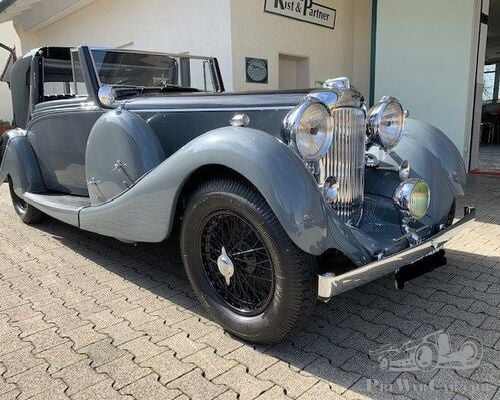
Lagonda LG 45 Coupe de Ville Sedanca by Mayfair
The successor to the M45, the LG45 was built around the same highly capable, competition-proven 4.5-litre Meadows inline-six engine, but featured r..
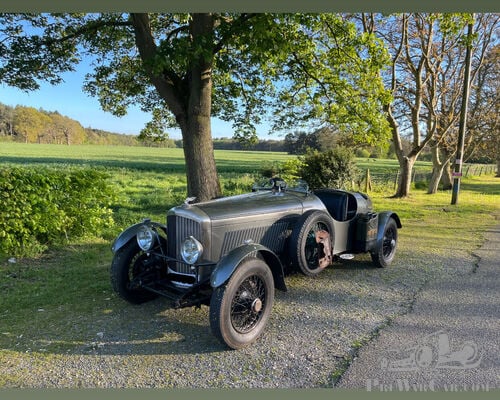
Derby Bentley Special 4-1/4
Sadly i am having to sell on my Bentley special ( Icarus). It is currently a work in progress and still needs finalising/ refining. A great o..

K3 Replica on KN Chassis
"The K3 Magnette must rank in the history books as the most famous and successful of all the record breaking MGs. With only 33 examples produced durin..