The global magazine and marketplace for classic car enthusiasts, by enthusiasts.


Filter
Classic A.B.C., American Austin (Bantam) for sale - A.B.C., American Austin (Bantam) cars for sale
-

1914 American Underslung Model 642 Roadster | RM Sotheby's | The Monterey Auction
To Be OFFERED AT AUCTION at RM Sothebys' The Monterey Auction event, 13 - 15 August 2026. $600,000 - $800,000 USD The sole known surviving Model 642 roadster, American’s sportiest creationA robust machine with a 60-hp T-head six and four-speed transmissionBuilt on the innovative Underslung chassis, one of the best-engin.. -
Unknown tricycle from around 1900
Unknown tricycle , built around 1900 , one of the oldest vehicles in Germany in unrestored condition .For sale .Who can provide information about the builder ??? -
1931 Beverley Barnes 22/90hp Sports Chassis
Technical Specifications:Mark & Model: Beverley Barnes 22/90hp Sports ChassisYear: 1931Registration plate: UnregisteredChassis Number: 603Engine Number: 603Engine Capacity: 2732 ccTransmission: 4-speed ManualMileage:Body style: Rolling chassis..


A.B.C.
US, 1906 – 1910
(1) Autobuggy Manufacturing Co, St Louis, Mo. 1906 – 1908
(2) A.B.C Motor Vehicle Manufacturing Co, St. Louis, Mo. 1908 - 1910
Originally known as the Autobuggy, this car was a typical high-wheel motor buggy whose excellent ground clearance made it popular in rural America. Powered by a 10/12hp 2-cylinder engine, it used a system of friction transmission by cone and two bevel wheels, one for forward movement, one for reverse. This gave a maximum speed of 30mph in either direction. Later models included more conventional roadsters with 2-or 4-cylinder air- or water-cooled engines. The company name was derived from the initials of the designer, A.B. Cole.
GB, 1920 – 1926
A.B.C. Motor Ltd, Hersham, Surrey
A.B.C engines for cyclecars (and also complete motorcycles) had been made before the war. The first production cars employed castings, stampings and forgings supplied by Harper Bean Ltd, and were fitted with a 24bhp air-cooled, flat-twin overhead-valve engine of 1.203cc designed by Granville Branshaw. Unfortunately this unit, built down to a cost, was noisy, hard to start, inefficiently lubricated and liable to breakages, especially of the very long, exposed push-rods. However, in conjunction with the car’s low weight, it made the A.B.C. exceptionally fast for its size, being capable of over 60mph with very good acceleration. The A.B.C. handled well, too. By 1925 the engine was quieter and more reliable, having been given more positive lubrication, and stronger valve gear and castings. One drawback remained; because the fuel tank filler was on top of the ‘radiator’, the tank was liable to be topped up with water by garage hands who did not recognize an air-cooled car. About 1500 A.B.C.’s were made. To the end, both electric starters and four wheel brakes were extra.
Source: Georgano Autoencyclopedie, GNG, TRN
The information is written with the greatest of care. However, if you have any suggested amendments please contact us at office@prewarcar.com
American Austin (Bantam)
US, 1930 – 1941
(1) American Austin Co Inc, Butler, Pa. 1930 – 1934
(2) American Bantam Car Co, Butler, Pa. 1935 – 1941
This was a license-produced Austin Seven with mirror-image engine. Chevrolet-like styling, and fixed disc wheels with detachable rims, selling in sedan form at $445. Unfortunately Americans have never been keen on sub-compacts, and rumoured orders for 180.000 American Austin cars boiled down to a trickle of sales. The make’s first year was its best, and even then only 8.558 American Austin cars were sold. There were receiverships in 1932 and 1934, and no car at all were produced in 1935 or 1936. In 1937 the American Austin was renamed the Bantam, with styling by Alexis de Sakhnoffski, a new horizontal-barred grille, pressure lubrication, mechanical pump feed, and synchromesh. The 1940 Bantam models had enlarged 800cc engines with 3-bearing crankshafts, and the range now included a four-seater convertible as well as roadsters, tourings, station wagons and light commercials, but few found buyers. In the same year the Bantam company produced the first successful Jeep prototype with 4-cylinder Continental engine for the US Army. Though the big contracts went to Willys and Ford, Bantam not only rescued themselves but abandoned car manufacture for good.
Source: Georgano, encyclopedia of motorcar; MCS
The information is written with the greatest of care. However, if you have any suggested amendments please contact us at office@prewarcar.com


Featured
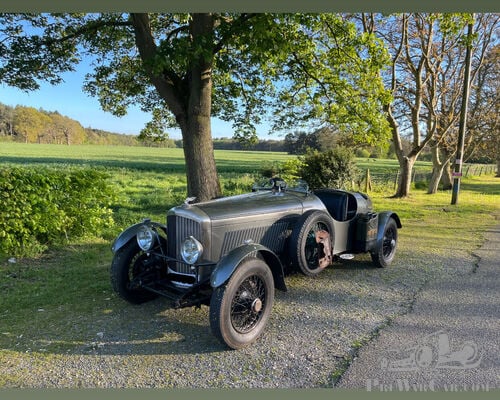
Derby Bentley Special 4-1/4
Sadly i am having to sell on my Bentley special ( Icarus). It is currently a work in progress and still needs finalising/ refining. A great o..
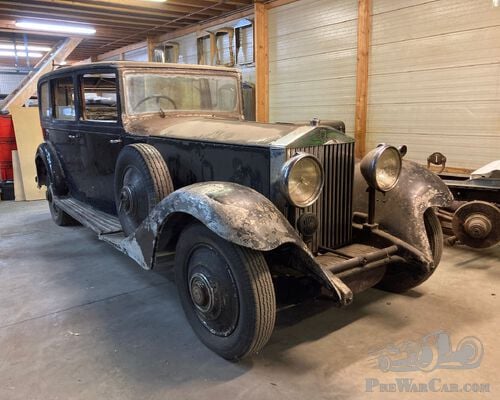

Lagonda LC Tourer 1934
The Lagonda story began in 1901 in Staines, a small town in the UK. The company enjoyed its greatest successes around 1935. During this period, the..