The global magazine and marketplace for classic car enthusiasts, by enthusiasts.


Filter
Classic Darmont, American Austin (Bantam) for sale - Darmont, American Austin (Bantam) cars for sale
-

1934 American Austin Roadster | RM Sotheby's | The Hershey Auction
Sold | $33,600 USD One of the first microcars produced for the American marketEquipped with a 747-cc inline four-cylinder engine producing approximately 13 hpRides on a 75-in. wheelbase with reported fuel economy of up to 40 mpgCoachwork by renowned designer Count Alexis de Sakhnoffsky, finished in an attractive..

Darmont
France, 1924 – 1939
R. Darmont, Courbevoie, Seine
The Darmont 3-wheeler was closely based on the contemporary Morgan, being almost indistinguishable in appearance. Two sv models were made, the air-cooled Darmont Etoile de France, and a water-cooled version. The most powerful was the ohv Darmont Spéciale which could be had in supercharged form when it was capable of nearly 100mph. The engines were French-built versions of the Blackburne. In 1936 Darmont introduced a light sporting 4-wheeler, the Darmont V-Junior, powered by a 1100cc V-twin engine. Like the 3-wheelers, it had Morgan-type independent front suspension.
Source: Georgano, encyclopedia of motorcar; GNG
The information is written with the greatest of care. However, if you have any suggested amendments please contact us at office@prewarcar.com
American Austin (Bantam)
US, 1930 – 1941
(1) American Austin Co Inc, Butler, Pa. 1930 – 1934
(2) American Bantam Car Co, Butler, Pa. 1935 – 1941
This was a license-produced Austin Seven with mirror-image engine. Chevrolet-like styling, and fixed disc wheels with detachable rims, selling in sedan form at $445. Unfortunately Americans have never been keen on sub-compacts, and rumoured orders for 180.000 American Austin cars boiled down to a trickle of sales. The make’s first year was its best, and even then only 8.558 American Austin cars were sold. There were receiverships in 1932 and 1934, and no car at all were produced in 1935 or 1936. In 1937 the American Austin was renamed the Bantam, with styling by Alexis de Sakhnoffski, a new horizontal-barred grille, pressure lubrication, mechanical pump feed, and synchromesh. The 1940 Bantam models had enlarged 800cc engines with 3-bearing crankshafts, and the range now included a four-seater convertible as well as roadsters, tourings, station wagons and light commercials, but few found buyers. In the same year the Bantam company produced the first successful Jeep prototype with 4-cylinder Continental engine for the US Army. Though the big contracts went to Willys and Ford, Bantam not only rescued themselves but abandoned car manufacture for good.
Source: Georgano, encyclopedia of motorcar; MCS
The information is written with the greatest of care. However, if you have any suggested amendments please contact us at office@prewarcar.com



Featured
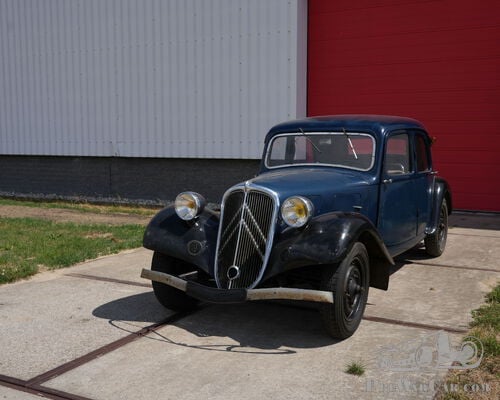
1935 Citroën Traction Avant
Early-production Traction AvantExceptionally original, unrestored conditionRecently part of a major museum collection
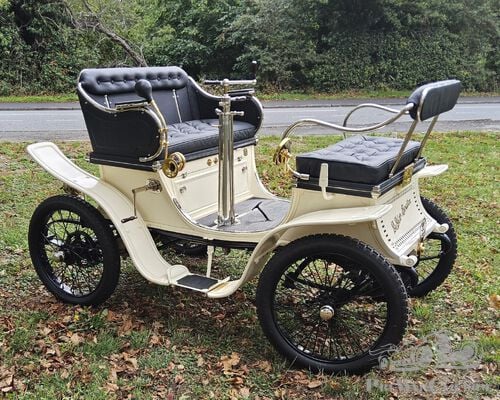
1902 De Dion Bouton Vis-a Vis 4.5 H.P. Reg No. Y123 V.C.C. Cert No. 1649
1902 De Dion Bouton Vis-à-vis 4.5 H.P.Reg. No. Y132 V.C.C. Cert No. 1649Beautifully presented and completely restored following an ex..
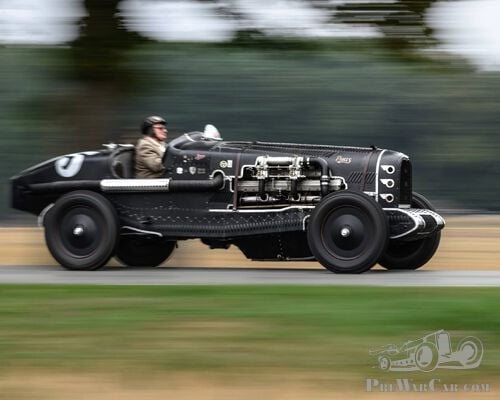
Delage DI, 1924, IL DRAGO RUGGENTE, one of few cars with an Aircraft engine and with war history.
A COLLECTOR'S OPPORTUNITY ONE-OFF. HAND-BUILT. UNREPEATABLE.A MACHINE WITH NO COMPARISONThere are special cars, there are racing cars..