The global magazine and marketplace for classic car enthusiasts, by enthusiasts.


Filter
Classic Gray, American Austin (Bantam) for sale - Gray, American Austin (Bantam) cars for sale
-

1914 American Underslung Model 642 Roadster | RM Sotheby's | The Monterey Auction
To Be OFFERED AT AUCTION at RM Sothebys' The Monterey Auction event, 13 - 15 August 2026. $600,000 - $800,000 USD The sole known surviving Model 642 roadster, American’s sportiest creationA robust machine with a 60-hp T-head six and four-speed transmissionBuilt on the innovative Underslung chassis, one of the best-engin.. -
1925 Gray open tourer
1925 Gray open tourer , mechanically complete but comes with spare engine and rearaxle. Panelwork to be done to the body and guards. Is in our Dutch storage. Rare Canadian built righthanddrive car. This is the last year of Gray motorcars € 9500.


Gray
US, 1920
Gray Light Car Corp, Longmont, and Denver, Colo.
The Gray concern with a splendid-sounding title in fact only built two Gray cars, both of them cyclecars of what sounds like a particularly spidery kind. One Gray car for sale was powered by a single-cylinder motor-cycle engine and the other Gray car for sale by a twin, both made by Harley-Davidson. Motor-cycle wheels were fitted.
US, 1922 – 1926
Gray Motor Corp, Detroit, Mich.
During the 1920s, two new makes, Star and Gray, tried to win a share of the mass market dominated by the Model T Ford. The Gray car for sale was in fact made by former employees of Ford, who included the head of the Gray Corporation, F.L. Klingensmith, and this Gray car was similar to the Ford in several features of engine and chassis. A side-valve, 4-cylinder, 2.7-litre engine was used. Unlike the Ford, the Gray cars springing was by conventional quarter-elliptics at front and rear. Front-wheel brakes were offered in 1926 on the Gray car, but that year was its last. The Gray company’s grandiose plans, which included making nearly a quarter of a million cars in the first full year of production, at $490 for the touring car and $760 for the coach, were never fully realized.
Source: Georgano, encyclopedia of motorcar; TRN
The information is written with the greatest of care. However, if you have any suggested amendments please contact us at office@prewarcar.com
American Austin (Bantam)
US, 1930 – 1941
(1) American Austin Co Inc, Butler, Pa. 1930 – 1934
(2) American Bantam Car Co, Butler, Pa. 1935 – 1941
This was a license-produced Austin Seven with mirror-image engine. Chevrolet-like styling, and fixed disc wheels with detachable rims, selling in sedan form at $445. Unfortunately Americans have never been keen on sub-compacts, and rumoured orders for 180.000 American Austin cars boiled down to a trickle of sales. The make’s first year was its best, and even then only 8.558 American Austin cars were sold. There were receiverships in 1932 and 1934, and no car at all were produced in 1935 or 1936. In 1937 the American Austin was renamed the Bantam, with styling by Alexis de Sakhnoffski, a new horizontal-barred grille, pressure lubrication, mechanical pump feed, and synchromesh. The 1940 Bantam models had enlarged 800cc engines with 3-bearing crankshafts, and the range now included a four-seater convertible as well as roadsters, tourings, station wagons and light commercials, but few found buyers. In the same year the Bantam company produced the first successful Jeep prototype with 4-cylinder Continental engine for the US Army. Though the big contracts went to Willys and Ford, Bantam not only rescued themselves but abandoned car manufacture for good.
Source: Georgano, encyclopedia of motorcar; MCS
The information is written with the greatest of care. However, if you have any suggested amendments please contact us at office@prewarcar.com


Featured
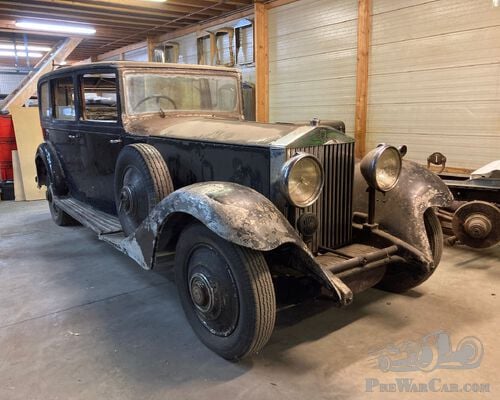

K3 Replica on KN Chassis
"The K3 Magnette must rank in the history books as the most famous and successful of all the record breaking MGs. With only 33 examples produced durin..
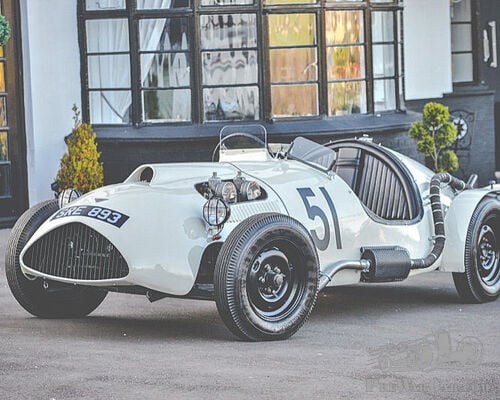
1933 Alvis 3.0 Special - One-Off Alloy Body | Period Competition Car | Featured in “Alvis – A Century of Drivers”
1933 Alvis 3. 0 Special - One-Off Alloy-Body | Period Competition Car | Featured in “Alvis – A Century of Drivers”