The global magazine and marketplace for classic car enthusiasts, by enthusiasts.


Filter
Classic American Austin (Bantam), Haynes-Apperson for sale - American Austin (Bantam), Haynes-Apperson cars for sale
-

1900 Haynes Apperson Twin Cylinder - VCC Dated
1900 Haynes Apperson Twin Cylinder PhaetonRegistration No. BS8275Engine No. 17VCC Dating Cert No. 2255 Elwood Haynes of Kokomo, Indiana, US, was one of the first Americans to build a motorcar. A brilliant metallurgist, Haynes invented Stellite stainless steel, by the age of 27 he had devised a process for produ.. -
1914 American Underslung Model 642 Roadster | RM Sotheby's | The Monterey Auction
To Be OFFERED AT AUCTION at RM Sothebys' The Monterey Auction event, 13 - 15 August 2026. $600,000 - $800,000 USD The sole known surviving Model 642 roadster, American’s sportiest creationA robust machine with a 60-hp T-head six and four-speed transmissionBuilt on the innovative Underslung chassis, one of the best-engin..


American Austin (Bantam)
US, 1930 – 1941
(1) American Austin Co Inc, Butler, Pa. 1930 – 1934
(2) American Bantam Car Co, Butler, Pa. 1935 – 1941
This was a license-produced Austin Seven with mirror-image engine. Chevrolet-like styling, and fixed disc wheels with detachable rims, selling in sedan form at $445. Unfortunately Americans have never been keen on sub-compacts, and rumoured orders for 180.000 American Austin cars boiled down to a trickle of sales. The make’s first year was its best, and even then only 8.558 American Austin cars were sold. There were receiverships in 1932 and 1934, and no car at all were produced in 1935 or 1936. In 1937 the American Austin was renamed the Bantam, with styling by Alexis de Sakhnoffski, a new horizontal-barred grille, pressure lubrication, mechanical pump feed, and synchromesh. The 1940 Bantam models had enlarged 800cc engines with 3-bearing crankshafts, and the range now included a four-seater convertible as well as roadsters, tourings, station wagons and light commercials, but few found buyers. In the same year the Bantam company produced the first successful Jeep prototype with 4-cylinder Continental engine for the US Army. Though the big contracts went to Willys and Ford, Bantam not only rescued themselves but abandoned car manufacture for good.
Source: Georgano, encyclopedia of motorcar; MCS
The information is written with the greatest of care. However, if you have any suggested amendments please contact us at office@prewarcar.com
Haynes Apperson
US, 1898 – 1904
The Haynes Apperson Co, Kokomo, Ind.
Although Elwood Haynes had built his first car in 1894, none Haynes was made for sale until he joined forces with the Apperson brothers. By the end of 1898 Haynes-Apperson cars were being made in two-, four- and six-seater models, all powered by a rear-mounted horizontally-opposed 2-cylinder engine of 3.120cc. The Haynes Apperson car had three forward speeds, spur gear transmission, and tiller steering. For three years this design of the Haynes Apperson car was made without great change, although the straight dash gave way to a sloping version. In November 1901 the Appersons left the Haynes Apperson car firm to make cars under their own name, but the Haynes-Apperson name continued on the cars for nearly three years longer. By 1903 the left-hand tiller steering had been replaced by a wheel, but this was still mounted on the left side, an unusual feature at the time on American cars. On 1904 Haynes Apperson car models the engine was moved to the front under a conventional bonnet, although it was still a horizontally-opposed twin. Prices ranged from $1.450 for a two-seater runabout to $2.550 for a five-seater tonneau. From June 1904 the Haynes Apperson cars began to be referred to as Haynes, and the 1905 cars with vertical 4-cylinder engines were always known under this name. The Haynes Apperson car company name was not changed until September 1905.
Source: Georgano, encyclopedia of motorcar; GNG
The information is written with the greatest of care. However, if you have any suggested amendments please contact us at office@prewarcar.com


Featured

1915 Rolls-Royce Silver Ghost Barker Tourer
⁃ An exceptionally rare original bodied pre-war Silver Ghost⁃ Desirable Barker tourer in exciting barn find condition⁃ ..

Alfa 6C1750 Spider
Alfa 6C1750 Spider with complete history from delivery in 1930 to first owner in Firenze till today with copy Libretto/license plate all the years
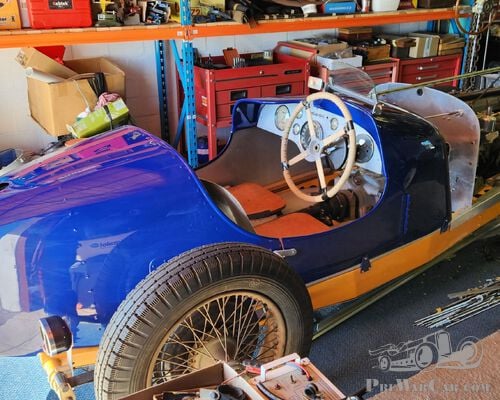
Riley TT Sprite
1935 6-cylinder TT Sprite replica. Chassis # 46A2722. Engine # 6A2722. Original Ulster Imp body. Restoration nearing completion. Engine, Ge..