The global magazine and marketplace for classic car enthusiasts, by enthusiasts.


Filter
Classic Maybach, American Austin (Bantam) for sale - Maybach, American Austin (Bantam) cars for sale
-

1934 Maybach Zeppelin DS8 Stromlinien Cabriolet - one-off body
Maybach was a technological leader in European vehicle manufacturing12-cylinder engine with 8-litre displacement and 200 hpUnique 8-speed shift regulator transmissionOnly 24 Maybach Zeppelin cars, including 2 chassis, still exist todayOne-of-a-kind bodyworkOriginal leather interior in excellent c.. -
1914 American Underslung Model 642 Roadster | RM Sotheby's | The Monterey Auction
To Be OFFERED AT AUCTION at RM Sothebys' The Monterey Auction event, 13 - 15 August 2026. $600,000 - $800,000 USD The sole known surviving Model 642 roadster, American’s sportiest creationA robust machine with a 60-hp T-head six and four-speed transmissionBuilt on the innovative Underslung chassis, one of the best-engin.. -
1938 Maybach SW 38 Gläser Cabriolet
German first deliveryRare bodywork by Gläser, DresdenIn the same ownership for 15 yearsDocumented history in the Maybach Register The SW38 is widely regarded as one of the most elegant and technically impressive six-cylinder cars produced in Germany in the late 1930s. With its powerful engine,..


Maybach
D, 1921 – 1941
Maybach Motoren-Werke GmbH, Friedrichshafen
Wilhelm Maybach left the Daimler company in 1907. Together with Count Zeppelin he founded a factory primarily for the production of aero engines, especially for the Zeppeling air-ships. These engines were designed by Karl Maybach, Wilhelm’s son. After World War 1, Karl Maybach started to build a 22/70ps 5.7-litre 6-cylinder engine intended for motor cars. This Maybach engine was used by Spyker, but no other factories were interested, so Maybach decided to take up Maybach car production on his own. From the beginning Maybach cars aimed at a high quality car with outstanding driving comfort. The first Maybach Model W3 appeared at the 1921 Berlin Motor Show, and this Maybach car featured a very advanced 2-speed pedal-controlled transmission. This Maybach carmodel was produced until 1926. It was followed by the ohv Maybach Model W5 (for sale in 1926 – 1930) using a 27/120ps 7-litre engine in the same chassis, this being available with Maybach’s Schnellgang 2-speed auxiliary box, giving the Maybach car 4 forward speeds. The Maybach 12 of 1929 had a V12 7-litre engine, which was superseded one year later by the Maybach Zeppelin, also with V12 7-litre engine of 150bhp; after 1931 the Maybach car was also available with an 8-litre 200bhp engine. The Zeppelin range was listed until 1939. Maybach Zeppelin car chassis were also fitted with 6-cylinder engines of 7-litres capacity (already used in Maybach Model W5) and a new 5.2-litre engine developing 130bhp (the Maybach W6 and DSH models respectively). These Maybach cars retained beam axles to the end and were characterized by 7-speed boxes of great complexity. A Zeppelin chassis for the Maybach car cost the equivalent of £1.300 in Germany.
In 1935 a new 6-cylinder Maybach car was presented, starting the SW range. This was the Maybach SW35 with a 3.5-litre 140bhp engine. Engine capacity of this Maybach car was raised to 3.8-litres in the Maybach SW38 in 1936 and to 4.2-litres in the SW42 of 1940. Production of the Maybach car ceased in 1941. The Maybach Zeppelin shared with the Mercedes 770 the claim to be the most exclusive German car of the 1930s. This reputation was enhanced by Maybach cars high standards of material and finish, of comfort and quietness in running. No less well-made were the 6-cylinder Maybach cars which were in the first rank of German cars of this class. Maybach only built complete chassis for their Maybach cars, bodies being made by various firms to customers’ special requirements. Best known of these firms was Spohn of Ravensburg. Spohn aslo built aerodynamic bodies to Jaray designs for the Maybach Zeppelin in 1932 and 1934, and for the Maybach SW35 in 1935. These versions Maybach cars were produced only in very limited numbers. Maybach car production was not taken up again after World War 2. Altogether, some 2.000 Maybach cars are believed to have been made. In 1960 Maybach cars pooled their interests with Daimler-Benz in the manufacture of diesel engines for locomotives and ships.
Source: Georgano, encyclopedia of motorcar; HON
The information is written with the greatest of care. However, if you have any suggested amendments please contact us at office@prewarcar.com
American Austin (Bantam)
US, 1930 – 1941
(1) American Austin Co Inc, Butler, Pa. 1930 – 1934
(2) American Bantam Car Co, Butler, Pa. 1935 – 1941
This was a license-produced Austin Seven with mirror-image engine. Chevrolet-like styling, and fixed disc wheels with detachable rims, selling in sedan form at $445. Unfortunately Americans have never been keen on sub-compacts, and rumoured orders for 180.000 American Austin cars boiled down to a trickle of sales. The make’s first year was its best, and even then only 8.558 American Austin cars were sold. There were receiverships in 1932 and 1934, and no car at all were produced in 1935 or 1936. In 1937 the American Austin was renamed the Bantam, with styling by Alexis de Sakhnoffski, a new horizontal-barred grille, pressure lubrication, mechanical pump feed, and synchromesh. The 1940 Bantam models had enlarged 800cc engines with 3-bearing crankshafts, and the range now included a four-seater convertible as well as roadsters, tourings, station wagons and light commercials, but few found buyers. In the same year the Bantam company produced the first successful Jeep prototype with 4-cylinder Continental engine for the US Army. Though the big contracts went to Willys and Ford, Bantam not only rescued themselves but abandoned car manufacture for good.
Source: Georgano, encyclopedia of motorcar; MCS
The information is written with the greatest of care. However, if you have any suggested amendments please contact us at office@prewarcar.com


Featured
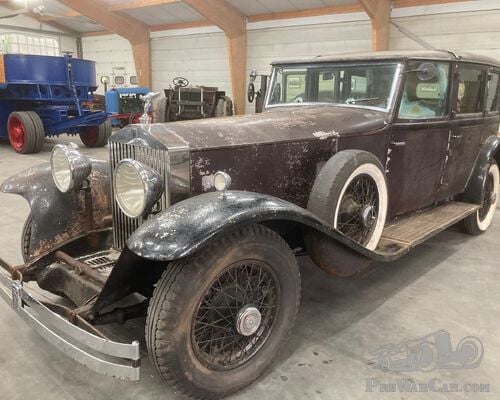
Rolls-Royce
Rolls-Royce Phantom ll chassisnummer 287 AJS. bouwjaar 1932, Links gestuurd, Brewster Keswick Sedance Towncar
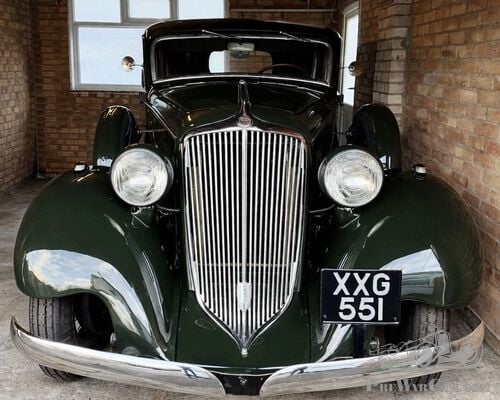
Graham Model 64 Standard Eight 'Blue Streak'
‘The most imitated car on the road’ One of the most significant pre-war American cars ever built. One of 23 known to exist glob..
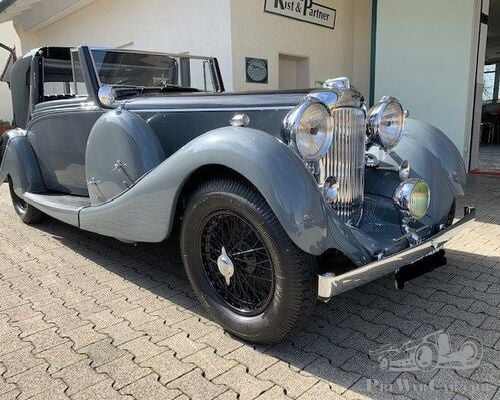
Lagonda LG 45 Coupe de Ville Sedanca by Mayfair
The successor to the M45, the LG45 was built around the same highly capable, competition-proven 4.5-litre Meadows inline-six engine, but featured r..