The global magazine and marketplace for classic car enthusiasts, by enthusiasts.


Filter
Classic Premier, American Austin (Bantam) for sale - Premier, American Austin (Bantam) cars for sale
-

1907 Premier Model 24
Right out of our Titanic Museum display, representing the cars from that era. We chose this car because of it's quality and beauty, it is the type of car that is a pleasure to look at. This 1907 Premier Model 24 Runabout is a prime example from this rarely seen marque that continues to benefit from an older, high-quality concours-level restorati.. -
1914 American Underslung Model 642 Roadster | RM Sotheby's | The Monterey Auction
To Be OFFERED AT AUCTION at RM Sothebys' The Monterey Auction event, 13 - 15 August 2026. $600,000 - $800,000 USD The sole known surviving Model 642 roadster, American’s sportiest creationA robust machine with a 60-hp T-head six and four-speed transmissionBuilt on the innovative Underslung chassis, one of the best-engin..


Premier
US, 1903 – 1925
(1) Premier Motor Mfg Co, Indianapolis, Ind.
(2) Premier Motor Corp, Indianapolis, Ind.
The Premier car started life as a conventional machine made on modern lines, with a pressed-steel frame, mechanically-operated inlet valves, and shaft drive. A four-cylinder air-cooled Premier car was made in 1905. The designer of the Premier car was G.A. Weidely, who made his name with proprietary engines. A line of conventional water-cooled big fours and six-cylinder Premier cars followed, starting with a 24/28hp Premier car in 1907. From 1913, sixes alone were built, the ‘Premier 48’ at $3.250 having a capacity of over 8 litres. The special racing Premier cars of 1916 had a twin ohc, 4-cylinder, 16-valve engine reminiscent of the Peugeot. The touring Premier car of 1919 – 1920 was notable mainly for its use of the Cutler-Hammer Magnetic Gear Shift, an electric transmission system controlled by a lever mounted on the steering wheel. The ohv 4.8-litre engine of the Premier car was an unusually advanced six, with aluminium block, crankcase and pistons, and iron liners.
GB, 1906 – 1907; 1912 – 1913
Premier Motor Co Ltd, Birmingham
The Premier car company were concessionaires for the Italian Marchand car, and the 1906 4-cylinder Premier car was, in fact, a Marchand. Towards the end of 1906 Premier cars launced a short-lived two-seater of their own design powered by a 10/12hp Aster engine, but no further Premier cars appeared until the cyclecar boom of 1912. This brought two distinct designs of Premier cars: the PMC Motorette 3-wheeler with a rear-mounted 6hp single-cylinder engine driving the rear wheel by chains; and the more conventional Premier car, a 4-wheeler using an 8hp 2-cylinder engine, and chain drive.
D, 1913 – 1914
Justus Christian Braun Premier – Werke AG, Nuremberg
After producing the Kaiser cars this firm offered a new model in 1913 under the name of Premier. This Premier car was a two-seater sports car with a 1.030cc 4/12PS engine. This Premier car was also built in the company’s Austrian factory at Eger and was marketed as the Omega.
Source: Georgano, encyclopedia of motorcar; TRN, GNG, HON
The information is written with the greatest of care. However, if you have any suggested amendments please contact us at office@prewarcar.com
American Austin (Bantam)
US, 1930 – 1941
(1) American Austin Co Inc, Butler, Pa. 1930 – 1934
(2) American Bantam Car Co, Butler, Pa. 1935 – 1941
This was a license-produced Austin Seven with mirror-image engine. Chevrolet-like styling, and fixed disc wheels with detachable rims, selling in sedan form at $445. Unfortunately Americans have never been keen on sub-compacts, and rumoured orders for 180.000 American Austin cars boiled down to a trickle of sales. The make’s first year was its best, and even then only 8.558 American Austin cars were sold. There were receiverships in 1932 and 1934, and no car at all were produced in 1935 or 1936. In 1937 the American Austin was renamed the Bantam, with styling by Alexis de Sakhnoffski, a new horizontal-barred grille, pressure lubrication, mechanical pump feed, and synchromesh. The 1940 Bantam models had enlarged 800cc engines with 3-bearing crankshafts, and the range now included a four-seater convertible as well as roadsters, tourings, station wagons and light commercials, but few found buyers. In the same year the Bantam company produced the first successful Jeep prototype with 4-cylinder Continental engine for the US Army. Though the big contracts went to Willys and Ford, Bantam not only rescued themselves but abandoned car manufacture for good.
Source: Georgano, encyclopedia of motorcar; MCS
The information is written with the greatest of care. However, if you have any suggested amendments please contact us at office@prewarcar.com


Featured
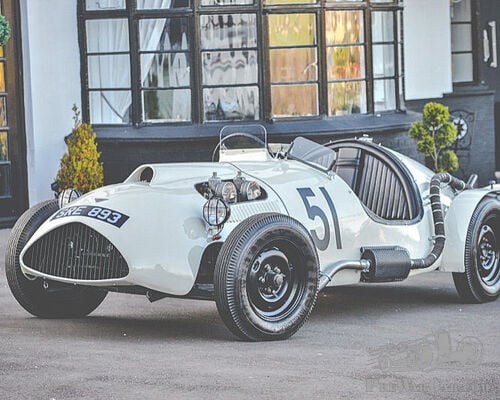
1933 Alvis 3.0 Special - One-Off Alloy Body | Period Competition Car | Featured in “Alvis – A Century of Drivers”
1933 Alvis 3. 0 Special - One-Off Alloy-Body | Period Competition Car | Featured in “Alvis – A Century of Drivers”
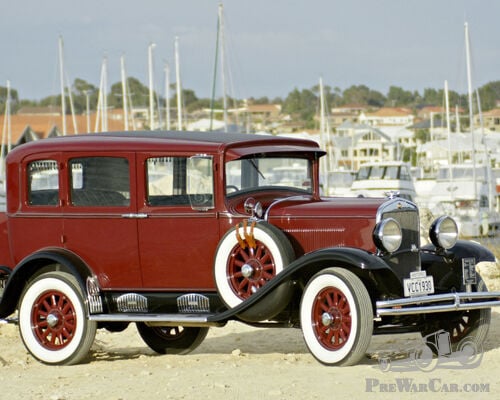
1930 Chrysler 66 Six-Wheel Equipped Royal Sedan
An exceptionally well restored and highly awarded Chrysler 66 Royal Sedan, with only two owners in nearly 97 years.The present owner ..
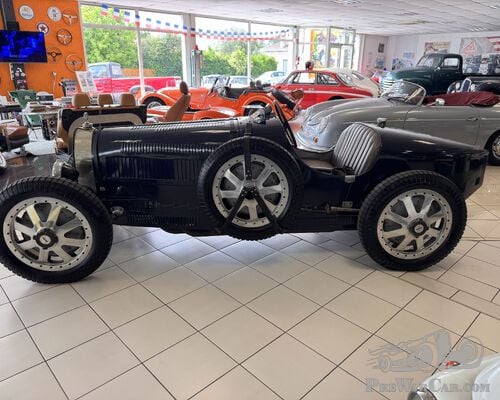
Bugatti 35 B Pur Sang
Bugatti 35 B Pur Sang,importée par un membre délégué de la FFVE il y’a une quinzaine d années.Participation à de nombreux Rallyes Bug..