The global magazine and marketplace for classic car enthusiasts, by enthusiasts.


Filter
Classic Railton, American Austin (Bantam) for sale - Railton, American Austin (Bantam) cars for sale
-

1914 American Underslung Model 642 Roadster | RM Sotheby's | The Monterey Auction
To Be OFFERED AT AUCTION at RM Sothebys' The Monterey Auction event, 13 - 15 August 2026. $600,000 - $800,000 USD The sole known surviving Model 642 roadster, American’s sportiest creationA robust machine with a 60-hp T-head six and four-speed transmissionBuilt on the innovative Underslung chassis, one of the best-engin..

Railton
GB, 1933 – 1949
(1) Railton Cars, Cobham, Surrey, 1933 – 1940
(2) Hudson Motors Ltd, London W.4, 1940 – 1949
This was the work of Reid Railton, well-known as the designer of cars for the World Land Speed Record, and the Railton car was assembled in the old Invicta works after the company’s activities had been transferred to Chelsea. The Railton car set the formula for the Anglo-American sports hybrids of the 1930s, and the basis of the Railton car was a 4-litre Terraplane 8 chassis (from mid-1934, a 4.2-litre Hudson 8) lowered and given stiffer suspension. On this was mounted coachwork in the British style, and the rectangular bonnet (with rivets along it) and radiator closely resembled those of the Invicta. The result, which Railton car sold in tourer from for £535 in 1934, was capable of 90mph, and the Railton car could be driven almost anywhere in top gear, and possessed startling acceleration: the Light Sports Railton car of 1935 could reach 60mph in under ten seconds.
Mechanically, the Railton cars followed Hudson evolution with hydraulic brakes added in 1936; the Railton cars also grew heavier and more expensive, with saloons selling for £698 that year. Cheaper versions Railton cars were available in 1938/ 1939 with the 2.7-litre and 3½-litre 6-cylinder Hudson engines, and a 10hp baby Railton car introduced in 1938 at £299 had Standard mechanical components. Rather more than 1.400 Railton cars were made; a handful Railton cars were assembled after World War 2, but the ban on dollar imports and a list price of over £4.000 for a Railton car put a stop to the best of the Anglo-Americans.
Source: Georgano, encyclopedia of motorcar; MCS
The information is written with the greatest of care. However, if you have any suggested amendments please contact us at office@prewarcar.com
American Austin (Bantam)
US, 1930 – 1941
(1) American Austin Co Inc, Butler, Pa. 1930 – 1934
(2) American Bantam Car Co, Butler, Pa. 1935 – 1941
This was a license-produced Austin Seven with mirror-image engine. Chevrolet-like styling, and fixed disc wheels with detachable rims, selling in sedan form at $445. Unfortunately Americans have never been keen on sub-compacts, and rumoured orders for 180.000 American Austin cars boiled down to a trickle of sales. The make’s first year was its best, and even then only 8.558 American Austin cars were sold. There were receiverships in 1932 and 1934, and no car at all were produced in 1935 or 1936. In 1937 the American Austin was renamed the Bantam, with styling by Alexis de Sakhnoffski, a new horizontal-barred grille, pressure lubrication, mechanical pump feed, and synchromesh. The 1940 Bantam models had enlarged 800cc engines with 3-bearing crankshafts, and the range now included a four-seater convertible as well as roadsters, tourings, station wagons and light commercials, but few found buyers. In the same year the Bantam company produced the first successful Jeep prototype with 4-cylinder Continental engine for the US Army. Though the big contracts went to Willys and Ford, Bantam not only rescued themselves but abandoned car manufacture for good.
Source: Georgano, encyclopedia of motorcar; MCS
The information is written with the greatest of care. However, if you have any suggested amendments please contact us at office@prewarcar.com


Featured
Rolls-Royce
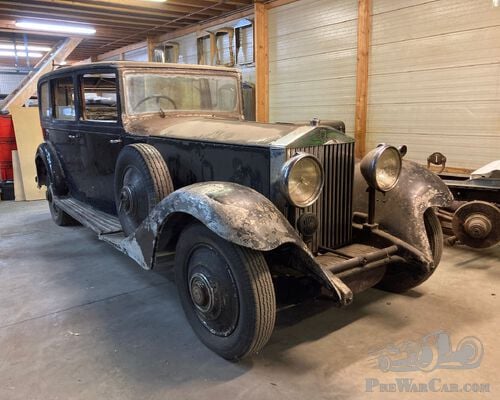
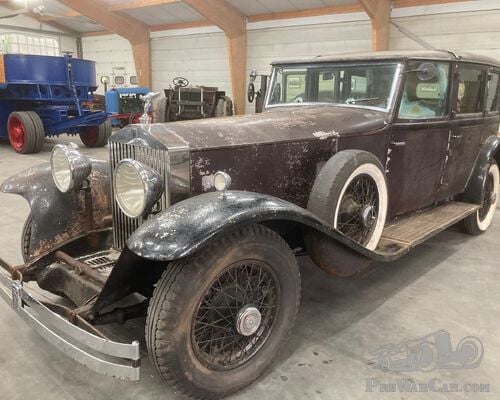
Rolls-Royce Phantom ll chassisnummer 287 AJS. bouwjaar 1932, Links gestuurd, Brewster Keswick Sedance Towncar

Alfa 6C1750 Spider
Alfa 6C1750 Spider with complete history from delivery in 1930 to first owner in Firenze till today with copy Libretto/license plate all the years