The global magazine and marketplace for classic car enthusiasts, by enthusiasts.


Filter
Classic Rally, American Austin (Bantam) for sale - Rally, American Austin (Bantam) cars for sale
-

RALLY NCP
1930 RALLY NCP cyclecar reconstuction engine Salmson S4 (1.300ccm), 4-gear-box french registration papers "carte grise de collection" (Salmson 2 places) -
1914 American Underslung Model 642 Roadster | RM Sotheby's | The Monterey Auction
To Be OFFERED AT AUCTION at RM Sothebys' The Monterey Auction event, 13 - 15 August 2026. $600,000 - $800,000 USD The sole known surviving Model 642 roadster, American’s sportiest creationA robust machine with a 60-hp T-head six and four-speed transmissionBuilt on the innovative Underslung chassis, one of the best-engin..


Rally
France, 1921 – 1933
Automobiles Rally, Colombes, Seine
The Rally car was a typical French sporting voiturette of its period, starting life as a 2-cylinder Rally cyclecar put together largely out of Harley-Davidson motorcycle parts, and growing up in 1922 into a normal 4-cylinder, water-cooled Rally car. The engine of this Rally car was of proprietary manufacture, and could be had in two sizes. S.C.A.P., Ruby, C.I.M.E. and Chapuis-Dornier units were used. There were 4 forward speeds on the Rally car. By 1927 there were four models Rally cars, the most powerful being a sports racing car with a Roots-supercharged twin overhead camshaft engine, and the most sophisticated an 1.100cc straight-8. Both these Rally cars were made only in prototype form. Later Rally cars were basically customized Salmsons.
Source: Georgano, encyclopedia of motorcar; TRN
The information is written with the greatest of care. However, if you have any suggested amendments please contact us at office@prewarcar.com
American Austin (Bantam)
US, 1930 – 1941
(1) American Austin Co Inc, Butler, Pa. 1930 – 1934
(2) American Bantam Car Co, Butler, Pa. 1935 – 1941
This was a license-produced Austin Seven with mirror-image engine. Chevrolet-like styling, and fixed disc wheels with detachable rims, selling in sedan form at $445. Unfortunately Americans have never been keen on sub-compacts, and rumoured orders for 180.000 American Austin cars boiled down to a trickle of sales. The make’s first year was its best, and even then only 8.558 American Austin cars were sold. There were receiverships in 1932 and 1934, and no car at all were produced in 1935 or 1936. In 1937 the American Austin was renamed the Bantam, with styling by Alexis de Sakhnoffski, a new horizontal-barred grille, pressure lubrication, mechanical pump feed, and synchromesh. The 1940 Bantam models had enlarged 800cc engines with 3-bearing crankshafts, and the range now included a four-seater convertible as well as roadsters, tourings, station wagons and light commercials, but few found buyers. In the same year the Bantam company produced the first successful Jeep prototype with 4-cylinder Continental engine for the US Army. Though the big contracts went to Willys and Ford, Bantam not only rescued themselves but abandoned car manufacture for good.
Source: Georgano, encyclopedia of motorcar; MCS
The information is written with the greatest of care. However, if you have any suggested amendments please contact us at office@prewarcar.com


Featured
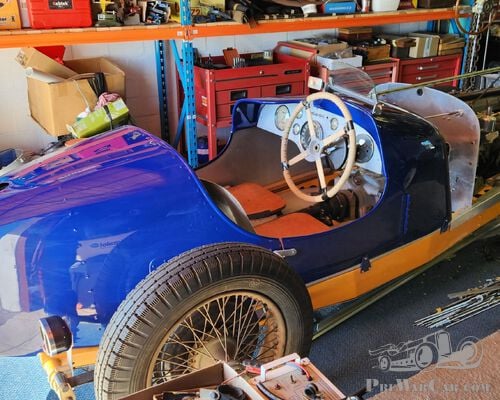
Riley TT Sprite
1935 6-cylinder TT Sprite replica. Chassis # 46A2722. Engine # 6A2722. Original Ulster Imp body. Restoration nearing completion. Engine, Ge..
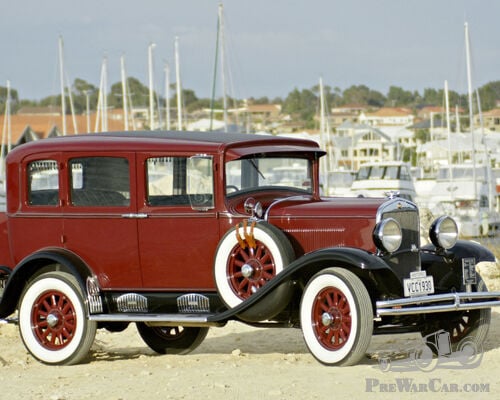
1930 Chrysler 66 Six-Wheel Equipped Royal Sedan
An exceptionally well restored and highly awarded Chrysler 66 Royal Sedan, with only two owners in nearly 97 years.The present owner ..
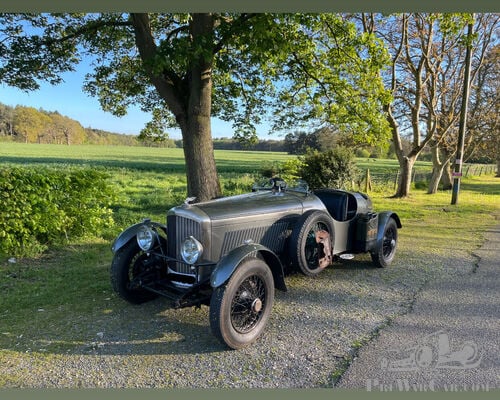
Derby Bentley Special 4-1/4
Sadly i am having to sell on my Bentley special ( Icarus). It is currently a work in progress and still needs finalising/ refining. A great o..