The global magazine and marketplace for classic car enthusiasts, by enthusiasts.


Filter
Classic American Austin (Bantam), Rauch & Lang for sale - American Austin (Bantam), Rauch & Lang cars for sale
-

1934 American Austin Roadster | RM Sotheby's | The Hershey Auction
To Be OFFERED AT AUCTION WITHOUT RESERVE at RM Sothebys' The Hershey Auction event, 7 - 8 October 2026. Offered Without Reserve | $25,000 - $35,000 USD One of the first micro cars produced for the American marketEquipped with a 747-cc inline four-cylinder engine producing approximately 13 hpRides on a 75-inch wheelbase .. -
1918 Rauch & Lang Model B26 Brougham | RM Sotheby's | The Hershey Auction
To Be OFFERED AT AUCTION at RM Sothebys' The Hershey Auction event, 7 - 8 October 2026. $150,000 - $175,000 USD One of the finest surviving examples of the Rauch & Lang electric carBeautiful show-quality, AACA First Junior-winning restorationKnown history, with only three long-term caretakers since the 1950s -
1934 American Austin 7
1934 American Austin American Austin 7 spent over five decades under single-family ownership. The engine is currently disassembled, although complete. It has a new/unfilled 6V battery (correct size, shipped over from England). Solid underneath. Older refurbishment. Interior appears to remain original.


American Austin (Bantam)
US, 1930 – 1941
(1) American Austin Co Inc, Butler, Pa. 1930 – 1934
(2) American Bantam Car Co, Butler, Pa. 1935 – 1941
This was a license-produced Austin Seven with mirror-image engine. Chevrolet-like styling, and fixed disc wheels with detachable rims, selling in sedan form at $445. Unfortunately Americans have never been keen on sub-compacts, and rumoured orders for 180.000 American Austin cars boiled down to a trickle of sales. The make’s first year was its best, and even then only 8.558 American Austin cars were sold. There were receiverships in 1932 and 1934, and no car at all were produced in 1935 or 1936. In 1937 the American Austin was renamed the Bantam, with styling by Alexis de Sakhnoffski, a new horizontal-barred grille, pressure lubrication, mechanical pump feed, and synchromesh. The 1940 Bantam models had enlarged 800cc engines with 3-bearing crankshafts, and the range now included a four-seater convertible as well as roadsters, tourings, station wagons and light commercials, but few found buyers. In the same year the Bantam company produced the first successful Jeep prototype with 4-cylinder Continental engine for the US Army. Though the big contracts went to Willys and Ford, Bantam not only rescued themselves but abandoned car manufacture for good.
Source: Georgano, encyclopedia of motorcar; MCS
The information is written with the greatest of care. However, if you have any suggested amendments please contact us at office@prewarcar.com
Rauch & Lang
US, 1905 – 1928
(1) Rauch & Lang Carriage Co, Cleveland, Ohio, 1905 – 1916
(2) Baker, Rauch & Lang Co, Cleveland, Ohio, 1916 – 1922
(3) Rauch & Lang Electric Car Manufacturing Co, Chicopee Falls, Mass., 1922 – 1928
Rauch & Lang were an old-established carriage building firm (founded 1853) when they began to make electric Rauch & Lang cars in 1905. These Rauch & Lang cars followed the usual pattern for such electric vehicles, being mainly closed town cars, although a few open phaeton Rauch & Lang cars were also made. The biggest Rauch & Lang cars were heavier vehicles and included a six-seater limousine with separate outside seat for the chauffeur. Some Rauch & Lang cars had 4-doors, a very unusual feature in electric cars. In 1916 the Rauch & Lang cars became part of the Baker, Rauch & Lane group and production declined. From 1919 onwards the Rauch & Lang cars were sometimes listed as Raulangs, and from 1922 this became the official name of the Rauch & Lang cars.
By this time production of Rauch & Lang cars had been transferred to the Stevens-Duryea factory at Chicopee Falls where the number of private cars made was very small. The factory, which was still turning out a few Stevens-Duryeas, also made petrol and electric taxi-cabs under the name Rauch & Lang cars, and bodies for Stanley Steamers.
Source: Georgano, encyclopedia of motorcar; GNG
The information is written with the greatest of care. However, if you have any suggested amendments please contact us at office@prewarcar.com


Featured
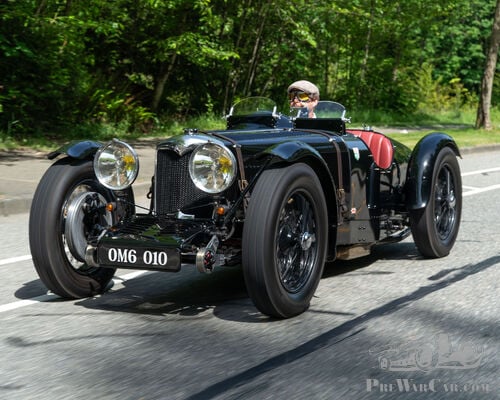
Riley 14/6 Special 1933
The ExperienceStep into the golden age of British motoring. This 1933 Riley 14/6 Special is a masterclass in pre-w..
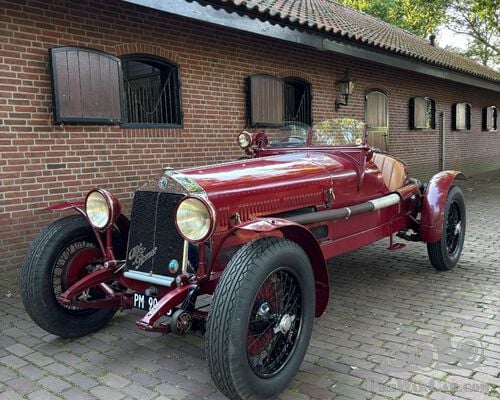
1930 Alfa Romeo 6C 1750 Spider
1930 Alfa Romeo 6C 1750 Spider with complete history from delivery to first owner in 1930 in Firenze till today with copy Libretto/license plate.
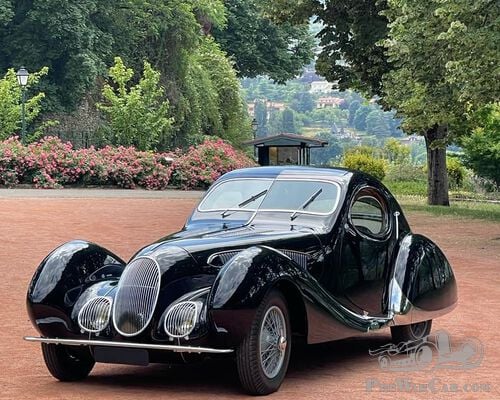
1939 Talbot-Lago T150C “Goutte d’Eau” — Iconic French Coachbuilt Masterpiece
Talbot-Lago T150C ‘Teardrop’ — An Icon of French Automotive Art There are motor cars that define an era. And then there are those tha..