The global magazine and marketplace for classic car enthusiasts, by enthusiasts.


Filter
Classic Rochet-Schneider, American Austin (Bantam) for sale - Rochet-Schneider, American Austin (Bantam) cars for sale
-

1914 American Underslung Model 642 Roadster | RM Sotheby's | The Monterey Auction
To Be OFFERED AT AUCTION at RM Sothebys' The Monterey Auction event, 13 - 15 August 2026. $600,000 - $800,000 USD The sole known surviving Model 642 roadster, American’s sportiest creationA robust machine with a 60-hp T-head six and four-speed transmissionBuilt on the innovative Underslung chassis, one of the best-engin..

Rochet-Schneider
France, 1894 – 1932
SA des Etablissements Rochet-Schneider, Lyons
In its early years, the Rochet Schneider car copied successful designs as they came out. The Rochet Schneider car started life as a derivation of the Benz, with a horizontal single-cylinder engine and belt drive, but the appearance of the Rochet Schneider car was more like that of the contemporary Peugeot. At the 1901 Paris Salon, two Rochet Schneider cars of Panhard type were revealed: a 2-cylinder 8hp and a 12hp 4-cylinder. However, the most advanced type of car was now the Mercedes, so for 1903 the existing Rochet Schneider car models were redesigned to follow Cannstatt practice, except for their armoured wood frames. What they lacked in originality, Rochet Schneider cars gained in power, good construction, and long life. From 1903, when the new 20/22hp Rochet Schneider car was offered, the Rochet Schneider car grew in reputation as strong, fast cars of conventional pattern.
A 4.4-litre live-axle 18hp joined the bigger chain-driven Rochet Schneider cars in 1906, and high-tension magneto ignition made its appearance in 1907, when the Rochet Schneider car range was headed by a 10.9-litre chain-driven six with pair-cast cylinders. A year later the smaller Rochet Schneider cars had L-head monobloc power units. By 1911 this trend had spread to the bigger Rochet-Schneider cars, among them a 4.8-litre 4-cylinder and a 5.5-litre six.
Six types o Rochet Schneider cars were offered in 1914, with 4- and 6-cylinder monobloc engines of between 15 and 50hp. All these Rochet Schneider cars had side valves. Commercial vehicles were also made by the Rochet Schneider car Company. A range of equally stolid, but sturdy machines was offered after World War 1, in 12, 18 and 30hp forms. All Rochet Schneider cars were basically pre-war 1 vehicles. From 1923, ohv engines were available on some models. By 1929, four 4-cylinder Rochet Schneider cars and a six were listed, the 14hp and 20hp with overhead valves.
The last new model of Rochet Schneider car was the 26CV, a 4½-litre ohv six with dual ignition and servo brakes. With wire wheels and elegant coachwork, this Rochet Schneider car was a very handsome vehicle, and with a smaller, 21CV six lasted until Rochet-Schneider abandoned private car production. Commercial vehicles were made until 1951, when the Rochet Schneider car company was taken over by Berliet. The Rochet Schneider car was made under licence in its early days by four firms: Nagant and FN in Belgium, Florentia in Italy and Martini in Switzerland.
Source: Georgano, encyclopedia of motorcar; TRN
The information is written with the greatest of care. However, if you have any suggested amendments please contact us at office@prewarcar.com
American Austin (Bantam)
US, 1930 – 1941
(1) American Austin Co Inc, Butler, Pa. 1930 – 1934
(2) American Bantam Car Co, Butler, Pa. 1935 – 1941
This was a license-produced Austin Seven with mirror-image engine. Chevrolet-like styling, and fixed disc wheels with detachable rims, selling in sedan form at $445. Unfortunately Americans have never been keen on sub-compacts, and rumoured orders for 180.000 American Austin cars boiled down to a trickle of sales. The make’s first year was its best, and even then only 8.558 American Austin cars were sold. There were receiverships in 1932 and 1934, and no car at all were produced in 1935 or 1936. In 1937 the American Austin was renamed the Bantam, with styling by Alexis de Sakhnoffski, a new horizontal-barred grille, pressure lubrication, mechanical pump feed, and synchromesh. The 1940 Bantam models had enlarged 800cc engines with 3-bearing crankshafts, and the range now included a four-seater convertible as well as roadsters, tourings, station wagons and light commercials, but few found buyers. In the same year the Bantam company produced the first successful Jeep prototype with 4-cylinder Continental engine for the US Army. Though the big contracts went to Willys and Ford, Bantam not only rescued themselves but abandoned car manufacture for good.
Source: Georgano, encyclopedia of motorcar; MCS
The information is written with the greatest of care. However, if you have any suggested amendments please contact us at office@prewarcar.com


Featured
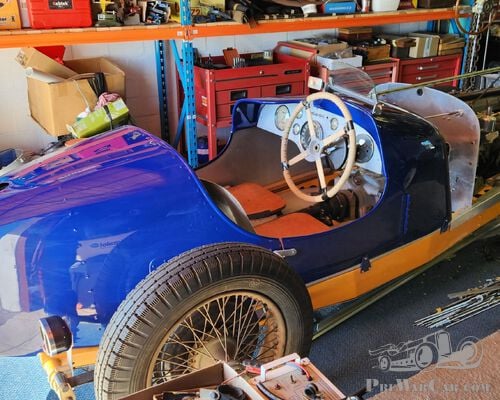
Riley TT Sprite
1935 6-cylinder TT Sprite replica. Chassis # 46A2722. Engine # 6A2722. Original Ulster Imp body. Restoration nearing completion. Engine, G..
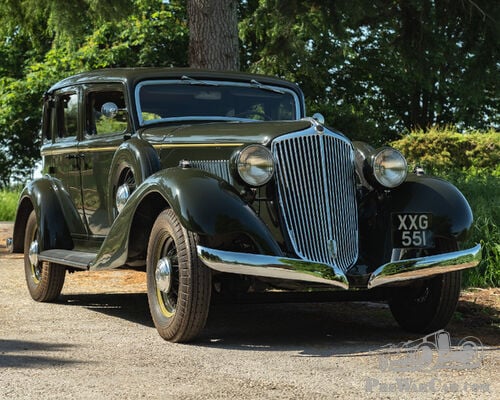
Graham Model 64 Standard Eight 'Blue Streak'
UK Registration No: XXG 551Chassis No: 1801069MOT: ExemptH&H ClassicsKelham Hall | Newark, Nottinghamshire
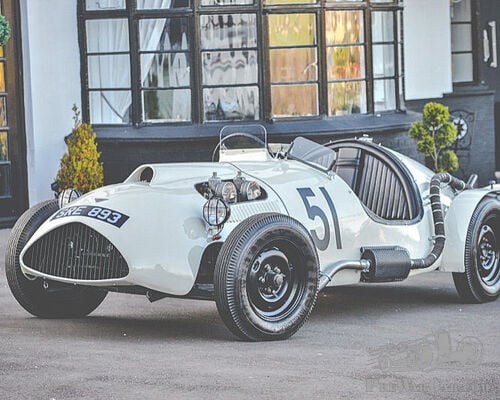
1933 Alvis 3.0 Special - One-Off Alloy Body | Period Competition Car | Featured in “Alvis – A Century of Drivers”
1933 Alvis 3. 0 Special - One-Off Alloy-Body | Period Competition Car | Featured in “Alvis – A Century of Drivers”