The global magazine and marketplace for classic car enthusiasts, by enthusiasts.


Filter
Classic American LaFrance, Chalmers for sale - American LaFrance, Chalmers cars for sale
-

American La France - Speedster
Ehemalige Feuerwehr wurde 2017 in den USA gekauft und 2018 nach Deutschland überführt und anschließend selbst zum zwei-sitzigen Speedster umgebaut. Sämtliche rote Farbe wurde abgebürstet, die Stahlteile mit Klarlack lackiert. Die Antriebszahnräder wurden durch größere ersetzt, so dass eine Reise-Geschwindigkeit von ca. .100 km/h möglich ist. Am ..

American LaFrance
US, 1907 – 2014
LaFrance Manufacturing Company
American LaFrance (ALF) was an American vehicle manufacturer which focused primarily on the production of fire engines, fire aerials, and emergency apparatus such as ambulance and rescue vehicles. The company was located in Summerville, South Carolina. It was announced Friday, January 17, 2014, they would cease operations.
The American LaFrance Fire Engine Company was one of the oldest fire apparatus manufacturers in the United States. With roots that go back to approximately 1832, the companies that went on to become American LaFrance built hand-drawn, horse-drawn, and steam-powered fire engines. Founded in 1873 by Truxton Slocum LaFrance and his partners, including Alexander S. Diven as the LaFrance Manufacturing Company selling hand powered equipment. The International Fire Engine Company, corporate predecessor of American LaFrance, built some steam power fire engines between 1903 and 1907. Apparatus built by International included horse drawn steamers, hose wagons, and hook & ladders to chemical engines, water towers and combinations. The American LaFrance Fire Engine Company was formed in 1903. Its corporate offices and manufacturing plant were in Elmira, New York. It also operated a Canadian plant in Toronto, Ontario, where it sold apparatus under the name Lafrance-Foamite, until 1971. American LaFrance (ALF) delivered its first motorized fire engine in 1907. Over the years, American LaFrance built thousands of fire trucks including chemical engines, combination pumpers, aerial ladder trucks, Aero Chief snorkel trucks, and airport crash trucks. The classical style of the American LaFrance apparatus is easily recognized. Some of the company's innovations led to changes in the industry, most notably the cab forward style cab.
In 1995, the company was bought by Freightliner LLC, which is a subsidiary of Daimler AG. Freightliner continued to utilize American LaFrance's original nameplates and designations including the Eagle custom chassis
Historic vehicles
- Type 1 1903-1904 Steam-powered Combination Hose & ChemicaL Wagon
- Type 3 1906-1906 Packard "N" Two-Tank ChemicaL Car - only 1 built
- Type 4 1909-1912 Simplex based chassis - 2 built (see also Technisches Museum Sinsheim site )
- Type 5 1910-1911 First complete ALF motor fire apparatus - 4 cyl.
- Type 6 1910-1914 LaFrance Commercial truck
- Type 8 1908-1910 ALF roadster type passenger car
- Type 10 1911-1920 Improved larger version of Type 5
- Type 12 1911-1925 6 cyl. 800, 900 & 1000 GPM pumper (see also in Riga Motor Museum)
- Type 14 1912-1926 City service ladder truck
- Type 15 1913-1925 1400 GPM Pump and hose car
- Type 16 1912-1916 Front drive aerial ladder truck
- Type 17 1913-1926 Tractor drawn - aerial, water tower, ladder
- Type 18 1913-1913 2-wheel front-drive steam fire engine tractor
- Type 19 1915-1928 1000 GPM Pump and hose car, 6 cyl.
- Type 25 1914-1914 Front drive, straight frame aerial ladder
- Type 28 1915-1915 Front drive service ladder truck
- Type 30 1914-1914 Front drive, bevel-gear drive water tower
- Type 31 1915-1929 2-wheel front-drive tractor
- Type 32 1915-1927 LaFrance/Model "T" Ford, Alf "F" series
- Type 33 1917-1926 Front drive straight frame service ladder truck
- Type 34 1916-1916 Centrifugal pumper
- Type 52 1922-1927 "Village Queen" Model "T" Ford trailer pump
- Type 65 19??-19?? 400 GPM Junior pumper
- Type 75 1915-1927 750 GPM 6 cyl Pumper - large number built
- Type 91 1927-1927 500 GPM Pumper - Buda-6 cycl. engine
- Type 92 1927-1927 600 GPM Pumper - Buda-6 cycl. engine
- Type 94 19??-19?? Service ladder truck, Buda-6 cycl.
- Type 96 19??-19?? Same as Type 94 but configured as a Quad
- Type 99 1927-1932 GMC Cosmopolitan, Buick 6-cyl. - see 100 series
- Type 500 1941-1946 Narrow cab and body design
- Type 600 1941-1946 Narrow cab and body design
- 100 Series 1926-1929 Metropolitan
- 200 Series 1929-1931 Master
- 300 Series 1931-1935 V-12 powered, 312A
- 400 Series 1933-1938 Junior 450/600/475 GPM
- 400 Series 1935-1940 Senior1000/1250/1500 pump-in-cowl design
- 500 Series 1938-1941 New enclosed streamlined design
- 600 Series 1941-1946 Improved 500 Series
- JO/JOX Series 1938-1946 mid-mount aerial ladder - Cab-ahead
- 700 Series 1947-1959 Cab-ahead-of-engine design
- 800 Series 1956-1958 Updated 700 Series (Pumpers only)
- 900 Series 1958-1974 New wide-cab design
- Pioneer I, II & III 1964-1978 Also Sparton I TCM flat-panel cab
- Pacemaker 1973-1976 TCM canopy cab-forward
- 1000 Series 1970-1974 Premium version of 900 Series
- Century Series 1974-1985 New wider cab
- Century 2000 1986-1994 Redesign by Kersey/ALF
- Patriot 1992-1994
- ALF Eagle 1996–2014 All-new custom chassis
- ALF Metropolitan 1999–2014 Entry-level custom chassis
- Freightliner Business Class, M2 2002–2014 Commercial chassis
Source: Wikipedia
The information is written with the greatest of care. However, if you have any suggested amendments please contact us at office@prewarcar.com
Chalmers / Chalmers-Detroit
US, 1908 – 1924
Chalmers Motor Car Co, Detroit, Mich.
The Chalmers was one of the most popular automobiles made in the United States for more than a decade. The Chalmers was the successor to the Thomas-Detroit which was built by a company which had been founded in 1906 by E.R. Thomas (builder of the Thomas car in Buffalo, N.Y.), Roy D. Chapin and Howard Earle Coffin; the two latter had previously served at Oldsmobile. The Thomas-Detroit of which some 500 were sold during the first year of production, was marketed through the parent firm in Buffalo which manufactured a larger line of cars under the Thomas emblem. The Thomas-Detroit was a medium priced four-cylinder car which had been designed by Coffin. In 1907, Hugh Chalmers, vice president of the National Cash Register Co and a noted salesman, entered the firm. Shortly after, he bought a half of E.R. Thomas’ stock and became president of the company which became the Chalmers-Detroit Motor Company. The Thomas-Detroit became the Chalmers-Detroit in 1908 and in 1910, the Chalmers. Open and closed Chalmers models in two lines comprised the Chalmers four-cylinder cars, with self-starters appearing in 1912. Chalmers (as Chalmers-Detroit) had distinguished itself in road races as early as 1908 when W.R. Burns won the Motor Parkway Sweekstakes at Jericho, N.Y., averaging 48.7mph in the six-lap 140.76 mile run.
In 1913, the Chalmers brought out its first 6-cylinder model, as well as the four and apart from small mechanical and design changes, continued both until 1914. The Chalmers four was dropped from the 1915 line, however, and sixes were to be used exclusively in Chalmers until the ending of manufacture. By 1915, some 20.000 Chalmers cars per year were coming off the Chalmers production line and would even exceed that figure before the advent of World War 1. In 1917, an L-head motor replaced the earlier overhead-valve type and on August 4th, Chalmers again headed racing news when Joe Dawson won the 24-hour stock Car Endurance Run at Sheepshead Bay, N.Y. Sales flagged following the end of the war and Hugh Chalmers, always the salesman, and with the realization that a competitor, Maxwell, wasn’t faring well either, arranged to lease his Chalmers plants to Maxwell, using his salesmanship to promote the two concerns and getting the benefit of Maxwell tooling and manufacturing equipment. By the early 1920s, however, many makes of cars were in financial difficulties due to over-expansion and recession, and Walter P. Chrysler was called in to try and reorganize Maxwell. Chrysler was at this time planning his own corporation and in 1922 Chalmers was taken over by Maxwell which had become a Chrysler subsidiary. The last Chalmer cars for sale were equipped with Lockheed hydraulic brakes but 1923 was the last year of Chalmers production with some 9000 units leaving the factories. The Maxwell survived until 1925 when it became the Chrysler Four.
Source: Georgano, encyclopedia of motorcar; KM
The information is written with the greatest of care. However, if you have any suggested amendments please contact us at office@prewarcar.com


Featured
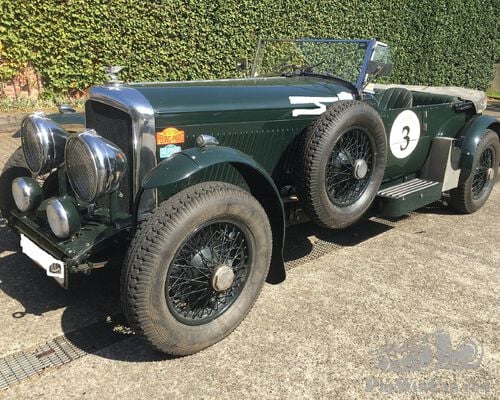
Bentley Derby Special Open Rally Car
This Bentley Derby, manufactured in 1935, has been rebuilt into a short and long-distance rally car. Full rebuilt engine in 2021, Since 2021 low mi..

HORCH 930 V
For SaleHorch 930 VManufacturer: HorchModel and Variant: 930 VBody Type: 4-door sedanChassis Number: ..
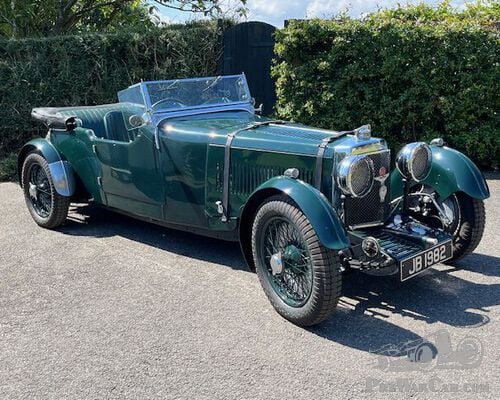
1933 Aston Martin Le Mans
Exceptional 1933 Astron Martin Le MansOriginally bodied as a Standard (Chassis No. L2/222), this unique vehicle was thoughtfully re-bodied i..