The global magazine and marketplace for classic car enthusiasts, by enthusiasts.


Filter
Classic Star, Amilcar for sale - Star, Amilcar cars for sale
-

1927 Amilcar CGS
Paris-based manufacturer Amilcar was founded by Andre Morel and engineer Edmond Moyet to build high-performance cyclecars and voiturettes. Amilcar's first model, the CC, entered production in 1921 and featured the company’s own four-cylinder 904cc side-valve engine. The CC was replaced in 1924 with the CGS which became the company’s most .. -
AMILCAR CS SKIFF
AMILCAR CS Pointe skiff en boisRestauration ancienneFreins sur les 4 rouesA parcouru de nombreux rallyesA remettre en routeCarte Grise FrançaiseL'Amilcar CS (Cyclecar Sport) est l'un des exemples les plus emblématiques de l'âge d'or des cyclecars français. Lancé en 1922 et produit jusqu'en 1925, le modèl..


Star
GB, 1898 – 1932
Star/ Starling/ Stuart
(1) Star Motor Co, Wolverhampton, Staffs., 1898 – 1902
(2) Star Engineering Co, Wolverhampton, Staffs., 1902 – 1909
(3) Star Cycle Co, Wolverhampton, Staffs., 1905 – 1909
(4) Star Engineering Co Ltd, Wolverhampton, Staffs., 1909 – 1928
(5) Star Motor Co Ltd, Wolverhampton, Staffs., 1928 – 1932
Edward Lisle Sr’s Star Motor Co, an offshoot of the Star Cycle Co, produced its first Star car in 1898, and offered the Star car for sale in the following year. The Star car was a Benz-based machine, with a single-cylinder, water-cooled 3½hp engine, belt primary drive and chain final drive. It was an improvement in that water circulation on the Star car was assisted by a pump. In 1900 there followed a 2-cylinder Star car with 3 forward speeds, still on Benz lines. 1901 brougth De Dion-engined single-cylinder Star cars, and 1902 an 8hp twin of Panhard type in addition. Other, larger Star cars of Panhard ancestry joined the 8hp, up to a 20hp four Star car. By 1904, although a De Dion-powered single and Panhard-type twin were still there, the bigger machines were of Mercédès pattern, these Star cars came with honeycomb radiators, mechanically-operated inlet valves and pressed-steel frames. All veteran Star cars up to 1914 were extremely well-made, well-furnished, conventional, rather expensive cars lacking in technical originality, showing a line of development appearance in the 1907 range. The best-known Star car of the veteran period was the excellent 15hp Star car of 1909, a shaft-driven 2.8-litre four which had become the 3-litre 15.9hp by 1914. A great variety of other Star cars, basically similar models were turned out, not only by Star but also by the Star Cycle Co. The latter, run by Edward Lisle Jr, had made motor tricycles and bicycles, and produced the Starling car in 1905. It had 2 forward speeds and a De Dion single-cylinder engine, but was otherwise of Panhard type, with armoured wood frame and chain drive. One year later the Star car company supplemented it with the more modern Stuart car, which had 2-cylinders, 3-speeds and shaft drive. This name was dropped in 1908, all models being called Starlings, but these too, disappeared in 1909 when Star cars cheaper line was entrusted to the new Brion Motor Co, a more indepented concern that was still run by Edward Lisle Jr. So popular was the Star car that its makers were among the six largest in the country before 1914.
The 15.9hp Star car was continued after World War 1, together with another sv four Star car of pre-war origin, the 20hp Star car of 3.8-litres. A modern light Star car of fashionable type, the 11.9hp, arrived in 1921. This Star car used a 1.795cc sv engine with a detachable head, made in unit with a 3-speed gearbox which had central change. By 1924, the 11.9 Star car had grown up into the 2-litre 12/25hp Star car. It shared cylinder dimensions with the 18hp Star car, which was a new 3-litre six. The 12/25 Star car could be had as a very fine fast touring car with overhead valves and 54bhp, in which form the Star car was called 12/40hp. Thereafter, the Star car range reverted to its pre-war complexity. By 1927, there were three sv Star car models and two additional and more up-to-date Star cars with overhead valves. The 14/40hp Star car, new in 1926, was a solid 2-litre, ohv machine which in spite of having only 4-cylinders and 3 forward speeds, this Star car was a notably smooth and flexible car, thanks to a 5-bearing crankshaft. The ohv 20/60hp Star car, a 2½-litre six with the same bore and stroke as the 14/40 and a 7-bearing crankshaft, was the most luxurious Star car. A light six, the popular ohv 18/50hp, joined the Star car range in 1928, the year of the Star car company’s acquisition by Guy, and replaced the 14/40 Star car for 1929. By this time, the sv Star cars had gone, leaving the two sixes. As the 18hp Star Comet and the 21hp Star Planet, these Star cars were revised with handsome bodies and very full, luxurious equipment, including one-shot chassis lubrication, thermostatically-controlled radiator shutters and a built-in jacking system. Two other engines, of 14hp (2-litres) and 24hp (3.6-litres) were also obtainable in Star cars for 1932, as alternative Comet and Planet power units. These Star car were the last new Star cars, for they were too expensive to make, and the times favoured the mass-produced economy car. Production of Star cars ended in March 1932, but the unsold stock was sold by McKenzie and Denley of Birmingham, and the Star car was quoted in the Buyer’s Guide lists until 1935.
US, 1903 – 1904
(1) Star Automobile Co, Cleveland, Ohio
(2) H.S. Moore, Cleveland, Ohio
This Star car was driven by a single-cylinder, watercooled engine of 1.9-litres, mounted beneath the front seat, with false bonnet and coil radiator in front. A champion planetary transmission and double chain drive was used on this Star car. Both two- and five-seater Star cars were made, the latter with rear entrance.
US, 1908
Star Automobile Co, Chicago, Ill.
Star runabouts were offered in three models, selling for $500, $600 and $700 respectively. The smallest Star car was an open two-seater, and shaft drive was employed on all Star cars.
US, 1908
Model Automobile Co, Peru, Ind.
The short-lived Star car from Peru was offered in conventional 2- and 4-cylinder forms. The twin was chain-driven, while the big, expensive four Star car ($4.000) had shaft drive.
US, 1922 – 1928
Durant Motor Co of New Jersey, Elizabeth, N.J.; Lansing, Mich; Oakland, Calif.
William Crapo Durant’s Star Four was one of the most serious attempts to take away some of the Model T Ford’s market, for the cheapest practical car. Unlike the Ford, the Star car was an assembled machine.The Star car had a 2.2-litre, 4-cylinder engine by Continental, and was conventional in design in every way except the gearbox, which was separate; a feature common to all the vehicles in Durant’s empire, but very unusual in American mass-produced cars by the early 1920s. The touring Star car cost only $443 in 1923, which helped Star to be the seventh biggest seller in America that year. The Star car was sold outside the United States as the Rugby. In 1926, a 2.8-litre six Star car was introduced. Front wheel brakes appeared in 1927 but a year later the Star car make disappeared in the collapse of the Durant interests. By this time, 250 Star cars a day were being turned out. Only the Four was still called the Star car for the 1928 model year, as the Six was now known as the Durant Model 55.
Source: Georgano, encyclopedia of motorcar; TRN, GMN, MJWW, TRN
The information is written with the greatest of care. However, if you have any suggested amendments please contact us at office@prewarcar.com
Amilcar
France, 1921 – 1939
(1) Sté Nouvelle pour l’Automobile Amilcar, St Denis, 1921 – 1937
(2) Sté Financière pour l’Automobile, Boulogne-sur-Seine, 1937 – 1939
Of all the sporting voiturettes that proliferated in France after World War 1, the Amilcar was the most famous and successful. Its name(Amilcar) was an anagram of those of its proagonists, Messrs Lamy, who had been concerned with the design of the Le Zèbre before the war, and Akar, who financed the Amilcar. The Amilcar’s designer was Edmond Moyet. The Amilcar Type CC and its developments the Amilcar CS and Amilcar C4 all had 4-cylinder sv engines of about 1-litre capacity, three forward speeds and quarter-elliptic springing. They differed little, therefore, from hosts of their competitors. The Amilcar CGS or Grand Sport of 1924 was a different and more serious proposition. It had a 1.074cc engine with full pressure-lubcrication, front-wheel brakes and front half-elliptic springs. It was developed into the more powerful, lowered Amilcar CGSS (Surbaisse) model in 1926. Various touring cars of between one and two litres were also made, all with four cylinders and side valves, but it was the Amilcar CGS and Amilcar CGSS that made the company’s reputation throughout the world.
Even so, the Amilcar C6 Course, one of the very few pure racing cars ever to be put into production, was still more exciting. Introduced in 1926, it dominated the 1100cc voiturette racing class. Its twin overhead camshaft, 6-cylinder engine developed 83hp and used roller bearings in works form. These Amilcars were capable of 118mph. A small touring straight-8 joined the range in 1928, as was the fashion then. This low-built Amilcar C8 was another excellent machine, with good roadholding and a creditable maximum speed of almost 80mph in spite of its considerable weight. The 2-litre engine had a single overhead camshaft.
By 1930, the Amilcar company was concentrating on touring cars; sports cars in France, as elsewhere with the onset of the Depression, were in decline. The Amilcar C8 was there, enlarged to two litres. The 1¼-litre Amilcar Type M, a sedate small four which had arrived in 1928, survived until 1935 as the Amilcar M2, Amilcar M3 and Amilcar M4; latterly with a 1.7-litre engine. Meanwhile, 1933 had brought Moyet’s new 5CV, the Type C, current until 1935 in various forms, and the disappearance of the C8. From 1934 to 1937 the Amilcar 12CV N7 was offered, which used a Delahaye engine, and there was also the Amilcar 14CV G36. The last Amilcars, made by Hotchkiss, were far more interesting. These ‘Compounds’ of 1938-1939 had independent suspension front and rear, front-wheel drive on J.A. Grégoire Tracta patents, and the Alpax unit construction of body and chassis that incorporated much aluminum. The engine was an 1.185cc four.
Source: Georgano, encyclopedia of motorcar; TRN
The information is written with the greatest of care. However, if you have any suggested amendments please contact us at office@prewarcar.com


Featured
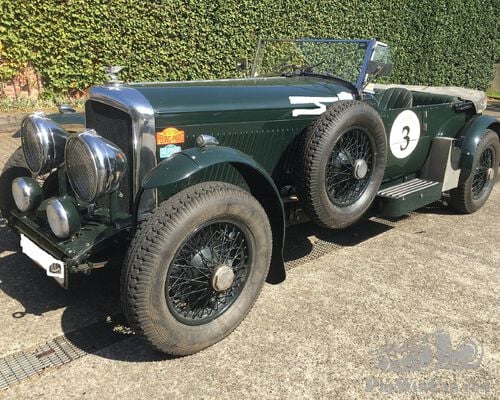
Bentley Derby Special Open Rally Car
This Bentley Derby, manufactured in 1935, has been rebuilt into a short and long-distance rally car. Full rebuilt engine in 2021, Since 2021 low mi..
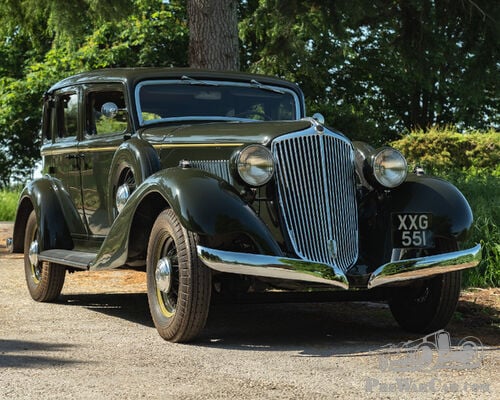
Graham Model 64 Standard Eight 'Blue Streak'
UK Registration No: XXG 551Chassis No: 1801069MOT: ExemptH&H ClassicsKelham Hall | Newark, Nottinghamshire
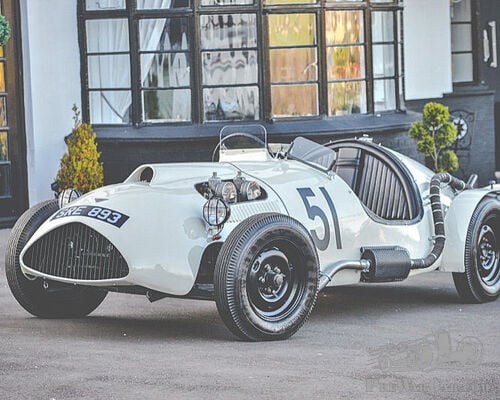
1933 Alvis 3.0 Special - One-Off Alloy Body | Period Competition Car | Featured in “Alvis – A Century of Drivers”
1933 Alvis 3. 0 Special - One-Off Alloy-Body | Period Competition Car | Featured in “Alvis – A Century of Drivers”