The global magazine and marketplace for classic car enthusiasts, by enthusiasts.


Filter
Classic Ansaldo, Orient for sale - Ansaldo, Orient cars for sale
-

1921 Ansaldo type 4C rolling chassis
1921 Ansaldo type 4C rolling chassis. Complete engine and gearbox no 17634 and chassis no 1763. All components are in excellent condition including the 5 original wirespoked wheels and three of the beaded edge tyres. Good radiator. Suitable project to build a Special from. OHC engine. € 18500 negotiable. .. -
1905/6 Orient Buckboard
Build by Waltham , mass. Usa . very original and unrestored , except the engine which is restored and running .Known history back to before ww2 . Last ovner found it in 1950.Eur 25.800


Ansaldo
Italy, 1919 – 1936
(1) SA Ansaldo Automobili, Turin, 1919 – 1932
(2) Construzione e Vendita Automobili Ansaldo, Turin, 1932 – 1934
(3) Ansaldo – Ceva SA, Turin, 1934 – 1936
One of Italy’s biggest engineering groups, Ansaldo turned their idle aero-engine works over to Ansaldo car manufacture in 1919, their Soria-designed range being intended for volume production in competition with FIAT. The advanced 4-cylinder ohc engines contrasted with the 3-speed gearboxes, central change, wooden wheels, and austere, Chevrolet-like tourer bodywork, but even the basic 1.847cc Ansaldo 4A car was capable of 55mph, and by 1922 it had been joined by the 2-litre Ansaldo 4CS car for sale that managed 70mph on an output of 48bhp. FIAT, however, were making five times as many cars. In 1923 there came both four-wheel brakes and a six, the 2-litre Ansaldo 6A car with coil ignition. In 1926 there was even a cheap Ansaldo car for sale with 1½-litre, the Ansaldo 10 car with transverse front suspension. The 1927 Ansaldo sixes had 2.2-litre engines and four forward speeds; the latter, long with coil ignition, were found on the bigger fours by 1928. Unfortunately Soria’s resignation in 1927 left Ansaldo with no new ideas, though his final efforts reached the market in 1929 and were the company’s staples after 1930. The Ansaldo 18 for sale was merely an enlarged 2.8-litre six, but the Ansaldo 22 car for sale, was a large and luxurious 3½-litre pushrod straight-8 on an 11ft 2in wheelbase, distinguished by its disc wheels with quick-detachable rims. These were a product of Ruotificio Italiano, an Ansaldo subsidiary. In 1932 the CEVA concern was organized to take over the stock of 400 unsold Ansaldo 18 and Ansaldo 22 chassis, and these were still available, with restyled body work, as late as 1936.
Source: Georgano, encyclopedia of motorcar; MCS
The information is written with the greatest of care. However, if you have any suggested amendments please contact us at office@prewarcar.com
Orient
US, 1898 – 1908
Waltham Mfg Co, Waltham, Mass.
The Orient car company made an experimental electric runabout in 1898, but did not put this Orient car into production. Their first petrol-engined Orient cars were motor cycles, tricycles and light runabouts powered by De Dion engines. In 1902 they introduced the Orient Buckboard, a very simple Orient car consisting of two seats on a wooden platform, with a 4hp air-cooled engine geared to the rear axle, and, originally, only one speed. There were no springs on this Orient car, as the wooden platform was said to have enough resilience. The weight was 350lb and the price $375.
Although the simple Buckboard was continued, more sophisticated Orient cars were gradually introduced, including a four-seater version Orient car which in turn became a side-entrance tonneau. Wheel steering and small bonnets to cover the driver’s feet appeared in 1904, although the engine of the Orient car was still at the back, and the Buckboard ancestry remained obvious.
In 1905 a completely new Orient car appeared, known as the Waltham Orient. This Orient car had a 4-cylinder air-cooled 18/20hp engine mounted in front in the conventional manner, friction transmission and shaft drive. A slightly smaller 16hp Orient car model was also made. In 1908 Waltham merged with the C.H. Metz Company, and for the following year the cars were known as Metz.
Source: Georgano, encyclopedia of motorcar; GNG
The information is written with the greatest of care. However, if you have any suggested amendments please contact us at office@prewarcar.com


Featured
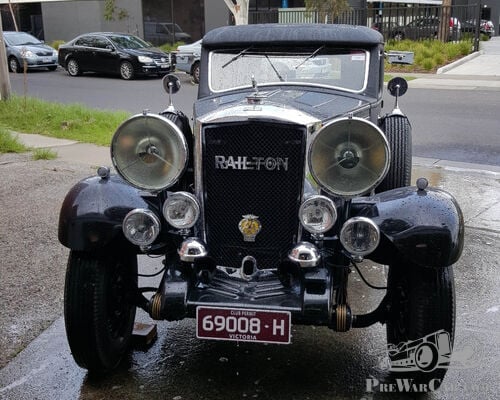
Railton straight 8 sports coupe for rallying REDUCED PRICE run with the bentleys at a fraction of the price
1934 Railton Sports CoupeBuilt for long distance rallyingRebuilt 2017built up at a cost of $160,000AUD, OFFERED FOR SALE AT A ..
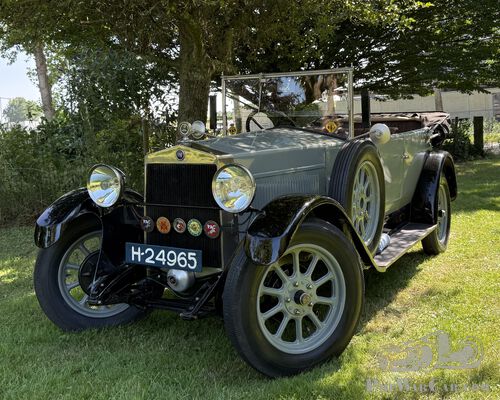
Fiat 509 Torpedo / Spider – Exceptionally Original and Complete
A Rare and Highly Original Example with Long-Term Dutch HistoryOffered for sale is an exceptionally original and remarkably complete Fiat 50..
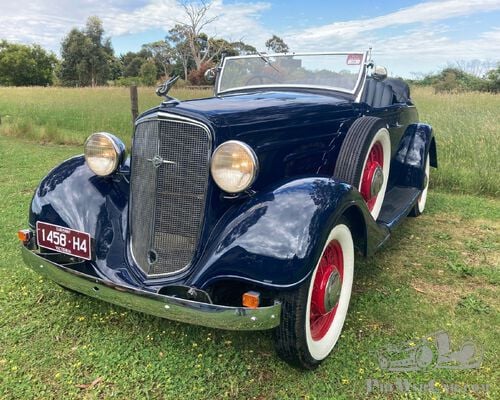
1934 Chevrolet Standard Roadster
1934 Chevrolet Standard Roadster This vehicle was delivered to Australia from Chevrolet and the body was manufactured by Holden Body Works w..