The global magazine and marketplace for classic car enthusiasts, by enthusiasts.


Filter
Classic Ansaldo, Rauch & Lang for sale - Ansaldo, Rauch & Lang cars for sale
-

1918 Rauch & Lang Model B26 Brougham | RM Sotheby's | The Hershey Auction
To Be OFFERED AT AUCTION at RM Sothebys' The Hershey Auction event, 7 - 8 October 2026. $150,000 - $175,000 USD One of the finest surviving examples of the Rauch & Lang electric carBeautiful show-quality, AACA First Junior-winning restorationKnown history, with only three long-term caretakers since the 1950s -
1921 Ansaldo type 4C rolling chassis
1921 Ansaldo type 4C rolling chassis. Complete engine and gearbox no 17634 and chassis no 1763. All components are in excellent condition including the 5 original wirespoked wheels and three of the beaded edge tyres. Good radiator. Suitable project to build a Special from. OHC engine. € 18500 negotiable. ..


Ansaldo
Italy, 1919 – 1936
(1) SA Ansaldo Automobili, Turin, 1919 – 1932
(2) Construzione e Vendita Automobili Ansaldo, Turin, 1932 – 1934
(3) Ansaldo – Ceva SA, Turin, 1934 – 1936
One of Italy’s biggest engineering groups, Ansaldo turned their idle aero-engine works over to Ansaldo car manufacture in 1919, their Soria-designed range being intended for volume production in competition with FIAT. The advanced 4-cylinder ohc engines contrasted with the 3-speed gearboxes, central change, wooden wheels, and austere, Chevrolet-like tourer bodywork, but even the basic 1.847cc Ansaldo 4A car was capable of 55mph, and by 1922 it had been joined by the 2-litre Ansaldo 4CS car for sale that managed 70mph on an output of 48bhp. FIAT, however, were making five times as many cars. In 1923 there came both four-wheel brakes and a six, the 2-litre Ansaldo 6A car with coil ignition. In 1926 there was even a cheap Ansaldo car for sale with 1½-litre, the Ansaldo 10 car with transverse front suspension. The 1927 Ansaldo sixes had 2.2-litre engines and four forward speeds; the latter, long with coil ignition, were found on the bigger fours by 1928. Unfortunately Soria’s resignation in 1927 left Ansaldo with no new ideas, though his final efforts reached the market in 1929 and were the company’s staples after 1930. The Ansaldo 18 for sale was merely an enlarged 2.8-litre six, but the Ansaldo 22 car for sale, was a large and luxurious 3½-litre pushrod straight-8 on an 11ft 2in wheelbase, distinguished by its disc wheels with quick-detachable rims. These were a product of Ruotificio Italiano, an Ansaldo subsidiary. In 1932 the CEVA concern was organized to take over the stock of 400 unsold Ansaldo 18 and Ansaldo 22 chassis, and these were still available, with restyled body work, as late as 1936.
Source: Georgano, encyclopedia of motorcar; MCS
The information is written with the greatest of care. However, if you have any suggested amendments please contact us at office@prewarcar.com
Rauch & Lang
US, 1905 – 1928
(1) Rauch & Lang Carriage Co, Cleveland, Ohio, 1905 – 1916
(2) Baker, Rauch & Lang Co, Cleveland, Ohio, 1916 – 1922
(3) Rauch & Lang Electric Car Manufacturing Co, Chicopee Falls, Mass., 1922 – 1928
Rauch & Lang were an old-established carriage building firm (founded 1853) when they began to make electric Rauch & Lang cars in 1905. These Rauch & Lang cars followed the usual pattern for such electric vehicles, being mainly closed town cars, although a few open phaeton Rauch & Lang cars were also made. The biggest Rauch & Lang cars were heavier vehicles and included a six-seater limousine with separate outside seat for the chauffeur. Some Rauch & Lang cars had 4-doors, a very unusual feature in electric cars. In 1916 the Rauch & Lang cars became part of the Baker, Rauch & Lane group and production declined. From 1919 onwards the Rauch & Lang cars were sometimes listed as Raulangs, and from 1922 this became the official name of the Rauch & Lang cars.
By this time production of Rauch & Lang cars had been transferred to the Stevens-Duryea factory at Chicopee Falls where the number of private cars made was very small. The factory, which was still turning out a few Stevens-Duryeas, also made petrol and electric taxi-cabs under the name Rauch & Lang cars, and bodies for Stanley Steamers.
Source: Georgano, encyclopedia of motorcar; GNG
The information is written with the greatest of care. However, if you have any suggested amendments please contact us at office@prewarcar.com


Featured
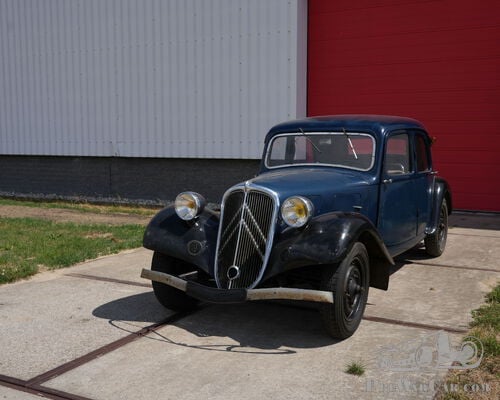
1935 Citroën Traction Avant
Early-production Traction AvantExceptionally original, unrestored conditionRecently part of a major museum collection
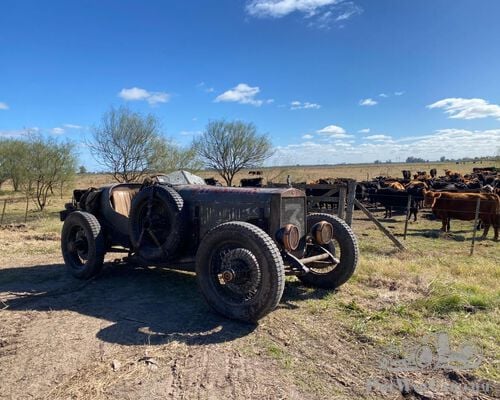
Studebaker 1927 for sale
Authentic race car of the time - Everything is working - All parts of its original mechanics - I have the history of the car - 6 cylinders - Ready ..
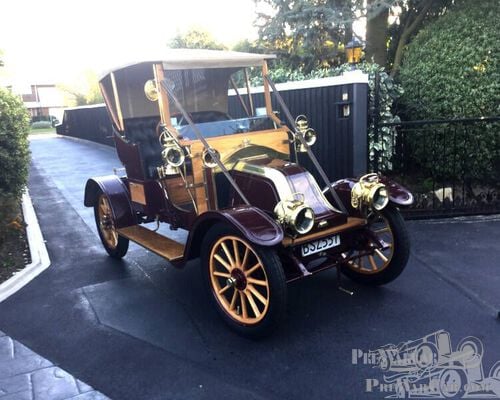
Renault /AX 1913 - named
Purchased fully renovated from New Zealand and imported to the UK. We have owned her for over10 years. Gigi is currently living in France where she..