The global magazine and marketplace for classic car enthusiasts, by enthusiasts.


Filter
Classic Ariès for sale - Ariès cars for sale
Change your filters to get results, or show all
Sorry, there are no results with your filters Cars
.
Ariès
France, 1903 – 1938
SA Ariès, Courbevoie, Seine
The first Ariès motor vehicle was the delivery truck of 1903, which was powered by an Aster 2-cylinder engine. The Paris Salon of that year saw the first Ariès car, which was also Aster-powered. It was designed by Baron Charles Petiet. These Ariès were unremarkable machines, except for the feature of De Dion-type drive, the rear wheels being driven by shafts above a ‘dead’ axle. Not all Ariès were so furnished; some Ariès models were available with the choice of live axle or chain drive. By 1905, 4-cylinder Ariès cars as well as a twin were listed. Engines were still by Aster. 1908 brought a six and a narrow V4 engine of 60mm x 100mm, so compact that it was mistaken for a single and in 1910 Ariès catalogued the smallest 6-cylinder car in the world. All models had De Dion-type drive. The production of commercial Ariès vehicles took precedence over passenger cars towards the end of the decade. One Ariès for sale of the 1913 range, following the fashion, used a Knight double sleeve-valve engine.
After making Hispano-Suiza engines during World War 1, Ariès went back to cars, but still in a small way. Among the longest-lived models were the Ariès 15CV for sale and its close relative the Ariès 12CV, touring cars using a 4-cylinder sv engine with a cubic capacity of around three litres, and a 4-speed gearbox. From 1922 there was an Ariès Sport model with overhead camshaft and front wheel brakes. The smallest Ariès, the 5CV Ariès Type CC2 was worthy of more attention. It had a single overhead-camshaft engine of 1.085cc and (from 1924) four forward speeds. The 1929 Ariès CC4S sports model, with two plugs per cylinder, was a fast car. The Ariès 15CV was still there, but by the end of 1930 both it and the Ariès CC4S had gone, making way for the 1½-litre Aries CB4 and its successor the slightly bigger Ariès CC4N, current until 1934. The 4-cylinder, 10CV Ariès Super of 1934-1938 boasted a 2-speed rear axle.
Source: Georgano, encyclopedia of motorcar; TRN
The information is written with the greatest of care. However, if you have any suggested amendments please contact us at office@prewarcar.com


Featured

Alfa 6C1750 Spider
Alfa 6C1750 Spider with complete history from delivery in 1930 to first owner in Firenze till today with copy Libretto/license plate all the years
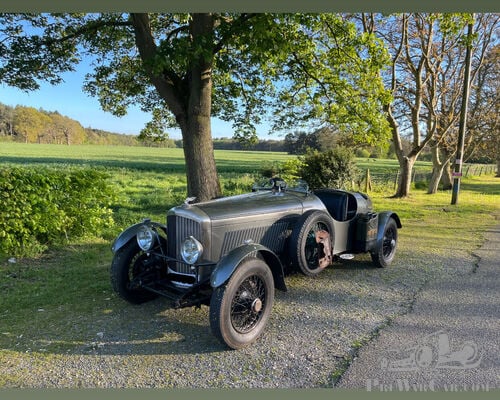
Derby Bentley Special 4-1/4
Sadly i am having to sell on my Bentley special ( Icarus). It is currently a work in progress and still needs finalising/ refining. A great o..
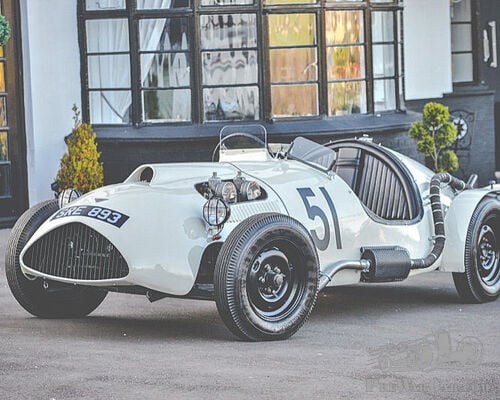
1933 Alvis 3.0 Special - One-Off Alloy Body | Period Competition Car | Featured in “Alvis – A Century of Drivers”
1933 Alvis 3. 0 Special - One-Off Alloy-Body | Period Competition Car | Featured in “Alvis – A Century of Drivers”