The global magazine and marketplace for classic car enthusiasts, by enthusiasts.


Filter
Classic Ariès, Orient for sale - Ariès, Orient cars for sale
-

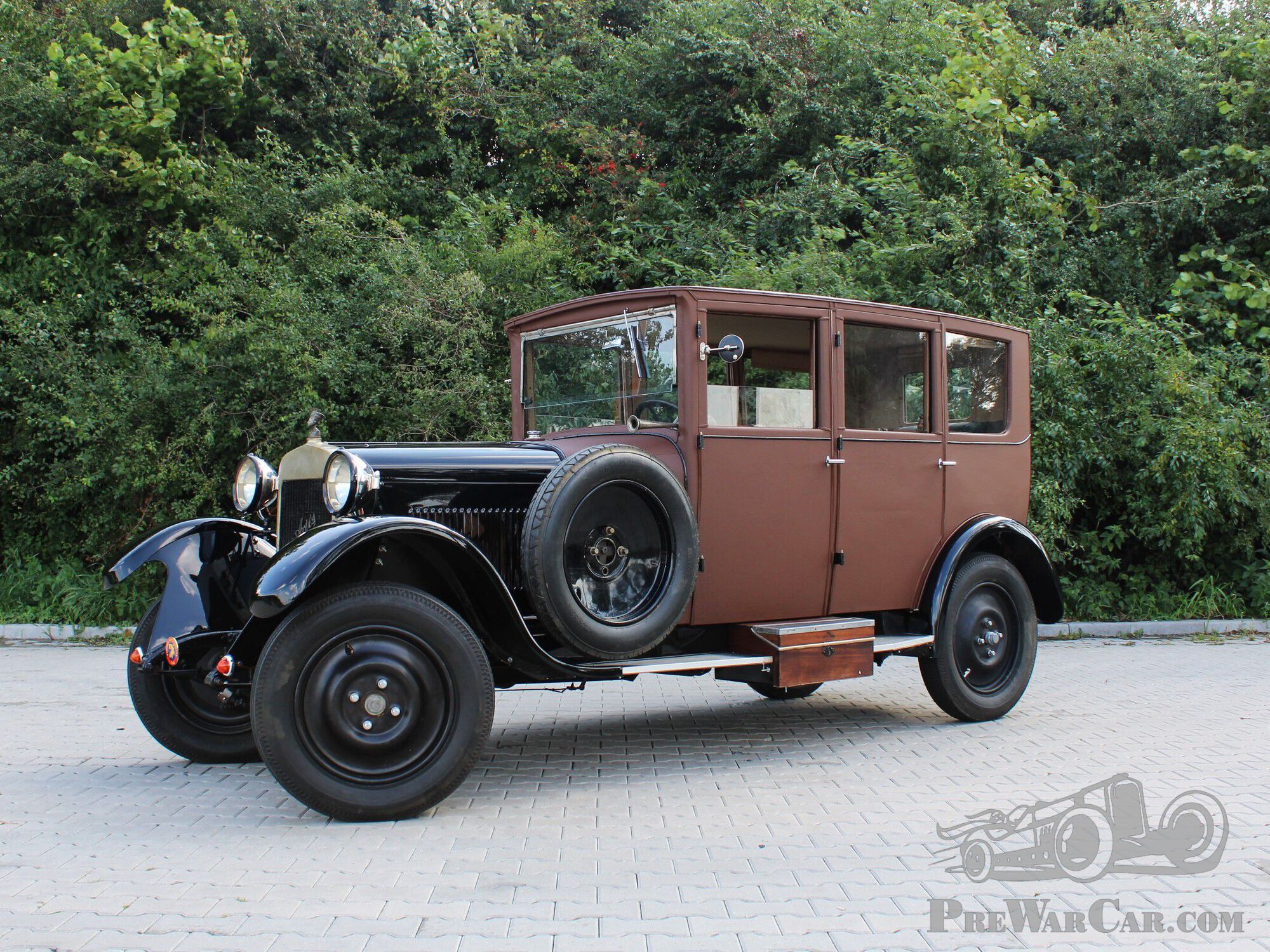
Aries CC4S Saloon 1925
Aries CC4S Saloon 1925 Company HistoryThe Ariès was built in Villeneuve de La Garenne and was the initiative of Baron Charles Petiet, who founded the company in 1902.In its early years, Ariès produced luxury cars where the chauffeur and the important/wealthy passengers sat separately. Later, in 1910, Ariès began producing c.. -
1905/6 Orient Buckboard
Build by Waltham , mass. Usa . very original and unrestored , except the engine which is restored and running .Known history back to before ww2 . Last ovner found it in 1950.Eur 25.800

Ariès
France, 1903 – 1938
SA Ariès, Courbevoie, Seine
The first Ariès motor vehicle was the delivery truck of 1903, which was powered by an Aster 2-cylinder engine. The Paris Salon of that year saw the first Ariès car, which was also Aster-powered. It was designed by Baron Charles Petiet. These Ariès were unremarkable machines, except for the feature of De Dion-type drive, the rear wheels being driven by shafts above a ‘dead’ axle. Not all Ariès were so furnished; some Ariès models were available with the choice of live axle or chain drive. By 1905, 4-cylinder Ariès cars as well as a twin were listed. Engines were still by Aster. 1908 brought a six and a narrow V4 engine of 60mm x 100mm, so compact that it was mistaken for a single and in 1910 Ariès catalogued the smallest 6-cylinder car in the world. All models had De Dion-type drive. The production of commercial Ariès vehicles took precedence over passenger cars towards the end of the decade. One Ariès for sale of the 1913 range, following the fashion, used a Knight double sleeve-valve engine.
After making Hispano-Suiza engines during World War 1, Ariès went back to cars, but still in a small way. Among the longest-lived models were the Ariès 15CV for sale and its close relative the Ariès 12CV, touring cars using a 4-cylinder sv engine with a cubic capacity of around three litres, and a 4-speed gearbox. From 1922 there was an Ariès Sport model with overhead camshaft and front wheel brakes. The smallest Ariès, the 5CV Ariès Type CC2 was worthy of more attention. It had a single overhead-camshaft engine of 1.085cc and (from 1924) four forward speeds. The 1929 Ariès CC4S sports model, with two plugs per cylinder, was a fast car. The Ariès 15CV was still there, but by the end of 1930 both it and the Ariès CC4S had gone, making way for the 1½-litre Aries CB4 and its successor the slightly bigger Ariès CC4N, current until 1934. The 4-cylinder, 10CV Ariès Super of 1934-1938 boasted a 2-speed rear axle.
Source: Georgano, encyclopedia of motorcar; TRN
The information is written with the greatest of care. However, if you have any suggested amendments please contact us at office@prewarcar.com
Orient
US, 1898 – 1908
Waltham Mfg Co, Waltham, Mass.
The Orient car company made an experimental electric runabout in 1898, but did not put this Orient car into production. Their first petrol-engined Orient cars were motor cycles, tricycles and light runabouts powered by De Dion engines. In 1902 they introduced the Orient Buckboard, a very simple Orient car consisting of two seats on a wooden platform, with a 4hp air-cooled engine geared to the rear axle, and, originally, only one speed. There were no springs on this Orient car, as the wooden platform was said to have enough resilience. The weight was 350lb and the price $375.
Although the simple Buckboard was continued, more sophisticated Orient cars were gradually introduced, including a four-seater version Orient car which in turn became a side-entrance tonneau. Wheel steering and small bonnets to cover the driver’s feet appeared in 1904, although the engine of the Orient car was still at the back, and the Buckboard ancestry remained obvious.
In 1905 a completely new Orient car appeared, known as the Waltham Orient. This Orient car had a 4-cylinder air-cooled 18/20hp engine mounted in front in the conventional manner, friction transmission and shaft drive. A slightly smaller 16hp Orient car model was also made. In 1908 Waltham merged with the C.H. Metz Company, and for the following year the cars were known as Metz.
Source: Georgano, encyclopedia of motorcar; GNG
The information is written with the greatest of care. However, if you have any suggested amendments please contact us at office@prewarcar.com


Featured
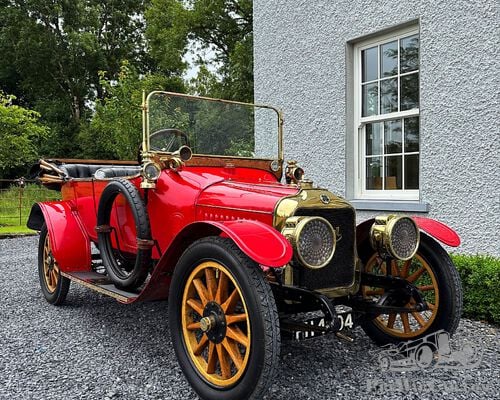
1914 Brasier
1914 Brasier Tourer 9ABrasier were a French manufacturer who were in business from 1901 until 1930, when the company became victim of the gr..
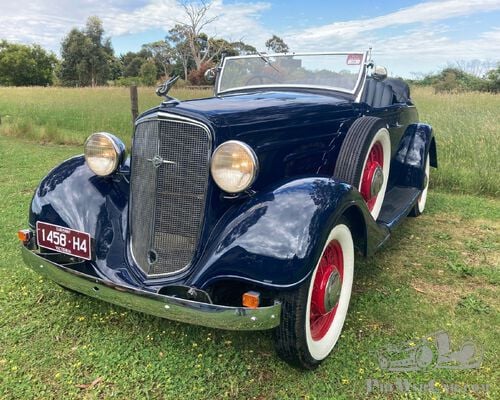
1934 Chevrolet Standard Roadster
1934 Chevrolet Standard Roadster This vehicle was delivered to Australia from Chevrolet and the body was manufactured by Holden Body Works w..
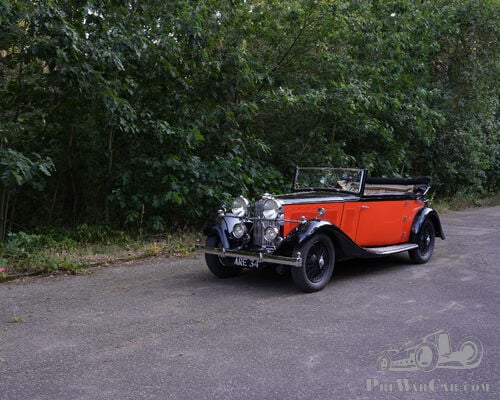
1934 Talbot AV105 Three Position Drophead Coupé
Registration no. ARE 34Chassis no. 35488 Much supporting paperworkRestored exampleVery usa..