The global magazine and marketplace for classic car enthusiasts, by enthusiasts.


Filter
Classic Aston Martin, Morris for sale - Aston Martin, Morris cars for sale
-

'Halford Special' 1923 Aston Martin
One of the most advanced race cars of the mid-1920s, the Halford Special was built by engine designer Major Frank Halford using Aston Martin chassis, number ‘1916’. In its original configuration, this chassis was the first Aston Martin built for sale and competed at Brooklands in 1923 but crashed in a Voiturette race in Boulogne the following ye.. -
1934 Aston Martin 1.5 Litre Mark 2 Long chassis sports tourer.
1934 Aston Martin 1.5 Litre Mark 2 Long chassis sports tourer. Chassis Number: D-4/417/L Engine Number: D-4/417/L Registration Number: WD7623 Stunning condition and the best one of these we have seen. This car had a full restoration including a massive engine rebui.. -
1934 Aston Martin Mk II (long chassis)
This 1934 Aston Martin MkII long chassis tourer is a stunning example of vintage Aston Martin craftsmanship. Originally delivered new to Mr King of Norwich in December 1934, the car remained in the King family until 1952. It was enjoyed next by Mr Briggs of Berkshire and remained in the UK until 1986 when it travelled to New York until 2002,.. -
1938 Aston-Martin 15/98
C8/843/SC is a truly exceptional example of a 15/98 kept in immaculate mechanical and cosmetic condition. Records of this C8/843/SC, including build sheets, along with entries in the AMOC Registers over the years along with some early ownership details. The car spent much of its life as part of a collection in West Germany thought to be owned .. -
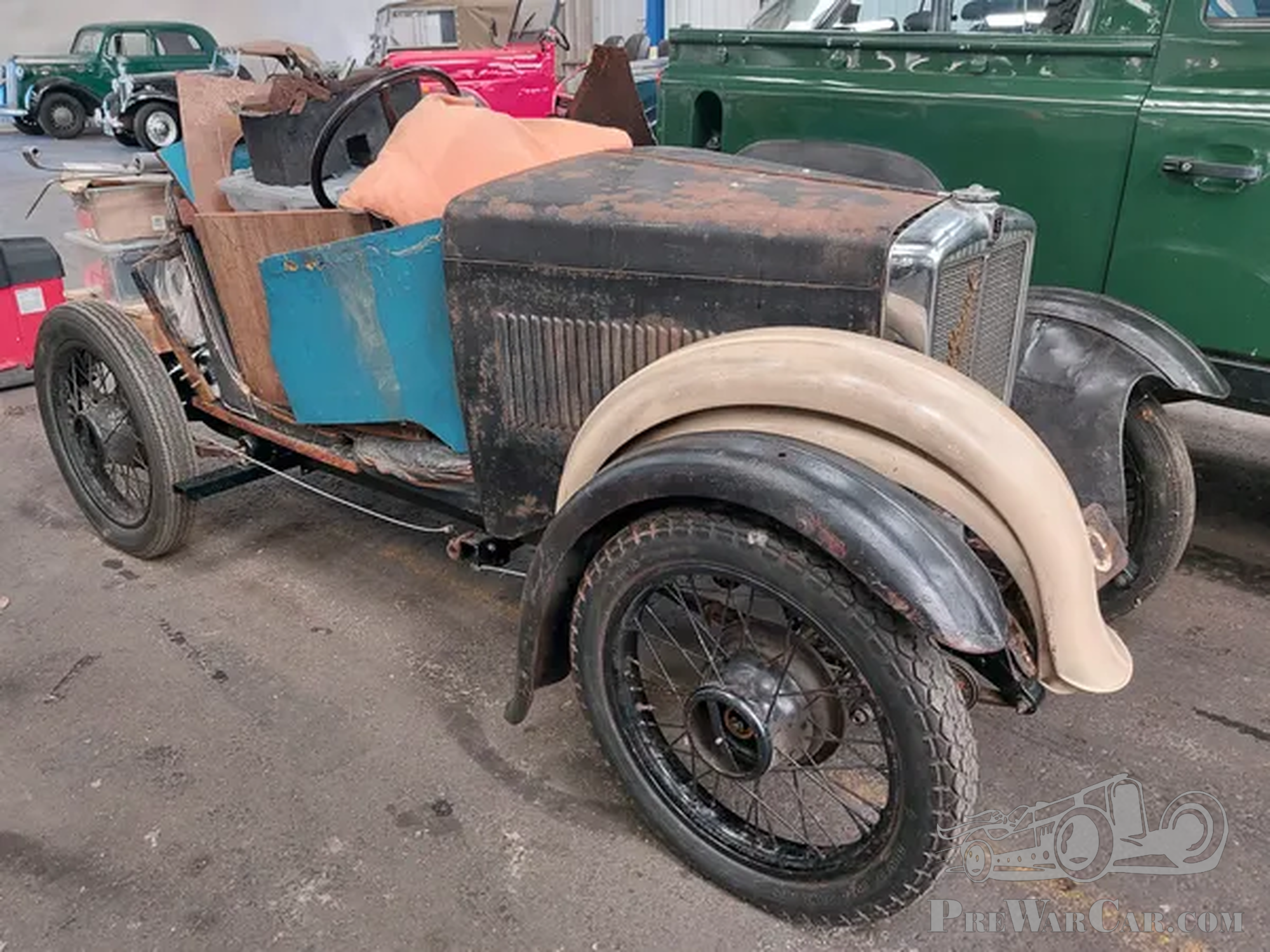
Morris 8 1936 Rolling Chassis + Series E Engine + 4 speed Gearbox
Rare opportunity to acquire a Morris 8 1936 Rolling chassis to build a 1930s style special. Complete Rolling chassis includes following parts.Complete Chassis frame, Rear Axle with Crown Wheel & Pinion and Prop shaft, rear leaf springs, , front shock absorbers, 5 spoked 17” wheels, bishop cam Steering box (Overhauled), steering.. -
1932 Aston Martin International
1932 Aston Martin International, chassis number A2/129. This is the last International sold by Aston Martin, first registered on 5th May 1932 and declared to the Licencing Authority as used for ‘Experimental Purposes’. Unusually, it was fitted with long sweeping front wings fitted to the bodywork, rather than the more normal ‘cycle wings’. Sold .. -
1933 Morris McEvoy Special | Brightwells | Auction Ends: Wed 24th Jun
Unfinished project; elements of genuine McEvoy Special Jensen body included; lots of spares; lots of potential Colonel Michael McEvoy was a fascinating character who not only saved the VW Beetle from the rubble of WW2, he also designed superchargers for Mercedes, made his own motorcycles and produced high-performance engine .. -
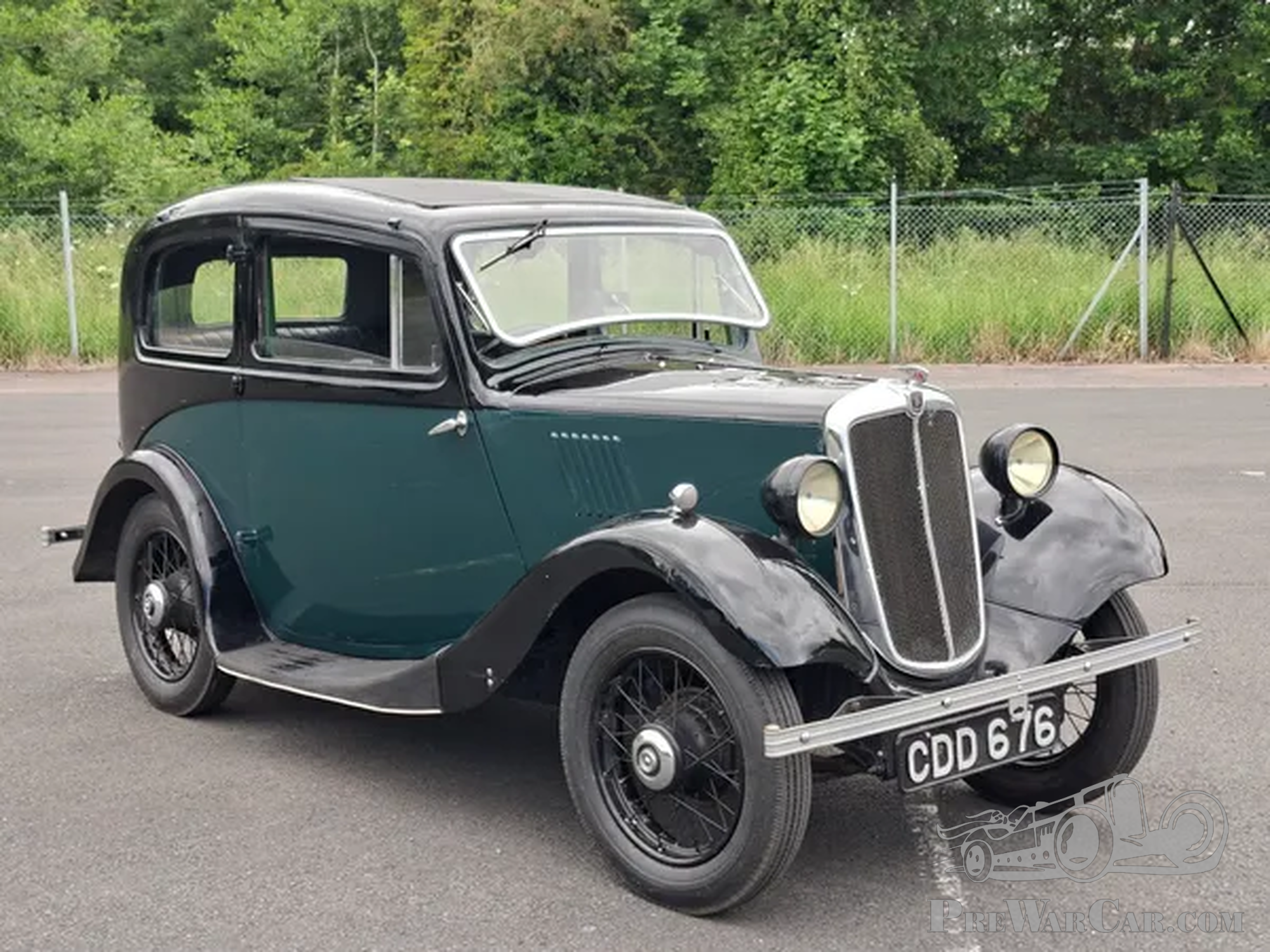
1937 Morris Eight Saloon | Brightwells | Auction Ends: Wed 24th Jun
Running and driving; tax and MOT exempt; its current owner since October 2012 This charming 1937 Morris 8 Saloon, finished in an attractive green and black colour scheme, is powered by a 796cc petrol engine. This pre-war vintage machine has had eight former keepers and has been with its current owner since October 2012. -
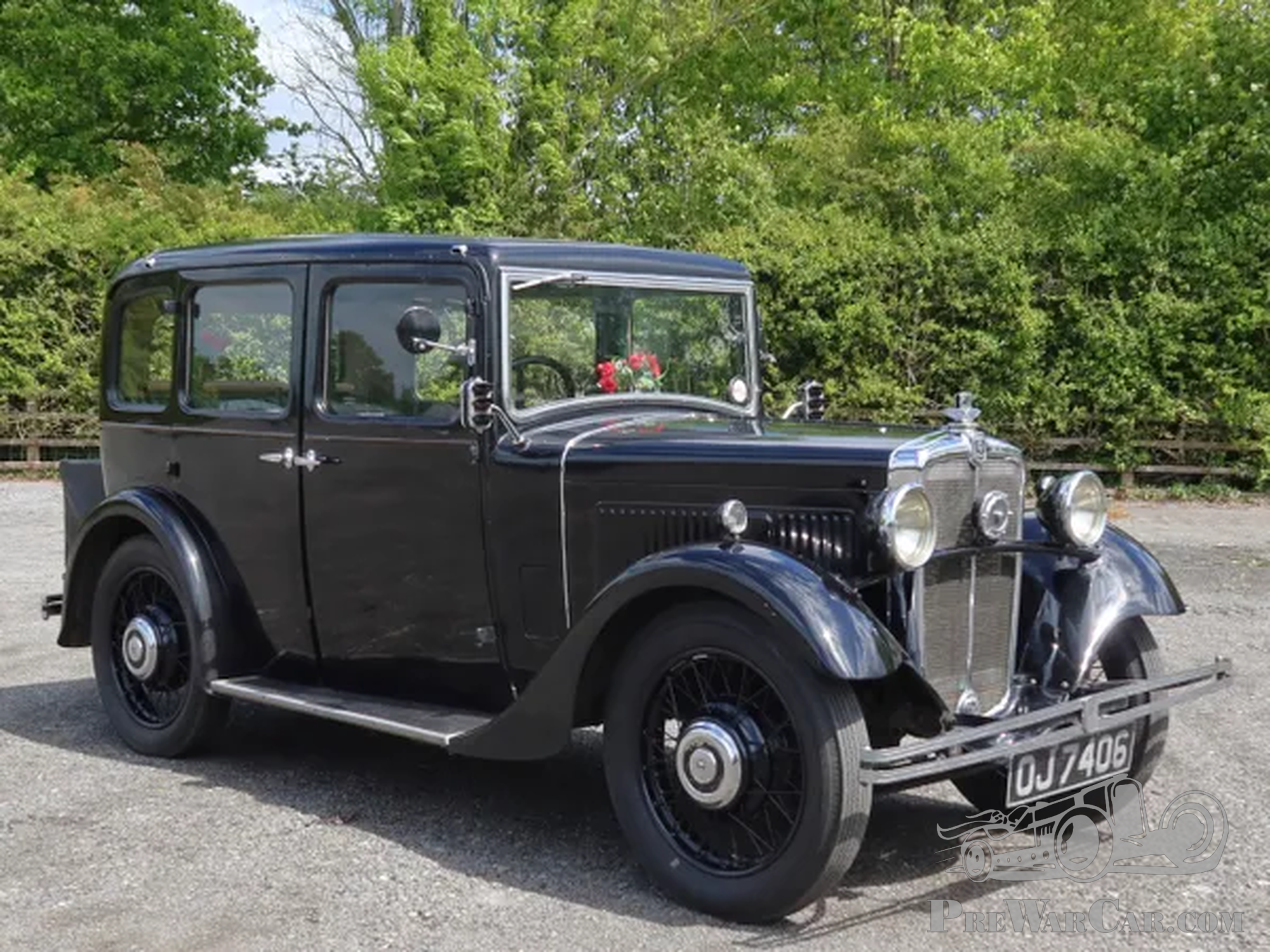
1932 Morris Ten Saloon | Brightwells | Auction Ends: Wed 24th Jun
In the current ownership for 47 years; body-off restoration in the early 1980s and in regular use since; only 1,450 miles on rebuilt engine; Wilcot Robot indicators; Dunhill luggage trunk; a gorgeous little Morris that is a credit to its long-term ownerWhile 20% of the UK’s roads were tarmac in the early-1920s, by the early-1930s t.. -
1934 Aston Martin Mk II (short chassis)
Brand new Ecurie Bertelli engine built around a new cylinder block, only test miles completed since. The original cylinder block comes with the car. The Mk II model was introduced in 1934, as Aston-Martin’s replacement for the Le Mans. It sported a new, stronger chassis and an improved engine with counter-balanced crankshaft. Or..



Aston Martin
GB, 1922 to date
(1) Bamford and Martin Ltd, London, W.8, 1922 – 1925
(2) Aston Martin Motors Ltd, Feltham, Middlesex, 1926 – 1929
(3) Aston Martin Ltd, Feltham, Middlesex, 1929 – 1957
(4) Aston Martin Lagonda Ltd, Newport Pagnell, Bucks, 1958 to date
The Aston Martin’s reputation has always far transcended its small-scale production. The first prototype was evolved by Lionel Martin and Robert Bamford in 1914, the Aston part of the name deriving from the Aston Clinton hill-climb. It used a 1.4-litre side-valve Coventry-Simplex engine in an Isotta-Fraschini voiturette chassis, and was followed by a second Aston Martin prototype in 1919. Aston Martin production started in 1922 with a larger 1½-litre side-valve engine in a chassis with 4-speed gearbox and semi-elliptic springs all round. A complete Aston Martin car for sale cost £850, and about 60 were made up to 1925. Successes included 2nd place in the 1922 200-Mile Race at Brooklands, and the collection of a number of world records in the same year. Front-wheel brakes were standard from 1923, and several overhead-camshaft engines were evolved for racing, initially of single-cam type, but later in 16-valve (1922) and 8-valve (1924) twin-cam forms, the former developing 54bhp. These Aston Martin cars were generally less successful than the production side-valves. The Aston Martin company exhibited at Olympia in 1925, but was wound up a few weeks later.
A comeback was staged in 1926, the new Aston Martin machine being an ohc 1½-litre designed by A.C. Bertelli. This was tested in an Enfield-Allday racing chassis and went into production at Feltham in 1927 in 50bhp form, with 4-speed separate gearbox, dash-mounted steering box, and David Brown worm final drive. Bodies were the work of Bertelli’s brother Enrico, and early Aston Martin sports models weighed only 2.128lb complete. A 63bhp dry-sump competition engine was made in 1928, and two dozen Aston Martin cars had been delivered by 1929. The dry-sump engine was standardized in 1930 and the Aston Martin 1½-litre model had a long and distinguished competition history: 6th in the ‘Double-12’ at Brooklands in 1931, the award of the Biennial Cup at Le Mans in 1932, 5th at Le Mans in 1933 and 3rd in 1935, in which year a class win was recorded in the Mille Miglia. In 1938, two years later the Aston Martin 1½-litre had gone out of production, Polledry took 2nd place in the Bol d’Or 24-Hour Race, and a similar car was actually 5th as late as 1951.
Finance was always a problem; there was a brief marketing link with Frazer Nash in 1931 and in 1933 the Aston Martin firm came under the direction of R.G. Sutherland, who retained control until after World War 2. In 1932 the Aston Martin 1½-litre acquired bevel drive and a unit gearbox of Moss make, being sold in 55bhp touring and 70 bhp sports versions, while the handsome Aston Martin MkII of 1934-1936, though it now weighed 2.576lb, was capable of 85mph and sold for £610. Aston Martin’s best sales year was 1933 with 105 cars delivered. The 80bhp Aston Martin Ulster model of 1935 could exceed 100mph. An Aston Martin 2-litre model, still with ohc was prepared for the cancelled 1936 Le Mans race and replaced the 1½-litre the following season, with wet-sump lubrication, synchromesh gearbox and Girling brakes at £575; a dry-sump Aston Martin Speed Model version was still available for £200 more. Prices were slashed to £495 in 1939, in which year the Aston Martin Speed Model was sold with aerodynamic bodywork and the Cross rotary-valve engine was tried, but not adopted. There were also wartime experiments with the Atom saloon with tubular chassis-body structure and Cotal gearbox, but the first post-war Aston Martin for sale, a Claude Hill design, featured a short-stroke pushrod 2-litre engine, independent front suspension, a hypoid back axle, hydraulic brakes and, for the first time, coil ignition. One of these Aston Martin cars won at Spa in 1948, but very few were made, even after the acquisition of the company by David Brown group in 1947.
In 1949 the 2.6-litre twin ohc 6-cylinder engine designed by W.O. Bentley for Lagonda (also part of the David Brown empire) was installed in an aerodynamic Aston Martin coupé using a space-frame with square-section tubes. It ran at Le Mans, reaching production status in 1950 as the Aston Martin DB2 available in 107bhp and 123bhp Aston Martin Vantage forms at a price of £1.915. These cars did well at Le Mans in 1950 and 1951, as well as winning their class in the 1951 Mille Miglia; they led to some out-and-out sports-racing machines, the Aston Martin DB3 (for sale in 1952), with Eberhorst-designed structure and 5-speed gearbox, and the 2.9-litre Aston Martin DB3S (for sale in 1953), which developed 210bhp and reverted to four forward speeds. Three wins in the Goodwood 9-Hour Sports-Car Race, and place at Sebring and 5th in the Mille Miglia in 1953, and twosuccessive 2nd places at Le Mans (1955 and 1956) made the David Brown Astons a powerful force in international racing. The touring Aston Martin DB2 acquired rather occasional rear seats in 1954 and a 140bhp 2.9-litre engine in 1955.
1956 saw the first of two unsuccessful forays into Formula I (the second was in 1959), and the début of the Aston Martin DBR series of sports-racers with space frames and De Dion rear axles, the first Aston Martins to have disc brakes. These were raced in 2.5-, 2.9-, and 3.7-litre forms and scored three successive wins in the Nürburgring 1000-Kilometre race, a win at Spa in 1957, a 1-2-3 victory in the 1958 T.T., and finished 1st and 2nd at Le Mans in 1959. Also in 1959 Aston Martin became the first and only British makers to win the Sports Car Constructors’ Championship. The MkIII version of the Aston Martin DB2/4 (for sale in 1957) had front disc brakes, and could be had with overdrive or automatic gearbox – factory options which are found on all later Aston Martins. Manufacture was transferred to the former Tickford body works (which had made the N.P. car in the 1920s) at Newport Pagnell in 1958. 1959 saw a detuned 240bhp version of the 3.7-litre DBR engine installed in the Aston Martin DB4, an Italian-styled sports saloon with platform frame, trailing-link and coil rear suspension and all-round disc brakes. A 302bhp short-chassis GT version capable of 170mph followed in 1960. A 255bhp Vantage engine was an option on the standard chassis in 1962, and the 4-litre Aston Martin DB5 for sale in 1964 had alternator ignition, a diaphragm clutch and the new transmission option of five forward speeds. The 5-speed box was standard in the 282bhp Aston Martin DB6 which sold in 1966 for £5.084. A 325bhp Vantage version was also available. An additional 1967 Aston Martin model had coupé bodywork by Superleggera Touring of Italy – a return to two-seaters after a lapse of several years. In December 1966 it was announced that the Aston Martin company was developing a 5-litre V8 racing engine to be installed in a Lola chassis. New for 1968 was the Aston Martin DBS coupé with four headlamps and De Dion rear axle, and in 1970 Mk2 versions of the Aston Martin DB6 had power steering as standard and fuel injection as a regular option. A new Aston Martin DBS was powered by Aston Martin’s V8, a 4ohc 5.4-litre unit developing 375bhp; transmission options were a 5-speed ZF gearbox or Chrysler Torqueflite automatic. In 1972 Ogle produced their Karen-styled version of this car with 22 rear lamps, Sundym glass and headlamp washers. Aston Martin changed hands in April of that year, and the 6-cylinder cars were discontinued.
Source: Georgano, encyclopedia of motorcar; MCS
The information is written with the greatest of care. However, if you have any suggested amendments please contact us at office@prewarcar.com
Morris
GB, 1913 to date
(1) W.R.M. Motors Ltd, Cowley, Oxford, 1913 – 1919
(2) Morris Motors Ltd, Cowley, Oxford, 1919 – 1970
(3) Austin-Morris Division, British Leyland Motor Corp Ltd, Cowley, Oxford, 1970 to date
W.R. Morris (later Lord Nuffield), an Oxford cycle and motor agent, launched his Morris-Oxford light car in 1913. This Morris car was made from proprietary parts, the engine being a 1-litre T-head four by White and Poppe. At £175 the Morris car was one of the best of the true light cars (as opposed to cyclecars) and over 1.000 Morris cars had been sold by the end of 1914. A larger model, the famous Morris Cowley, arrived on the scene in 1915; this Morris car was assembled from American components, the engine being by Continental. After World War 1 Morris cars marketed two 1½-litre L-head sv fours, with power units by Hotchkiss of Coventry; the Morris Cowley differed from the Morris Oxford mainly in its more austere equipment and the absence of a starter. In an inflationary climate, Morris cars was brave enough to reduce the prices of its Morris cars(a Morris Cowley two-seater cost £465 in October 1920, £299.10s a year later, and £225 in October 1922) and ensured a steady flow of Morris carproduction by acquiring his suppliers, such as Hotchkiss, Wrigley (transmissions) and Hollick and Pratt (bodies).
The Morris ‘bullnoses’ were soon best-sellers backed by a nation-wide service organization of Morris cars, and in 1925 Morris outsold all his competitors with 54.000 Morris cars. From 1924 to 1926 the staple Morris cars were the 1½-litre Morris Cowley and the 1.8-litre Morris Oxford, both with 3-speed gearboxes and the wet-plate clutches which persisted on some Morris carmodels right up to 1939. The Morris Oxford acquired front wheel brakes in 1925, and they were available as an option on Morris Cowleys a year later. 1927 Morris cars produced the flat radiator and also a venture into the export market with the unsuccessful Empire Oxford Morris car of 2½-litres, which had a 4-speed box and worm drive. Equally unsuccessful was a plan to market Gallicized Morris cars built in the Léon Bollée plant at Le Mans.
Meanwhile Cecil Kimber had produced the first of the Morris-Oxford-based MG sports cars, and a new name had been born. Morris had made a few six-cylinder Morris cars in the early 1920s, but his first serious attempt in this direction with Morris cars was a 2½-litre ohc model for 1928, the engine of this Morris car inspired by the Wolseley 16/45, a make which had come under Morris control the previous year. 1929 saw another ohc Morris car, the 847cc Morris Minor at £125. Never a best-seller, the Morris car none the less served as the basis for MG’s Midget. The 1930 6-cylinder Morris cars had hydraulic brakes, extended down the range until they were universal by 1934 on all Morris cars, and in 1931 Morris managed to offer a simplified sv two-seater version of the Morris Minor for £100. The early 1930s proved very difficult for the Morris car company, which had no obvious best-seller and too many different models of Morris cars. Sliding roofs and electric fuel pumps by the Morris-owned S.U. concern were innovations for 1932 and 1933 Morris cars pioneered the semaphore-type traffic indicator in Britain. That year Morris cars sv 1.3-litre Morris Ten-Four came out as an answer to Austin’s Ten and Hillman’s Minx. All 1934 Morris cars had synchromesh and the bigger sixes the added refinement of a free wheel.
The best-seller Morris car came at last in 1935 with the 918cc sv Series I Morris Eight, which retailed at £132.10s for a fully-equipped Morris car saloon and helped reach their first million Morris cars by the summer of 1939. In a bigger category were the Series II Morris carmodels with modern styling, 3-speed gearboxes, and built-in jacking systems, ranging from a revised Morris Ten-Four up to a 3½-litre 6-cylinder Morris Twenty-Five at £280. These Morris cars were contemporary with the Series I, though introduced some months after that Morris car. All 1938 Morris cars except for the Morris Eight had push-rod ohv engines (already applied to Wolseley and MG). Later that year Riley was absorbed into the Nuffield Morris car empire. Two 1939 winners were a revised Series E 8hp with a 4-speed gearbox and headlamps faired into the wings of the Morris car, and the 1.140cc ohv Series M Ten, which introduced integral construction to Cowley and this Morris car was made after World War 2 by Hindusthan in India.
Only the 8 and 10 Morris cars were made in the first post-war years, the first really new Morris car for ten years being the 1949 Morris cars designed by Alex Issigonis. Of these the MM series Morris Minor used the old 8hp sv engine, but boasted integral construction, rack-and-pinion steering and torsion-bar independent front suspension and set a new standard in popular car handling. A million of the basic design Morris cars had been sold by January 1961. Its companion Morris carmodels, also chassisless, and with independent front suspension were a new sv 1½-litre Morris Oxford and the 2.2-litre ohc Morris MS Type Six.
The amalgamation of Nuffield and Austin to form the British Motor Corporation in 1952 resulted in a gradual process of rationalization. First the Morris Minor went over to Austin’s 803cc ohv A30 engine in 1953. The Series II Oxford Morris car and its less powerful companion, the Morris Cowley, of 1954 had Morris hulls, but their engines were also ohv Austins. In 1955 the Morris carrange was completed by a new Isis using the 2.6-litre BMC 6-cylinder unit – this Morris car was discontinued in 1958. In the late 1950s some Morris cars were made and sold in Australia under the Morris car name which were in fact more closely akin to other makes in the BMC group. The 6-cylinder Morris Marshall was really an Austin A105, while both the Major and its Austin counterpart, the Lancer, were based on the Wolseley 1500.
With the arrival of the Farina-styled 1½-litre Morris car saloons in 1959, differences between Austin and Morris cars had been reduced to house colours and radiator emblems. The front-wheel-drive Mini (1960) was shared between the two makes and though its bigger stablemate, the 1100 of 1963 with Hydrolastic suspension, was initially a Nuffield monopoly Morris car, the inevitable Austin variant followed a year later. In the case of the third front-wheel-drive model, the 1800, Austin were ahead of Morris cars in introducing it by nearly eighteen months. The 1968 Morris car range comprised the fwd Mini, 1100/1300, and 1800 as well as the conventional 1.600cc Oxford and the indestructible Morris Minor 1000, now with 1.098cc engine and still selling close on 60.000 Morris cars a year. This sole survivor of independent Morris car design did not disappear until the end of 1970. Minis became a separate make that year. From 1971 Morris car versions of the 1100 and 1300 disappeared; the name was reserved for the Marina, an orthodox rear-wheel-driven family saloon with Minor 1000 front suspension, semi-elliptics at the rear, and drum brakes on the simpler variant Morris cars. Push-rod 1.300cc and 1.800cc B.L.M.C. 4-cylinder engines were used, and the original 2-door coupé and 4-door saloon were joined by a station wagon Morris car in 1973. The largest fwd cars were still available with Morris car badges – there was a version of the 6-cylinder 2200 in 1972.
Source: Georgano, encyclopedia of motorcar; MCS
The information is written with the greatest of care. However, if you have any suggested amendments please contact us at office@prewarcar.com


Featured
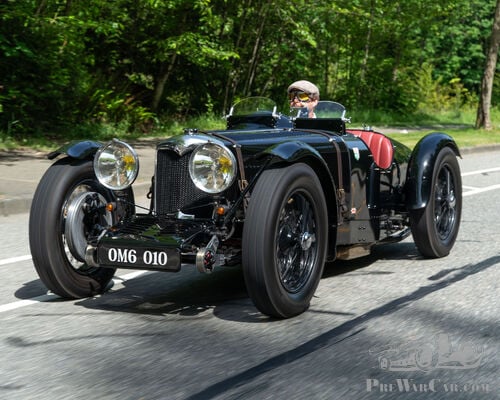
Riley 14/6 Special 1933
The ExperienceStep into the golden age of British motoring. This 1933 Riley 14/6 Special is a masterclass in pre-w..
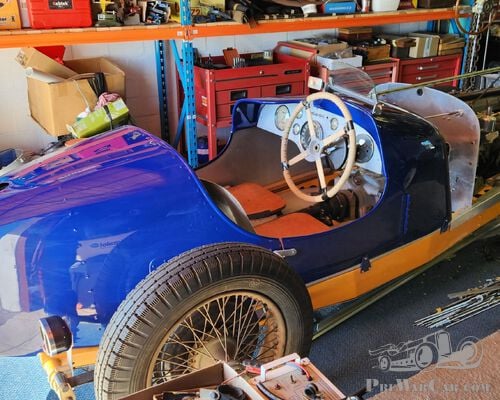
Riley TT Sprite
1935 6-cylinder TT Sprite replica. Chassis # 46A2722. Engine # 6A2722. Original Ulster Imp body. Restoration nearing completion. Engine, Ge..
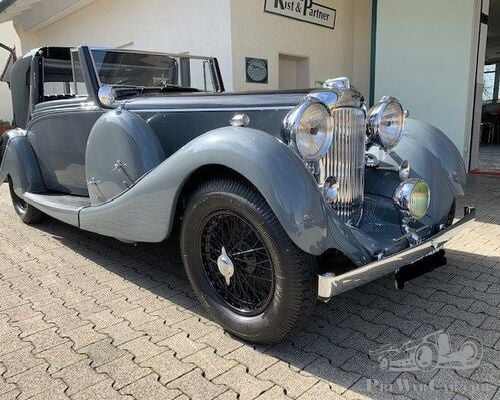
Lagonda LG 45 Coupe de Ville Sedanca by Mayfair
The successor to the M45, the LG45 was built around the same highly capable, competition-proven 4.5-litre Meadows inline-six engine, but featured r..