The global magazine and marketplace for classic car enthusiasts, by enthusiasts.


Filter
Classic Rolland-Pilain, Bean for sale - Rolland-Pilain, Bean cars for sale
-

Rolland Pilain
I am selling a 1913 Rolland Pilain RP 10HP in very good condition. It has a standard registration document in my name, and the MOT will be carried out prior to the sale. -
Circa 1928 Bean 14 hp rolling chassis
Circa 1928 Bean 14 hp rolling chassis for sale. This would be an ideal project to build a special sporty body on . Look at the large frontwheel brakes a la Delage and more powerful engine. Not many of these 14hp Beans are around . The price includes all shipping costs to Europe and the import vat . £ 8500.


Rolland-Pilain
France, 1906 – 1931
SA des Etablissements Rolland-Pilain, Tours
Unusual among French marques of its period, Rolland Pilain cars made their greatest impact after World War 1. Their first product was a 20hp 4-cylinder model Rolland Pilain cars with a monobloc engine, though smaller 2.2-litre shaft-driven Rolland Pilain cars were available in 1909 and a 3-speed 1½-litre Rolland Pilain 8/10CV in 1910, in which year the Rolland Pilain car company was also experimenting with ‘valveless’ engines and 4-wheel brakes. Though racing was in the doldrums, the Rolland Pilain car company went to the trouble of building a big chain-driven Rolland Pilain car for the 1911 Grand Prix de France, and a complex 1912 range started with a Rolland Pilain 9CV of 1.7-litres and went up to a chain-driven 4-cylinder 60 Rolland Pilain car of 130x270mm. The 6-cylinder Rolland Pilain 18CV had a ‘valveless’ engine, and even in 1913 chain drive was still optional on the biggest fours of 20CV and 24CV Rolland Pilain cars. Only 1.9-litre and 4-litre 4-cylinder Rolland Pilain cars with sv monobloc engines and unit gearboxes were listed in 1914.
These basic types of Rolland Pilain cars, still with pedal-operated transmission brakes, were available again after World War 1, but far more advanced was the 2.2-litre Rolland Pilain 14/16 of 1921, which boasted not only overhead valves and a detachable head, but also front-wheel brakes (hydraulic at the front and mechanical at the rear). This Rolland Pilain car was still catalogued in 1926. Even more ambitious was the 2-litre twin ohc straight-8 GP Rolland Pilain car of 1922, with desmodromic valves, ball-bearing crankshafts and 4-wheel hydraulic brakes. A victory of a Rolland Pilain car at San Sebastian in 1923 was the limit of the success of Rolland Pilain cars on the circuits, but the type found its way into the catalogue as the Type A22 Rolland Pilain car at 90.000fr, and one of the racers also ran with a 2-litre, 6-cylinder cuff-valve Schmid engine. In 1925 came a 2-litre ohv 4-cylinder Rolland Pilain car with 4-wheel mechanical brakes, selling for £725 in England, while a 1½-litre development, the Rolland Pilain D26, was introduced for 1927. In 1929 Rolland-Pilain car, along with several other French firms, tried a Franco-American theme by introducing a range of big luxury chassis with sv Continental engines. Both the 6-cylinder, 3-litre, and the 4-litre straight-8 Rolland Pilain cars had centralized chassis lubrication, though the elegant bodywork of the Rolland Pilain car was marred by the use of artillery wheels. At the 1930 Paris Salon the Rolland Pilain car company shared a stand with the BNC (also going through a Franco-American phase), but this was the end, though the Rolland Pilain car firm’s Paris depot was still advertising spare parts for Bignan as well as Rolland Pilain cars in 1934.
Source: Georgano, encyclopedia of motorcar; MCS
The information is written with the greatest of care. However, if you have any suggested amendments please contact us at office@prewarcar.com
Bean
GB, 1919 – 1929
(1) A. Harper, Sons & Bean Ltd, Tipton, Dudley, Worcs., 1919 – 1926
(2) Bean Cars Ltd, Tipton, Dudley, Staffs., 1926 – 1929
The Bean was a remodeling of the Perry light car, whose manufacturers were taken over by Harper Sons & Bean, motor components makers, after World War 1. The Bean was to be mass-produced, in one 11.9hp model only. Its makers were members of a consortium of firms, including the famous, old-established names of Swift and Vulcan, Hadfields, the engineers of Sheffield, Gallay Radiators and Marles Steering, that was intended to achieve efficient quantity production by rationalization of parts. In fact, Bean carried cost cutting too far with this car. Its 4-cylinder, side-valve 1794cc engine was rough, the gear change difficult and the suspension harsh. The Bean four-seater open body cost only £80. However, 1922 customers were car-starved and undiscriminating, and 80 Bean cars a week were made that year, even if the first target of 50.000 Beam cars per annum remained a dream. The bigger, 2.3-litre Bean Fourteen introduced for 1924 was more modern machine, with its unit construction of engine and gearbox.
Hadfields took over Bean early in 1926. For 1927, the Bean company followed fashion by introducing a six, the ‘Bean 18/50’. Its 2.7-litre, overhead-valve engine was made by Meadows, and a rather square radiator replaced the well-known rounded Bean shape. Also new in 1927 was the Bean Imperial Six, the first Bean designed specifically for export. Unlike the Bean 18/50 for sale this had a Bean-built engine of 3.8-litres with a Ricardo cylinder head. The Australian explorer Francis Birtles drove a disintegrating Bean prototype from England to India, and in fact the Bean Imperial Six was never put into production. From 1927 all cars were called Hadfield-Beans. The 2.3-litre 14/40 Hadfield-Bean, which joined the range in 1928, was no better, with its unreliable engine and overhead-worm drive rear axle, bad brakes and difficult clutch- and gear-change. It was also old-fashioned in that it used a fairly large, long-stroke, side-valve 4-cylinder engine. The latter was economical, and the 14/40 Hadfield-Bean for sale was cheap, but cost cutting presumably dictated the fitting of quarter-elliptic rear springs, which cannot have improved comfort. There was a Bean 14/70hp sports version, which had better brakes, with Dewandre vacuum servo assistance, but the only good car in the range, the old Hadfield-Bean Fourteen for sale, was desperately out-dated and no Hadfield-Beans at all were made after 1929.
Source: Georgano, encyclopedia of motorcar; TRN
The information is written with the greatest of care. However, if you have any suggested amendments please contact us at office@prewarcar.com


Featured
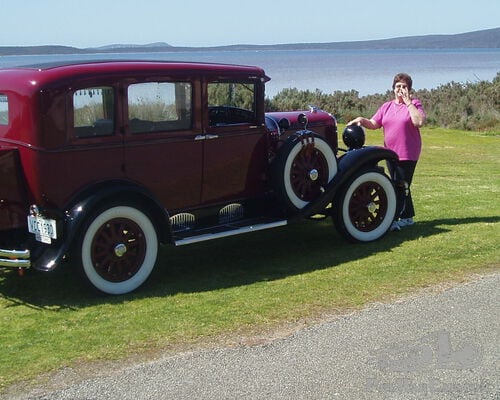
1930 Chrysler 66 Six-Wheel Equipped Royal Sedan
An exceptionally well restored and highly awarded Chrysler 66 Royal Sedan, with only two owners in nearly 97 years.The present owner ..
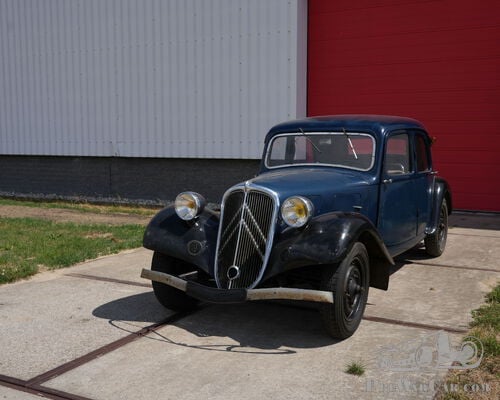
1935 Citroën Traction Avant
Early-production Traction AvantExceptionally original, unrestored conditionRecently part of a major museum collection
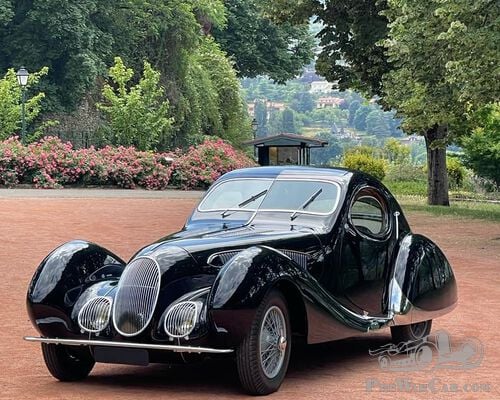
1939 Talbot-Lago T150C “Goutte d’Eau” — Iconic French Coachbuilt Masterpiece
Talbot-Lago T150C ‘Teardrop’ — An Icon of French Automotive Art There are motor cars that define an era. And then there are those tha..