The global magazine and marketplace for classic car enthusiasts, by enthusiasts.


Filter
Classic Bédélia for sale - Bédélia cars for sale
-

1929 Rolls-Royce 20/25 Estate Car
Extremely unusual well-proportioned estate coachwork from Burbage & SonsThoroughly well sorted benefitting from significant work from ourselvesCharming and practical vehicle accompanied by an interesting early history Coming off test on Christmas Eve 1929, GDP 43 was delivered to coachbuilder Th.. -
1924 Rolls Royce 20hp Doctors Coupe
1924 Rolls Royce 20hp Doctors Coupe Registration No: DS9474 Chassis No: GRK6 According to its accompanying copy build sheets, ‘GRK6’ was dispatched as a rolling chassis to Rolls-Royce of America Inc (Springfield, Massachusetts) in July 1924. Originally intended to carry Br.. -
1938 BMW 328 Roadster 1938 for sale
1938 BMW 328 Roadster Chassis number 85316 Registration number: TBA €790,000.00 Part of a small collection of rare BMW cars: This 328 was found as a wreck in the late 1960's with the then Czechslovakian title documents going back to 4th November 1970 when it was registered in Bratislava. The registration lists a succe.. -
'Halford Special' 1923 Aston Martin
One of the most advanced race cars of the mid-1920s, the Halford Special was built by engine designer Major Frank Halford using Aston Martin chassis, number ‘1916’. In its original configuration, this chassis was the first Aston Martin built for sale and competed at Brooklands in 1923 but crashed in a Voiturette race in Boulogne the following ye.. -
Marmon Type 70 Sedan 1930 for sale
Marmon-Roosevelt straight eight sedan. Model 97, Type 70. The body was built by Hayes Corp. Roosevelt is the companion make to Marmon, nevertheless the Marmon label is featured on the car. The car makes a striking impression with it's six wire wheels and handsome headlights. It runs and drives but it requires work. The restoration is older and .. -
5 ROVERS in the BICYCLE COLLECTORS ONLINE AUCTION
5 ROVER BICYCLES in the BICYCLE COLLECTORS ONLINE AUCTIONhttps://auction.onlinebicyclemuseum.co.uk -
1921 Ansaldo type 4C rolling chassis
1921 Ansaldo type 4C rolling chassis. Complete engine and gearbox no 17634 and chassis no 1763. All components are in excellent condition including the 5 original wirespoked wheels and three of the beaded edge tyres. Good radiator. Suitable project to build a Special from. OHC engine. € 18500 negotiable. .. -
Chenard & Walcker Model G
The Chenard & Walcker is a 1905 Model G, equipped with a 5-liter, four-cylinder engine producing 20 horsepower, enabling the car to reach a top speed of approximately 85 km/h | 50 mp/h. The body is a Double Phaeton and was crafted by the renowned coachbuilder Jean-Henri Labouredette. In addition to the radiator b.. -
1939 Rolls Royce Wraith James Young Razor Edge Saloon
1939 Rolls Royce Wraith James Young Razor Edge Saloon Chassis Number: WEC72 Registration Number: 39D25 (Ireland) £200k spent upon the restoration of this car to make it in effect a brand new Rolls Royce Wraith being delivered 86 years late!!! Simply.. -
1936 Bentley Derby 4.25 Sedanca by Thrupp & Maberly
1936 Bentley Derby 4.25 Sedanca by Thrupp & Maberly Chassis number: B-36-GA Registration Number: CXE213 A stunningly beautiful car which wows onlookers wherever it is seen, this 4.25 Litre Derby Bentley Sedanca Coupe has fabulous and possibly unique aluminium Sedanca coachwork by Thrupp and Maberly...


Bédélia
France, 1910 – 1925
(1) Bourbeau et Devaux, Paris, 1910 – 1916
(2) Mahieux et Cie, Levallois-Perret, 1920 – 1925
The Bédélia of 1910 was the first of the French cyclecars. Low-built and very light, unlike earlier attempts to provide a truly popular car, the Bedelia could carry two passengers in tandem. The rear passenger controlled the steering, which was of the crude centre-pivot variety, and at first he also changed speed. The power unit of the Bedelia for sale was a single-cylinder in any one of three sizes from 3½ to 5½hp, or else a V-twin of 10hp. Transmission was by belts, providing two forward speeds. Cyclecars waned in popularity after World War 1, giving way to the light car, or miniature big car, but the Bédélia was longer-lived than most. Postwar Bedelia models had normal seating arrangements and three forward speeds, but the choice of a single or 2-cylinder engine was still available. In 1920 the founders, Henri Bourbeau and Robert Devaux, sold the Bedelia business to one of their agents, M. Binet, who had the car built for him by L. Mahieux et Cie.
Source: Georgano, encyclopedia of motorcar; TRN
The information is written with the greatest of care. However, if you have any suggested amendments please contact us at office@prewarcar.com


Featured
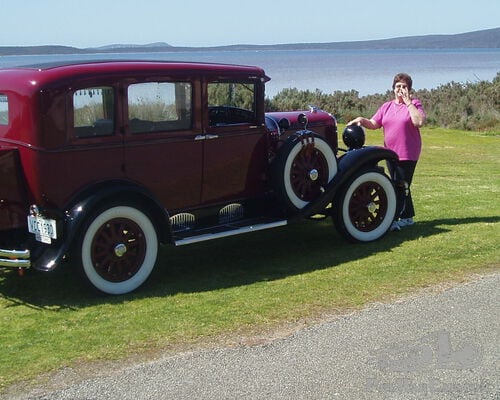
1930 Chrysler 66 Six-Wheel Equipped Royal Sedan
An exceptionally well restored and highly awarded Chrysler 66 Royal Sedan, with only two owners in nearly 97 years.The present owner ..
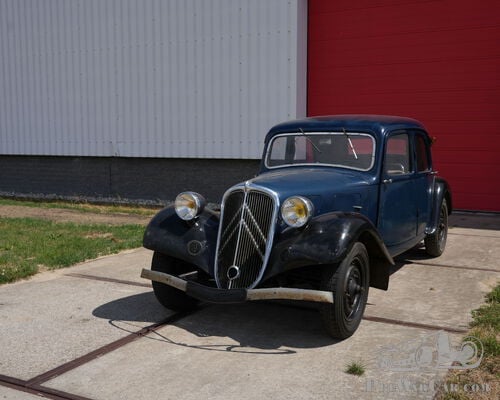
1935 Citroën Traction Avant
Early-production Traction AvantExceptionally original, unrestored conditionRecently part of a major museum collection
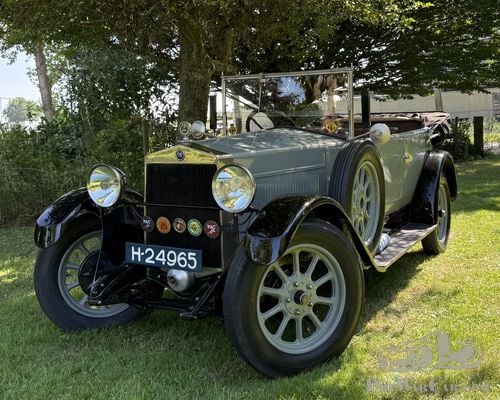
Fiat 509 Torpedo / Spider – Exceptionally Original and Complete
A Rare and Highly Original Example with Long-Term Dutch HistoryOffered for sale is an exceptionally original and remarkably complete Fiat 50..