The global magazine and marketplace for classic car enthusiasts, by enthusiasts.


Filter
Classic Belsize for sale - Belsize cars for sale
-

1916 Talbot 4 CYX Tourer by Walter Whitbourne of Melbourne
1916 Talbot 4 CYX Tourer by Walter Whitbourne of Melbourne Registration number: SV 7832 Chassis number: 7424 Engine number: 4CYX 725 1916 Talbot 4CYX. The car has been fully restored to concours condition & as a result is presented in impeccable o.. -
1930 Chrysler 66 Six-Wheel Equipped Royal Sedan
An exceptionally well restored and highly awarded Chrysler 66 Royal Sedan, with only two owners in nearly 97 years.The present owner acquired the car as a complete and remarkably original example and subsequently carried out a no-expense-spared restoration over many years. The restoration was a total body-off, nut-and-bolt rebuild .. -
1911 Ford Model T Touring | RM Sotheby's | The Hershey Auction
To Be OFFERED AT AUCTION WITHOUT RESERVE at RM Sothebys' The Hershey Auction event, 7 - 8 October 2026. Offered Without Reserve | $10,000 - $15,000 USD Please check back soon as our dedicated cataloguing team is preparing the description for this lot. To view this car and others currently consigned to this auction, please visit the RM website a.. -
1935 Derby Bentley 3 1/2 Litre Sedanca Coupe by H.J. Mulliner.
1935 Derby Bentley 3 1/2 Litre Sedanca Coupe by H.J. Mulliner.Chassis number: B203CWRegistration number: BXP114Arriving with us in the next two weeks! A laregly original car with its original tool kit; this car spent 50 years in the ownership of one family who preserved it beautifully. since then the car has had a mechanical restoration & .. -
1939 Lagonda V-12 Drophead Coupé
1939 Lagonda V-12 Drophead CoupéChassis number: 14062Engine number: 14062Registration number: TBABody Number: 7542According to the Lagonda Club of Great Britain, the V-12 Drophead Coupé offered here was delivered new to James Scott and Son, of Dundee. In recent years it was fully restored in Sweden by world renowned Rolls Royce & Bentley spe.. -
1910 Mercedes Simplex 3.6 Litre 30HP Coachwork by Laclaverie Gaches et Cie
1910 Mercedes Simplex 3.6 Litre 30HP Coachwork by Laclaverie Gaches et CieRegistration No. SV6058Chassis No. 8837Engine No. 11645 Following the departure of Wilhelm Maybach from Mercedes in 1907 the company, along with several others, withdrew from active .. -
1902 Mors Model H Four Cylinder Rear Entrance Tonneau - VCC Dated
1902 Mors Model H 4 Cylinder Rear Entrance Tonneau Registration No. DY29Engine No. 8057VCC Dating Certificate. 2055 (1995) Emile Mors was right at the cutting edge of motor car development at the turn of the century and, from his Parisian base, built motor cars that were at the forefront in the major m.. -
1907 Cadillac Model M Touring | RM Sotheby's | The Hershey Auction
To Be OFFERED AT AUCTION WITHOUT RESERVE at RM Sothebys' The Hershey Auction event, 7 - 8 October 2026. Offered Without Reserve | $30,000 - $40,000 USD Please check back soon as our dedicated cataloguing team is preparing the description for this lot. To view this car and others currently consigned to this auction, please visit the RM website a.. -
1906 Success Model A Runabout | RM Sotheby's | The Hershey Auction
To Be OFFERED AT AUCTION WITHOUT RESERVE at RM Sothebys' The Hershey Auction event, 7 - 8 October 2026. Offered Without Reserve | $15,000 - $20,000 USD Please check back soon as our dedicated cataloguing team is preparing the description for this lot. To view this car and others currently consigned to this auction, please visit the RM website a.. -
1925 Rolls Royce Silver Ghost London To Edinburgh style tourer.
1925 Rolls Royce Silver Ghost London To Edinburgh style tourer. Chassis number: 48EU Reg Number: Canadian Registered 11771509. Previously UK BF6862 Location: Vancouver British Columbia. The Ghost 48EU started life as a large saloon/limousine as so many did, but by ..


Belsize
GB, 1897 – 1925
(1) Marshall & Co, Manchester, 1897 – 1902
(2) Belsize Motors & Engineering Co Ltd, Manchester, 1902 – 1906
(3) Belsize Motors Ltd, Manchester, 1906 – 1925
The ancestor of the Belsize was the Marshall, put together by a former bicycle manufacturer at a time when all ‘British’ designs except one (Lanchaster) were copies or adaptations of foreign cars. The Marshall was a modification of the French Hurtu, with a radiator added, which was in turn the German Benz, a small car with a single-cylinder horizontal engine and belt-and-chain transmission. The first cars to bear the Belsize name appeared in 1901. Most Belsize cars were of modern design, including the best known, a small Belsize 12hp for sale with shaft drive and a 2-cylinder engine by Buchet that had mechanical inlet valves and was efficient for its day. Chain drive was still considered appropriate for big cars, like the 20hp Belsize, which also had a 3-cylinder engine and a dashboard radiator. At the 1906 Olympia Show, a fine shaft-driven six with overhead valves was exhibited. However, the Belsize firm gained most of its repute from its conventional, smaller cars, which came to use 4-cylinder, side-valve engines with a notably good power output, unit construction of engine and gearbox, and worm final drive. Commercial vehicles, including Belsize taxis, were also made.
The staple model by 1920 was the Belsize Fifteen, of 2.8 litres; but in 1921, a true light car was introduced, the Belsize-Bradshaw. This used a 1094cc, ohv V-twin engine with oil cooling, designed by Granville Bradshaw, that was quieter-running than most conventional twins. Granville Bradshaw also made similar and smaller oil-cooled engines, some flat-twins, for installation in motor cycles and other manufacturers’ cars, as well as his famous air-cooled flat-twin (ABC). However, that in the Belsize-Bradshaw for sale was unreliable and frail, and undistinguished water-cooled fours replaced it in the light car range. All the same, by 1924 all cars were called Belsize-Bradshaws. The firm’s last fling was into multi-cylinderism on a miniature scale, with a 1696cc six in 1924, and, for 1925, a 2½-litre straight-8, both with overhead valves. The Belsize-Bradschaws company was in the official receiver’s hands before many of either could be made.
Source: Georgano, encyclopedia of motorcar; TRN
The information is written with the greatest of care. However, if you have any suggested amendments please contact us at office@prewarcar.com


Featured
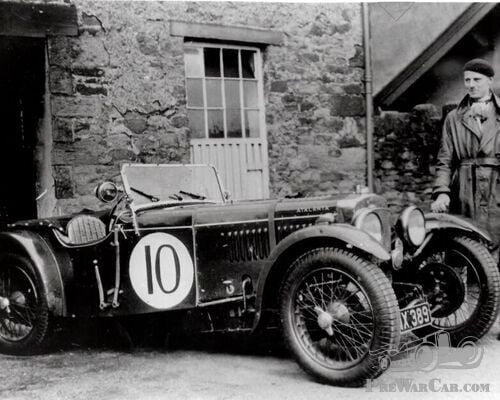
Fraser Nash TT Replica
AHX 389 ( chassis no. 2073, engine no. 10367).An important and correct short-chassis TT Replica with known history from new. Ex. H. P..
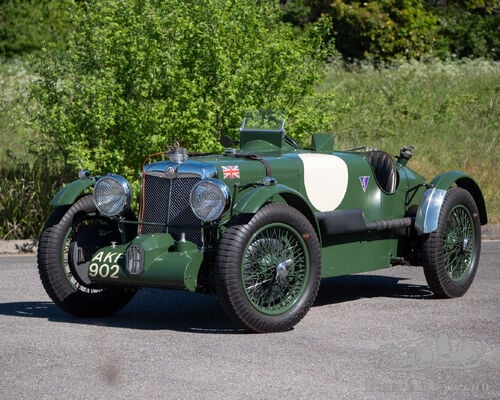
K3 Replica on KN Chassis
"The K3 Magnette must rank in the history books as the most famous and successful of all the record breaking MGs. With only 33 examples produced durin..
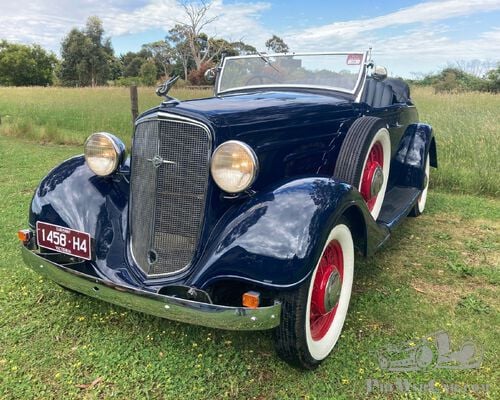
1934 Chevrolet Standard Roadster
1934 Chevrolet Standard Roadster This vehicle was delivered to Australia from Chevrolet and the body was manufactured by Holden Body Works w..