The global magazine and marketplace for classic car enthusiasts, by enthusiasts.


Filter
Classic Benjamin, Donnet/ Donnet-Zédel for sale - Benjamin, Donnet/ Donnet-Zédel cars for sale
-

Benjamin Type C Economic 1922
Benjamin Type C Economic Company/HistoryBenjamin was a French manufacturer of Cyclecars between 1921 and 1927 and based on the north-west edge of Paris and the firm was established by Maurice Jeanson in Asnieres eight kilometres from the centre of Paris. The business started out with a range of cycle cars, identified..

Benjamin (Benova)
France, 1921 – 1931
Maurice Jeanson, Asnières, Seine
The Benjamin was a typical attempt to build a 4-cylinder light car and still stay below the statutory French weight limit for cyclecars (350kg). Features on the Benjamin for sale were a 750cc sv engine and a 3-speed transaxle with no differential, and suspension followed Austin Seven lines: transverse at the front and quarter-elliptic at the rear. By 1923 this engine was giving 14bhp, long-chassis four-seater versions were catalogued, and an ohc Benjamin sports model was capable of 60mph. Unfortunately in 1924 there was an attempt by Benjamin at a true cyclecar for sale in the shape of a tiny staggered two-seater selling for 5.500fr. This had a 525cc air-cooled vertical twin 2-stroke engine and 2-speed gearbox mounted at the rear of a crude boat-shaped perimeter frame. There was also a similar 3-cylinder Benjamin 9cv model. Although Benjamin tried again with a rear-engined lightweight in 1925, this time with a 630cc 4-stroke motor, their regular offerings were now conventional machines powered by 945cc and 1100cc Chapuis-Dornier 4-cylinder engines, the latter available with ohv. These Benjamin cars had quarter-elliptic springing all round and worm drive. Four-wheel brakes were seen on the 1926 Paris Salon Benjamin cars for sale: these were the last Benjamins, though a year later the marque reappeared under the Benova name. The fours were continued, along with a small straight-8 using the new S.C.A.P. 1500cc ohv proprietary unit. The Benova was still quoted in 1931, when four 4-cylinder Benova models were offered, capacities ranging from 945cc to 2.1 litres.
Source: Georgano, encyclopedia of motorcar; MCS
The information is written with the greatest of care. However, if you have any suggested amendments please contact us at office@prewarcar.com
Donnet / Donnet-Zédel
France, 1924 – 1934
SA des Automobiles Donnet, Nanterre, Seine; Neuilly, Seine, Pontarlier, Doubs.
After Zédel and Vinot et Deguingand ceased production, Donnet, a new company constituted from them in 1924, offered two new cars called Donnet-Zédel. A light car was made, the 7CV Donnet-Zedel Type G, which had a side-valve 4-cylinder engine of 1100cc and (unusual for so small a vehicle) a 4-speed gearbox. It was a solidly-built machine, and a Donnet-Zedel sports model was listed. There was, in addition, a medium-sized four of about 2¼-litres. From 1926, the Donnet-Zedel firm came to concentrate upon a 2½-litre six, also with side valves, which proved a popular car. Another, smaller six with 1.3-litres (later 1.8-litre) Sainturat-designed engine was also offered by Donnet-Zedel. In the 1932 range however, was a new small Donnet-Zedel car in the shape of a 750cc 2-stroke. This, a violet design, had been sold as the Dequingand until 1930. A fwd 2-litre 6-cylinder Donnet-Zedel, shown at the 1931 Paris Salon came to nothing. With the demise of Donnet, Simca took over the Donnet-Zedel factory.
Source: Georgano, encyclopedia of motorcar; TRN
The information is written with the greatest of care. However, if you have any suggested amendments please contact us at office@prewarcar.com


Featured
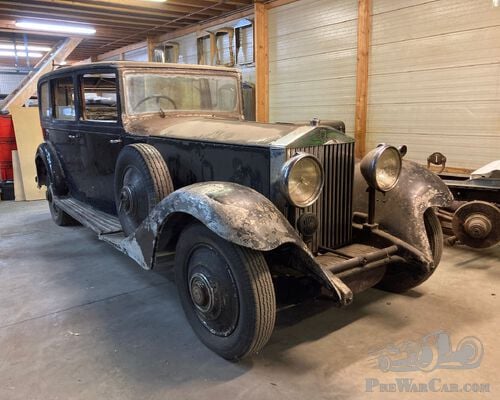

1915 Rolls-Royce Silver Ghost Barker Tourer
⁃ An exceptionally rare original bodied pre-war Silver Ghost⁃ Desirable Barker tourer in exciting barn find condition⁃ ..
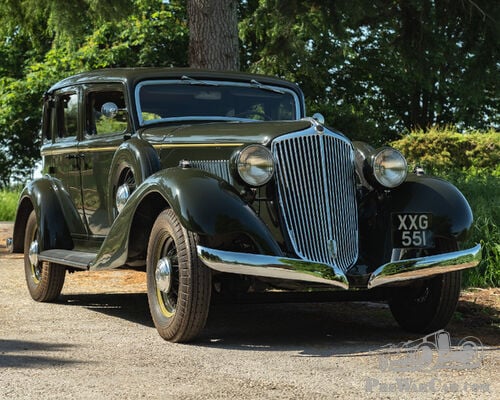
Graham Model 64 Standard Eight 'Blue Streak'
UK Registration No: XXG 551Chassis No: 1801069MOT: ExemptH&H ClassicsKelham Hall | Newark, Nottinghamshire