The global magazine and marketplace for classic car enthusiasts, by enthusiasts.


Filter
Classic Benjamin, Du Pont for sale - Benjamin, Du Pont cars for sale
-

1929 Du Pont Model G Two-Passenger Speedster by Merrimac | RM Sotheby's | The Monterey Auction
To Be OFFERED AT AUCTION at RM Sothebys' The Monterey Auction event, 13 - 15 August 2026. $800,000 - $1,200,000 USD One of the most beautiful American automobiles of its generationThe 1929 New York International Automobile Show display carOne of three two-passenger “taper tail” models with an external spareOne .. -
Benjamin Type C Economic 1922
Benjamin Type C Economic Company/HistoryBenjamin was a French manufacturer of Cyclecars between 1921 and 1927 and based on the north-west edge of Paris and the firm was established by Maurice Jeanson in Asnieres eight kilometres from the centre of Paris. The business started out with a range of cycle cars, identified..


Benjamin (Benova)
France, 1921 – 1931
Maurice Jeanson, Asnières, Seine
The Benjamin was a typical attempt to build a 4-cylinder light car and still stay below the statutory French weight limit for cyclecars (350kg). Features on the Benjamin for sale were a 750cc sv engine and a 3-speed transaxle with no differential, and suspension followed Austin Seven lines: transverse at the front and quarter-elliptic at the rear. By 1923 this engine was giving 14bhp, long-chassis four-seater versions were catalogued, and an ohc Benjamin sports model was capable of 60mph. Unfortunately in 1924 there was an attempt by Benjamin at a true cyclecar for sale in the shape of a tiny staggered two-seater selling for 5.500fr. This had a 525cc air-cooled vertical twin 2-stroke engine and 2-speed gearbox mounted at the rear of a crude boat-shaped perimeter frame. There was also a similar 3-cylinder Benjamin 9cv model. Although Benjamin tried again with a rear-engined lightweight in 1925, this time with a 630cc 4-stroke motor, their regular offerings were now conventional machines powered by 945cc and 1100cc Chapuis-Dornier 4-cylinder engines, the latter available with ohv. These Benjamin cars had quarter-elliptic springing all round and worm drive. Four-wheel brakes were seen on the 1926 Paris Salon Benjamin cars for sale: these were the last Benjamins, though a year later the marque reappeared under the Benova name. The fours were continued, along with a small straight-8 using the new S.C.A.P. 1500cc ohv proprietary unit. The Benova was still quoted in 1931, when four 4-cylinder Benova models were offered, capacities ranging from 945cc to 2.1 litres.
Source: Georgano, encyclopedia of motorcar; MCS
The information is written with the greatest of care. However, if you have any suggested amendments please contact us at office@prewarcar.com
Du Pont
US, 1920 – 1932
(1) Du Pont Motors Inc, Wilmington, Del., 1920 – 1923
(2) Du Pont Motors Inc, Moore, Pa., 1923 – 1932
E. Paul du Pont’s company built quality cars in limited numbers, total production being 537 vehicles of all Du Pont types. First of the line was a Du Pont 4.1-litre sv four with their own engine, selling for $2.600, but this gave way to proprietary-engined sixes, initially powered by Herschell-Spillman. The 1925 Du Pont Model D had a 6-cylinder 5-litre Wisconsin engine with overhead valves that developed 75bhp, a constant-mesh gearbox, and Lockheed hydraulic brakes to all four wheels. Its successor, the Du Pont Model E, could be had with a supercharger, but the best-known, and best, Du Pont was the Du Pont Model G speedster introduced in 1928. With its narrow straight wings copied from the Amilcar, Woodlite headlamps and grille concealing the radiator, the last a pioneering feature, the Du Pont Model G was not a good-looking car, but it was a very effective one. Like all the DuPont speedsters it had four forward speeds. The 5.3-litre, sv straight-8 engine, by Continental, gave 114bhp at 3600rpm with catalogued modifications. With the latter, 100mph was guaranteed. In the 1929 Le Mans 24 Hours race the Du Pont Model G proved itself faster than the other American entries, Stutz and Chrysler. Touring bodywork was, of course, available on the Du Pont car, and in 1931 came the long wheelbase (12ft 2 in) Du Pont Model H, built in a Stearns Knight frame. The later Du Pont cars were assembled in the Indian motorcycle factory at Springfield, after E. Paul du Pont had acquired this concern.
Source: Georgano, encyclopedia of motorcar; TRN
The information is written with the greatest of care. However, if you have any suggested amendments please contact us at office@prewarcar.com


Featured

Daimler Flat six 15 Saloon - Fluid Flywheel / pre-selector
The E20 was manufactured between 1935 and 1939. It offered the choice of a coachbuilt saloon, Sports Saloon, Fixedhead Coupé and Drophead Coupé bod..
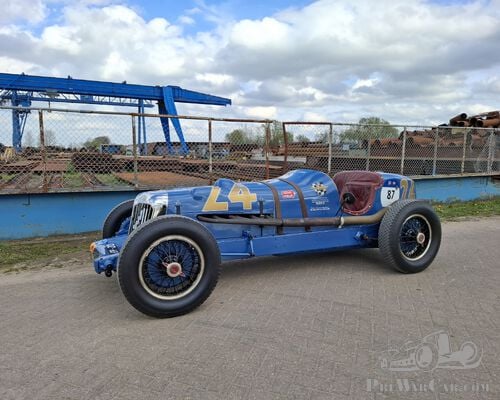
1932 - Graham " Lucenti " Indianapolis
Original participant of the 1932, 1934 and 1935 Indy 500. Best result: finishing 10th overall in the 1934 Indy 500 with driver “Herb” Ardinger...
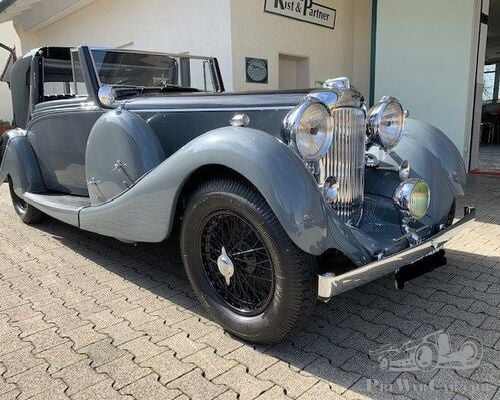
Lagonda LG 45 Coupe de Ville Sedanca by Mayfair
The successor to the M45, the LG45 was built around the same highly capable, competition-proven 4.5-litre Meadows inline-six engine, but featured r..