The global magazine and marketplace for classic car enthusiasts, by enthusiasts.


Filter
Classic Bentley, Miller for sale - Bentley, Miller cars for sale
-

Felix
This delightfully original 1925 3 Litre Bentley, with matching engine and chassis, was shortened in 1939 by the works to Speed Model specification. The original Gurney Nutting bodywork which was also shortened at the time has well patinated front seats, a split windscreen, hood, and four doors. Running on dual CG4 magnetos and SU sloper carburettor.. -
Bentley 4 1/4 Sedanca de ville convertible
Bentley Sedanca De-Ville for sale 1936 4 ¼ with beautiful and possibly unique two door open top sedanca tourer coachwork by Thrupp and Maberly. Looks stunning in period correct black cellulose paint with lovely light tan leather interior and everflex roof. Extensively restored over a long period by marque experts with invoices from Alpin.. -
1935 Derby Bentley 3 1/2 Litre Sedanca Coupe by H.J. Mulliner.
1935 Derby Bentley 3 1/2 Litre Sedanca Coupe by H.J. Mulliner.Chassis number: B203CWRegistration number: BXP114Arriving with us in the next two weeks! A laregly original car with its original tool kit; this car spent 50 years in the ownership of one family who preserved it beautifully. since then the car has had a mechanical restoration & .. -
Bentley 4 Litre Blower, 1931
he Bentley 4-Litre is one of the rarest Bentley models produced under the direction of W.O. Bentley before the Rolls-Royce takeover in 1931. Only fifty 4-Litre cars were built, and this example is a rare survivor. In 2017, the car was completely disassembled by Altena Classic Service and improved without affecting the original patina. The.. -
Bentley Derby Special Open Rally Car
This Bentley Derby, manufactured in 1935, has been rebuilt into a short and long-distance rally car. Full rebuilt engine in 2021, Since 2021 low mileage.Car has participated in numerous rally’s, like Peking Paris, several Flying Scotsman rally’s, Road to Madelay, Alpine Trial, Southern cross Africa and many more.In 2017 car was sev.. -
Derby Bentley Special 4-1/4
Sadly i am having to sell on my Bentley special ( Icarus). It is currently a work in progress and still needs finalising/ refining. A great opportunity to be able to buy a cheaper Derby special to finish with your own touch. Details on the car:The car was originally built by well known Bentley special builder and profe.. -
1937 Derby Bentley 4.25 Litre Park Ward Drophead Coupe.
1937 Derby Bentley 4.25 Litre Park Ward Drophead Coupe.Chassis number: B111JYRegistration number: TXS554Coming to us from 50 years of ownership by a California Doctor. This is an unmolested car in good running order with a strong quiet engine. We have just given the car a full service. The dry California Climate has done.. -
1936 Bentley 4¼-Litre Vanden Plas Tourer
1936 Bentley 4¼-Litre Vanden Plas Tourer Chassis number: B200GA Registration number: CXR5 First registered to Sir Norman Watson Bt, to whom it was delivered on 4th June 1936, this particularly stylish Derby Bentley on the 4¼-Litre chassis has been clothed in well-proportioned op.. -
BENTLEY 4L1/4 PARK WARD 1937 « The Silent Sport Car »
Cette voiture qui a appartenu à notre père depuis 2007, fait partie de la famille des Derby Bentley construites dans l’usine Rolls-Royce en 1234 exemplaires, sa carrosserie tout acier est signée Park-Ward. Commercialisée par "Jack Barclay London", la plus grande et la plus ancienne concession Bentley au monde, elle allie le confort d’une Rolls-Royc.. -
1931 Bentley 8 Litre Vandenplas Style Tourer
1931 Bentley 8 Litre Vandenplas Style TourerChassis number YM5045Registration number: GX2423One of a Pair of similar 8 litres we have in stock.A magnificent completely matching numbers Vanden Plas Style Tourer. This car started life as a Freestone & Webb Saloon & was delivered new to Major CH Stevens, and own..


Bentley
GB, 1920 to date
(1) Bentley Motors Ltd, Cricklewood, London N.W.2., 1920 – 1931
(2) Bentley Motors (1931) Ltd, Derby, 1933 – 1945
(3) Bentley Motors (1931 Ltd, Crewe, Cheshire, 1946 to date
W.O. Bentley was already well-known as the importer of the D.F.P. car, a pioneer of aluminium pistons and a designer of successful rotary aircraft engines when his first Bentley 3-litre car for sale appeared at the 1919 London Show. This Bentley model, indelibly imprinted in the layman’s mind as the archetype of the Vintage sports car, had a long-stroke (80x149mm) single ohc engine with fixed head and dual magneto ignition developing about 70bhp in its early form. The Bentley 3-litre was at its best in long-distance events; a team of Bentley 3-litres with flat radiators (the only instance of this apart from the same year’s Indianapolis car) finished 2nd, 3rd, and 5th in the 1922 T.T., and the model accounted for the first two of the marque’s Le Mans wins, those of Duff/ Clement in 1924 and Davis/ Benjafield in 1927 on the badly damaged ‘Bentley Old No. 7’ – one of the legends of motor-racin history. Up to 1929 1.630 3-litres Bentley motorcars were made. 1924 saw the introduction of front wheel brakes and also the famous sports four-seater ‘Bentley Speed Model’ by Vanden Plas. Bentley cars are popularly known by the colours of the enamel on their radiator badges – ‘Bentley Red Label’ signifying a Speed Model short-chassis 3-litre, ‘Bentley Blue Label’ the early short, and long chassis which could and sometimes did carry limousine coachwork, and ‘Bentley Green Label’, a special 100mph Bentley type made in very small numbers.
In 1926 the Bentley company made a bid for the carriage trade with a big Bentley 6½-ltre six for sale on similar lines. A chassis cost £1.450, but the Bentley image made no impression in this market. However, the model was developed into the 180bhp ‘Bentley Speed 6’ of 1929, considered by many to be the best of the old-school Bentleys for sale, and responsible for the firm’s last two Le Mans wins – Barnato/ Clement in 1929, and Barnato/Kidston in 1930. In 1927 the Bentley 3-litre was developed into the Bentley 4½-litre, still with four cylinder, but with a 100bhp engine which was giving 130bhp by the time production ended. This admirable car could exceed 90mph in standard form, and was used by Barnato and Rubin to win LeMans in 1928. A supercharged version was listed in 1930; it had 182bhp, and did not have the approval of Bentley himself, but it was an excellent if thirsty road car, and won Sir Henry Birkin an unexpected 2nd place in the formule libre French G.P. of 1930. Bentley finances were always shaky, and even Woolf Barnato’s aid of 1927 did not last long; the Bentley company went down in the early summer of 1931 to the accompaniment of a splendid gesture – a 220bhp ohc Bentley 8-litre six, made in two wheelbase lengths, 12ft and 13ft. Only 100 of these eight-litres Bentleys were made, plus 50 examples of a rather uninspired inlet over exhaust valve 4-litre car.
Napier made an unsuccessful bid for the assets of the Bentley company, but were beaten by Rolls-Royce, who introduced their version of the Bentley at Olympia in 1933. This was an entirely different type, based on Derby’s contemporary 3.7-litre ohv push-rod ’20-25’. It had a 4-speed synchromesh gearbox, Rolls-Royce servo brakes, and sold for £1.460 with saloon bodywork. In this form, it could reach 90mph and merited its slogan ‘The Silent Sports Car’. It was not raced, of course, apart from E.R. Hall’s three consecutive second places in the T.T. (1934, 1935 and 1936). By 1936 it had grown into a Bentley 4¼-litre, the increase of capacity being necessitated by the rising weight of bespoke coachwork. An overdrive gearbox was standardized in 1939, and the 1940 Bentley Mk V had independent front suspension, though only a handful were made because of the war. The Derby Bentley car’s swansong was a creditable 6th place by H.S.F. Hay at Le Mans in 1949, on a ten-year-old machine with 60.000 road miles behind it. Cylinder capacity was unchanged at 4.257cc in 1946, but independent front suspension, was standard, and Bentely, like Rolls-Royce, had gone over to inlet over exhaust valves. Prices for the Bentley motorcars for sale rose from £2.997 to £4.474 in 1951 for the standard steel saloon, the first Rolls-Royce product to have a regular series-produced factory body.
Thereafter the Rolls-Royce and Bentley identities merges, though in 1952 there was a special ‘Bentley Continental’ version of the latter with fastback 2-door saloon body by H.J. Mulliner which gave 120mph on a 3.077:1 top gear. Capacity went up to 4.6 litres in 1952 and 4.9 litres in 1955. Automatic transmissions, already optional, became standard that year; power-assisted steering and air conditioning followed In 1957, and for 1960 the old six at long last gave way to a 6.2-litre V8 with full overhead valves, by which time only the radiator style distinguished one make from the other. The ‘Bentley Continental’ with separate chassis was discontinued at the end of 1966; 1972 Bentleys were the 6.745cc Bentley T saloon and the Bentley Corniche 2-door saloon and convertible. Even the price differential between the two sister makes was now a thing of the past, the Bentley T-series selling for the same £10.455 as the Rolls-Royce Silver Shadow.
Source: Georgano, encyclopedia of motorcar; MCS
The information is written with the greatest of care. However, if you have any suggested amendments please contact us at office@prewarcar.com
Miller
US, 1912 – 1913
Miller Car Co, Detroit, Mich.
The Miller car was built on conventional lines with 30 and 40hp 4-cylinder engines. Roadsters and five-seater touring Miller cars were sold at prices ranging from $1.250 to $1.450.
US, 1915 – 1932
(1) Harry A. Miller Inc, Los Angeles, Calif., 1915 – 1929
(2) Rellimah Inc, Los Angeles, Calif., 1930 – 1932
Harry A. Miller, a recognized specialist in carburretors, first attracted notice in the world of motor cars when he built a replacement engine for Bob Burman’s GP Peugeot in 1915, following this up by a 4-cylinder ohc light aero engine which was installed in several cars, including Barney Oldfield’s Golden Submarine. During World War 1 Miller was associated with the Bugatti-Duesenberg aero-engine project, and his subsequent work reflects both this influence an that of Henry of Peugeot.
By 1920 MIller had siposed of his wartime interests to Leach-Biltwell and in conjunction with Fred Offenhauser and Leo Goossen was working on the first of his advanced racing power Miller cars, a 3-litre double ohc hemispherical-head straight-8 commissioned by Tommy Milton. This Miller car was not ready in time for the 1921 Indianapolis 500 Mile Race and though a complete Miller car did compete in 1922, ironically enough victory went to Milton’s great rival, Jimmy Murphy, at the wheel of a GP-type Duesenberg with Miller engine.
With the coming of the 2-litre Formula, Miller cars began to make themselves felt. Throughout its career the Miller car company concentrated on track-racing machines which dominated late-Vintage 500 Mile Races (apart from 1924, 1925, and 1927, when Duesenberg won), but the Miller cars lacked the handling and brakes to complete on equal terms with European Grand Prix cars on their home ground. In spite of this, a Miller car finished 3rd in the 1925 European G.P., but subsequent attempts by Leon Duray and Peter de Paolo to race the Miller cars in Europe proved abortive. The basic Miller car was still a straight-8 on the established lines, with dry-sump lubrication, eight carburetors, and Delco coil ignition: output was 120bhp. In 1924 appeared the first of the fwd Miller cars with engine reversed in the frame and De Dion front axle. Jimmy Murphy, who had commissioned this Miller car, was killed before he could take delivery, but the Miller car finished 2nd at Indianapolis in 1925. Miller cars were doing well in 1926, when America followed Europe in adopting the 91ci (1.500cc) capacity limit, and the new Miller car, the Miller 91 sold at $15.000 with front-wheel drive or $10.000 for a Miller car with conventional transmission. The engine of this Miller car was the old 2-litre unit with short-stroke crankshaft and magneto ignition: a centrifugal blower (as pioneered by Duesenberg) running at five times engine speed boosted power to 154bhp at 7.000rpm, and the 3-speed gearbox of the Miller car had ball change. All but one of the first ten finishers in that year’s Indianapolis were Miller cars, while in 1927 Frank Lockhart took the International Class Flying-Mile record at 164mph on an unstreamlined single-seater Miller 91 tuned to give 252bhp. Lou Meyer (later of Meyer-Drake, the firm that took over the development of the Miller racing engine from Fred Offenhauser) won the 1928 ‘500’ with a Miller car, and Ray Keech won in 1929. Experiments were also made with Miller engines and Miller cars in Europe. A Miller-powered Lea-Francis was prepared for record work in 1927. Ettore Bugatti purchased the two fwd Miller car racers that Leon Duray brought ot Europe in 1928 (it may be significant that Le Patron produced a 4x4 spring car, the Type 53, in 1932). Douglas Hawkes of Derby used a similar fwd Miller car as the basis for the successful Derby-Miller sprint and record cars of the early 1930s.
Though Miller cars won again at Indianapolis in 1930 and 1931, the advent of the ‘junk formula’ caused Harry Miller to sell out; but he was soon in partnership again with Goossen and Offenhauser at Rellimah, Inc. (‘H.A. Miller’ spelt backwards.). New designs Miller cars included as abortive plan for a World Land Speed Record machine for Barney Oldfield, and a fearsome 5.1-litre 4-wheel-drive 4-ohc V16 Miller car. More significant historically, however, was the 3-litre 4-cylinder double ohc Miller car with integral head which Shorty Cantlon drove into 2nd place at Indianapolis in 1930. The power unitof this Miller car was developed from a 1926 marine engine and formed the basis for the legendary Offenhauser (later Meyer-Drake) units which in 4½-litre unblown form with fuel injection dominated the Indianapolis scene until the 1960s.
The Miller car company built only two road-going sports Miller cars, a 325bhp V8 in 1928, and a 4-wheel-drive V16 in 1932. The latter cost $35.000, and the client had to have the Miller car finished elsewhere after bankruptcy forced Miller cars to close down in 1932.
Miller went on designing until his death in 1943. He ran three reworked 3.6-litre Ford V8s in the 1935 Indianapolis Race: the Miller cars had all-round independent suspension and front-wheel drive, but suffered from sheer lack of horse-power. Complexity killed the last of the Miller cars, the 1938 ‘Gulf Special’ which resembled the Auto Unions and had rear-mounted 300bhp double ohc 3-litre 6-cylinder engines, and all four wheels independently sprung and driven. In 1938 there was also a more conventional car with exposed lateral oil and water radiators and disc brakes.
Source: Georgano, encyclopedia of motorcar; MCS
The information is written with the greatest of care. However, if you have any suggested amendments please contact us at office@prewarcar.com


Featured
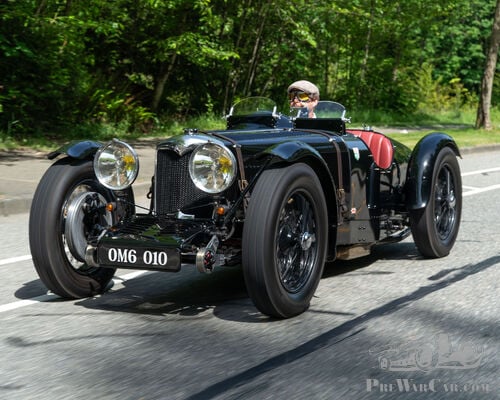
Riley 14/6 Special 1933
The ExperienceStep into the golden age of British motoring. This 1933 Riley 14/6 Special is a masterclass in pre-w..
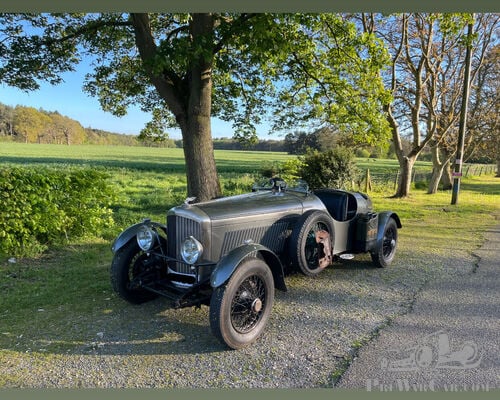
Derby Bentley Special 4-1/4
Sadly i am having to sell on my Bentley special ( Icarus). It is currently a work in progress and still needs finalising/ refining. A great o..
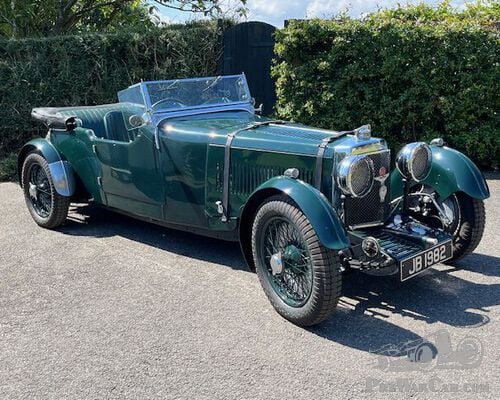
1933 Aston Martin Le Mans
Exceptional 1933 Astron Martin Le MansOriginally bodied as a Standard (Chassis No. L2/222), this unique vehicle was thoughtfully re-bodied i..