The global magazine and marketplace for classic car enthusiasts, by enthusiasts.


Filter
Classic Brasier for sale - Brasier cars for sale
-

1914 Brasier Tourer 9A
Brasier were a French manufacturer who were in business from 1901 until 1930, when the company became victim of the great depression. This particular car began its life in France and is believed to have been used by the French army during the first world war. It was discovered on a farm in France in the 1970's before being brought to the ..

Brasier
France, 1897 – 1930
(1) Société des Anciens Etablissements Georged Richard, Ivry-Port, 1897 – 1905
(2) Société des Automobiles Brasier, Ivry-Port, 1905 – 1926
(3) Société Chaigneau-Brasier, Ivry-Port, 1926 – 1930
The first car made by Georges Richard (not yet named Brasier) was a frail machine on Benz lines, with belt drive and three forward speeds. By 1900, Richard was offering the Vivinus from Belgium under his own name – another voiturette, but a quieter, smoother-running one with a fair turn of speed. It was powered by a 6hp 2-cylinder engine, and it too was belt-driven. However, the 7½hp Georges Richard of 1901 had shaft drive, in the approved modern fashion of Darracq and Renault. With the arrival of the designer Brasier, who had worked for Mors, Georges Richard gradually ceased to be associated with voiturettes, but gained little originality. There were four new models in 1902, all called Richard-Brasiers, rated at between 10 and 40hp but they were of Panhard type in most respects. The smaller cars still had tubular chassis and not all Richard-Brasier models had chain drive, but all types had steel frames by 1904. In that year there were two twins and three fours, only the biggest of which, the 40hp, was chain-driven. In 1904 and 1905, Brasier’s cars won the Gordon Bennett Trophy for France, bringing worldwide fame to the name.
In 1905 Georges Richard left to make the Unic at Puteaux, and Brasier continued to offer his cars, now known simply as Brasiers. The Brasier remained conservative in design until 1912, with exposed valve gear and cylinders cast in pairs. In that year, a modern light Brasier car was introduced, with a 4-cylinder engine cast en bloc. Ivry-Port went on listing solid, unenterprising, relatively expensive Four-cylinder Brasiers for sale until 1927. They were brought up to date in 1923 by means of front wheel brakes and ohv engines, but this had become common practice, Brasier, in fact, was another famous old make whose popularity slowly declined, like so many in France at this time.
Reorganization at Brasier in 1926 at first brought no important innovations, apart from a change of name to Chaigneau-Brasier, and the introduction of a modern orthodox light car in the shape of the Chaigneau-Brasier 9CV. Then, in 1928, the new company revealed the outcome of its rethinking. This had been over- instead of under-enterprising, for the new car as a 3-litre, overhead-camshaft straight-8 with front wheel drive. With this car, and even more with the bigger Chaigneau-Brasier Type DG8 of similar design that followed in 1930, Chaigneau-Brasier committed the double error of plunging into the luxury market at a time of economic depression, and offering an unconventional design to a public that distrusted such things. Chaigneau-Brasier were not the only French firm to make the same simultaneaous, and fatal, mistakes, and they paid the same price.
Source: Georgano, encyclopedia of motorcar; TRN
The information is written with the greatest of care. However, if you have any suggested amendments please contact us at office@prewarcar.com


Featured
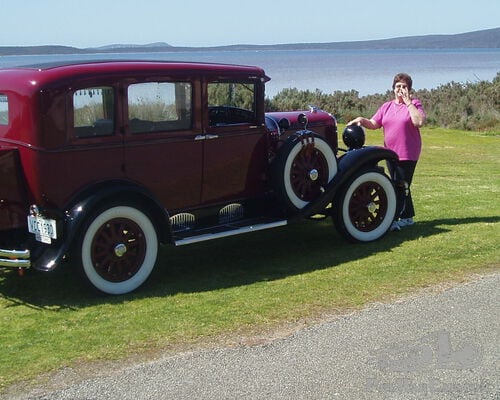
1930 Chrysler 66 Six-Wheel Equipped Royal Sedan
An exceptionally well restored and highly awarded Chrysler 66 Royal Sedan, with only two owners in nearly 97 years.The present owner ..
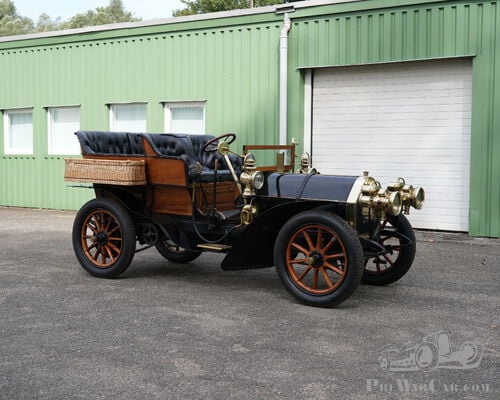
1904 Aster 16/20 HP Four-Cylinder Five-Seat Rear-Entrance Tonneau
Powerful four-cylinder engineFour-speed gearboxChain driveFive seatsMore than €100,000 recently invested
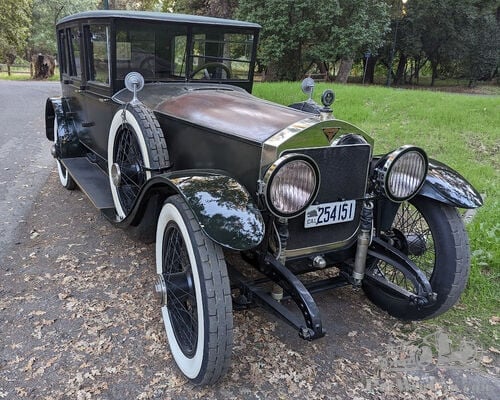
1916 Simplex, Crane model 5
1916 Simplex, Crane MODEL 5CUSTOM MADE HISTORIC PRESERVATION VEHICLE – READY TO TOUR!This Simplex recently completed th..