The global magazine and marketplace for classic car enthusiasts, by enthusiasts.


Filter
Classic Briggs & Stratton for sale - Briggs & Stratton cars for sale
-

1937 Delahaye 135 Grand Prix | RM Sotheby's | The Monterey Auction
To Be OFFERED AT AUCTION at RM Sothebys' The Monterey Auction event, 13 - 15 August 2026. $250,000 - $400,000 USD Mr. Mann’s proven and very successful longtime vintage racing entrantBuilt by Pascal Morel to period Le Mans specificationRecipient of much sorting over the years by Competition Motors and Marcovicci-Wenz -
1937 Delage D8-120 S Aerodynamic Coupe by Pourtout | RM Sotheby's | The Monterey Auction
To Be OFFERED AT AUCTION at RM Sothebys' The Monterey Auction event, 13 - 15 August 2026. $5,000,000 - $6,000,000 USD Best of Show at the 2005 Pebble Beach Concours d’EleganceThe original prototype for the D8-120 S chassisThe personal automobile of Louis Delage Extraordinarily beautiful, unique coachwork of sup.. -
1937 Cord 812 Supercharged Cabriolet | RM Sotheby's | The Monterey Auction
To Be OFFERED AT AUCTION at RM Sothebys' The Monterey Auction event, 13 - 15 August 2026. $175,000 - $250,000 USD The iconic Cord in its most desirable and sought-after formA much-enjoyed part of the Mann Collection for 33 yearsAttractive older restoration, mellowed through years of touring pleasureIdeal for CC.. -
1935 Duesenberg Model JN Convertible Coupe by Rollston and Bohman & Schwartz | RM Sotheby's | The Monterey Auction
To Be OFFERED AT AUCTION at RM Sothebys' The Monterey Auction event, 13 - 15 August 2026. $5,750,000 - $8,000,000 USD Built for legendary actor Clark Gable, “The King of Hollywood”Restyled to Gable’s wishes by Bohman & Schwartz; a truly bespoke commissionUsed extensively by Gable with his beloved wife, Carole Lombar.. -
1934 Avions Voisin C23/24 Roadster by Saliot | RM Sotheby's | The Monterey Auction
To Be OFFERED AT AUCTION at RM Sothebys' The Monterey Auction event, 13 - 15 August 2026. $2,500,000 - $3,000,000 USD Best of Show at the 2002 Pebble Beach Concours d’EleganceBest of Show at the 2004 Amelia Island Concours d’EleganceA one-off creation by Parisian Avions Voisin impresario Raymond SaliotMeticulou.. -
1932 Chrysler CH Imperial Speedster | RM Sotheby's | The Monterey Auction
To Be OFFERED AT AUCTION at RM Sothebys' The Monterey Auction event, 13 - 15 August 2026. $2,500,000 - $3,000,000 USD Best of Show at the 1991 Pebble Beach Concours d’EleganceA one-off Chrysler in-house design and engineering study for Walter P. ChryslerBuilt using almost entirely custom hardware and numerous prototype .. -
1929 Du Pont Model G Two-Passenger Speedster by Merrimac | RM Sotheby's | The Monterey Auction
To Be OFFERED AT AUCTION at RM Sothebys' The Monterey Auction event, 13 - 15 August 2026. $800,000 - $1,200,000 USD One of the most beautiful American automobiles of its generationThe 1929 New York International Automobile Show display carOne of three two-passenger “taper tail” models with an external spareOne .. -
1927 Bentley 6½-Litre Short Chassis "Bob-Tail" Tourer in the style of Corsica | RM Sotheby's | The Monterey Auction
To Be OFFERED AT AUCTION at RM Sothebys' The Monterey Auction event, 13 - 15 August 2026. $600,000 - $800,000 USD Desirable short-chassis 6 1/2-Litre, one of the greatest vintage Bentleys Formerly owned by Jack Jeffery, Barry Cooney, Jack Goffette, and Bruce McCawExceptionally beautiful coachwork, fitted within two deca.. -
1924 Hispano-Suiza H6C Monza Speedster in the style of Kellner | RM Sotheby's | The Monterey Auction
To Be OFFERED AT AUCTION at RM Sothebys' The Monterey Auction event, 13 - 15 August 2026. $500,000 - $800,000 USD Built on an original, exceedingly rare Monza short-wheelbase H6C chassisFormerly owned by noted Hispanophiles John Sebert and Edwin “Ted” JamesonDriven by Mr. Mann against George Holman’s Stutz at the 2011 I.. -
1914 Rolls-Royce 40/50 HP Silver Ghost Colonial London-to-Edinburgh Skiff by Schapiro-Schebera | RM Sotheby's | The Monterey Auction
To Be OFFERED AT AUCTION at RM Sothebys' The Monterey Auction event, 13 - 15 August 2026. $1,500,000 - $2,000,000 USD Among the most famous and recognizable “parallel bonnet” Silver GhostsFormerly owned by noted collectors Bob Barrymore and Joseph and Margie CassiniOne of the cars featured in Melbourne Brindle’s Twen..


Briggs & Stratton
US, 1919 – 1924
Briggs & Stratton Co, Milwaukee, Wis.
To the comfort-loving American motorist, the cyclecar was a bad joke, and the Briggs & Stratton was one of the worst. The Briggs & Stratton buckboard of 1919 resembled nothing so much as a child’s soapbox racer, except that it had rather less bodywork. Two bucket seats sat on a frame with a pram wheel at each corner, while a fifth trailing wheel carried a single-cylinder air-cooled engine that also powered lawn-mowers. In the United States, rough country roads were highly unsatisfactory for the cyclecar which was even less of a commercial success in America than in Europe. Briggs & Stratton went on to make outboard motors, pumps and generators. An alternative name for the Briggs & Stratton buckboard was Red Bug, or Auto Red Bug, coined by the American Motor Vehicle Company of Lafayette, Ind., who originated the design in 1916, then sold the license to the A.O. Smith company of Milwaukee, who sold it to Briggs of Stratton in 1919. The names were continued by the Automobile Electric Service Co of Newark, N.J., who made petrol and electric models.
Source: Georgano, encyclopedia of motorcar; TRN
The information is written with the greatest of care. However, if you have any suggested amendments please contact us at office@prewarcar.com


Featured
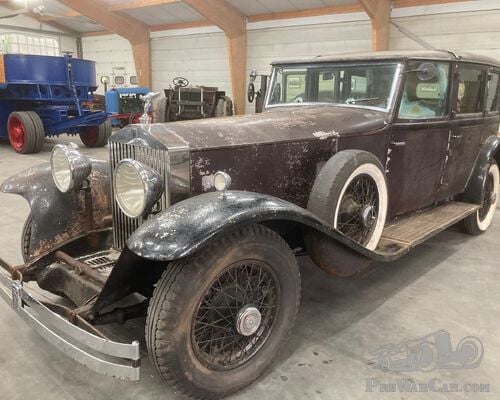
Rolls-Royce
Rolls-Royce Phantom ll chassisnummer 287 AJS. bouwjaar 1932, Links gestuurd, Brewster Keswick Sedance Towncar
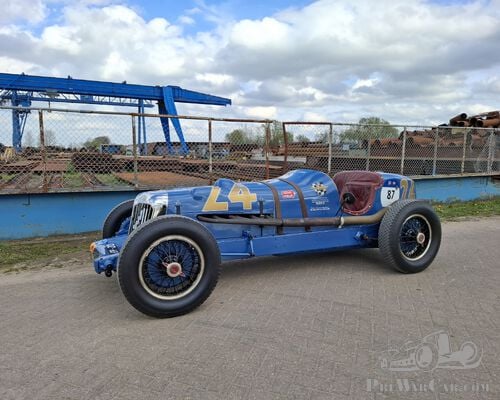
1932 - Graham " Lucenti " Indianapolis
Original participant of the 1932, 1934 and 1935 Indy 500. Best result: finishing 10th overall in the 1934 Indy 500 with driver “Herb” Ardinger...
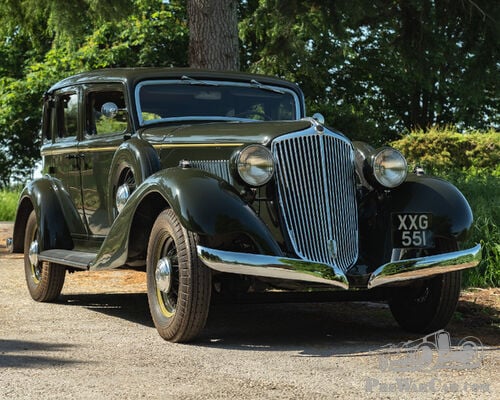
Graham Model 64 Standard Eight 'Blue Streak'
UK Registration No: XXG 551Chassis No: 1801069MOT: ExemptH&H ClassicsKelham Hall | Newark, Nottinghamshire