The global magazine and marketplace for classic car enthusiasts, by enthusiasts.


Filter
Classic Brush for sale - Brush cars for sale
-

Isotta Fraschini 8A Cesare Sala
This 1927 Tipo 8A was delivered from the factory to coachbuilder Cesare Sala in Milan. One of Italy’s most prestigious and skilled coachbuilders, Sala was a popular choice for Isotta’s customers, together with fellow Milan concern Castagna. Sala had made its name in the pre-automobile era, supplying fine horse-drawn carriages to European royalty.. -
1938 Derby Bentley 4.25 Litre High Vision Coupe by H.J. Mulliner.
1938 Derby Bentley 4.25 Litre High Vision Coupe by H.J. Mulliner. Chassis Numbwer: B83LE Registration Number: GPK222 Bentley 4¼-Litre chassis number B83LE, was bodied by H.J. Mulliner to a most unusual-yet-attractive design. Dubbed a ‘High Vision’ Coupé, it features a roof.. -
1935 MERCEDES BENZ 200 W21 LWB CABRIOLET
1935 Mercedes Benz 200 W21 LWB Cabriolet Chassis number: 108020Registration Number: Applied for. Produced in 1935, this very rare Mercedes cabriolet is the enbodiment of teutonic quality manufacturing. The Mercedes 200 W21 was in production between 1933 and 1936 as the successor to the W02. This W21 is o.. -
1935 Lancia Augusta Coupé Ghia Fuoriserie
- Ghia Certificate of Origin - Ghia Bodywork At the 1934 Milan Motor Show, Lancia introduced a new chassis designated "tipo 234" for custom-built cars based on the Augusta platform. Starting from the front hood, the custom chassis was essentially identical to the four-door sedan without pillars, apart from the relocated fuel tank. The chassis u.. -
1936 Bugatti Type 57 Atalante
1936 Bugatti Type 57 Atalante. We have two available, both with european papers. Both are fully matching numbers with complete history from day one. Qualified principals please call Richard Biddulph 0044 7967 260673 for full details. -
1929 Lancia Lambda 8th Series Short-Chassis Torpedo Factory Mille Miglia Specification
With its monocoque body, four-wheel brakes, independent front suspension and V4 overhead camshaft engine many enthusiasts view the Lancia Lambda as one of the greatest automobiles of all time. With a conventional pedal layout and H-pattern gear selection the Lambda also set the automotive template for years to come. The Lambda was.. -
AC 16 / 66 - 1935 / 6 Cylinder / British Racing Green
AC (Acédès) 16/66 Drophead Coupe, year 1935.Chassis number L34X, engine number UBS.29X.Original British registration: DPC918. Colour: dark British Racing Green combined with a beige leather interior and light brown carpet trimmed with beige borders.The car is fitted with a black vinyl hood and a light brown mohair t.. -
1934 Aston Martin Mk II (long chassis)
This 1934 Aston Martin MkII long chassis tourer is a stunning example of vintage Aston Martin craftsmanship. Originally delivered new to Mr King of Norwich in December 1934, the car remained in the King family until 1952. It was enjoyed next by Mr Briggs of Berkshire and remained in the UK until 1986 when it travelled to New York until 2002,.. -
1931 Alfa Romeo 6C 1750 Gran Turismo Supercharged
Created by legendary engineer Vittorio Jano, the Alfa Romeo 6C is rightly regarded as one of the greatest automobiles of all time and was also supremely successful in multiple categories of motorsport. Launched in 1925 with an engine capacity of 1500cc the 6C was available in single-overhead cam, twin-overhead cam, or twin-overhead cam with supe.. -
Fraser Nash TT Replica
AHX 389 ( chassis no. 2073, engine no. 10367).An important and correct short-chassis TT Replica with known history from new. Ex. H. Porter-Hargreaves, Bunty Richmond & Midge Wilby with extensive period competition history.Purchased at the renowned sale of Midge Wilby's effects in 1986 and subsequently restored by Derek H..


Brush
GB, 1902 – 1904
(1) Brush Electrical Engineering Co Ltd, London S.E., 1902 – 1904
(2) Brush Electrical Engineering Co Ltd., Loughborough, Leics., 1904
The first Brush car appeared on the market in March 1902. It was powered by a 10hp 2-cylinder Abeille engine, and had a Sage 3-speed gearbox and double chain drive. For 1902 it was joined by 4-cylinder Brush cars of 12, 16 and 20hp, also using Abeille engines and chain drive. For part of 1904 these cars were still made in London, but at the same time a completely different design known as the Brushmobile was made at Brush’s other factory at Loughborough. This Brush had a 5 or 6hp single-cylinder horizontal engine, single chain drive and coil suspension. It was identical in design, though not in appearance, to the 6hp Vauxhall, and all but the last six Brushmobiles made were, in fact, built in the Vauxhall factory.
US, 1907 – 1913
(1) Brush Motor Car Co, Detroit, Mich.
(2) Brush Runabout Co, Detroit, Mich.
The US Brush was a popular two-seater runabout with coil springs all round, and a wooden frame and axles. The initial Brush model for sale had a single-cylinder, 12hp engine, with chain-drive and solid tyres, priced at $780. By the end of 1907 the price of the Brush was down to $500, and in 1912, a stripped version, the Liberty-Brush, sold for only $350. Brush chassis with an abbreviated landaulette body were marketed in 1912 for taxicab use under the name Titan. Later Brush models used a larger engine and pneumatic tyres, but the basic design of the car remained unchanged. The Brush car was designed by Alanson P. Brush, and the company was formed by Frank Briscoe. Later, Brush became a division of U.S. Motors Co and ceased production with the collapse of this combine in 1913.
Source: Georgano, encyclopedia of motorcar; GNG, GMN
The information is written with the greatest of care. However, if you have any suggested amendments please contact us at office@prewarcar.com



Featured
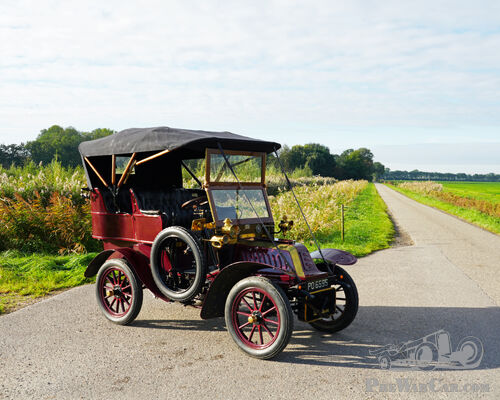
Your ticket to 2026 London to Brighton! 1904 De Dion Bouton Type V 8HP Rear Entrance Tonneau
VCC datedEuropean registrationProven rally historyFour seatsWonderful conditionRoof and window
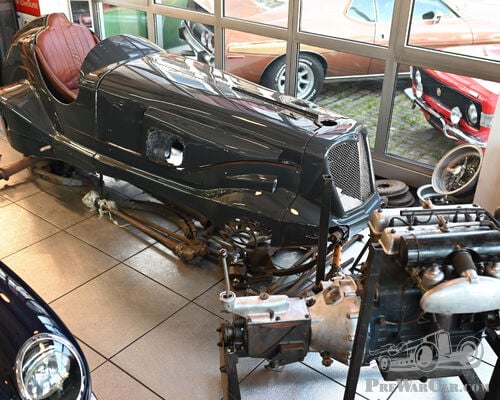
Riley special - 1937 Big Four Monoposto project with aluminium hand built body in Switzerland
An interesting Riley Special project offered for completion, based on a bare 1937 chassis and supplied with various associated parts, together with..
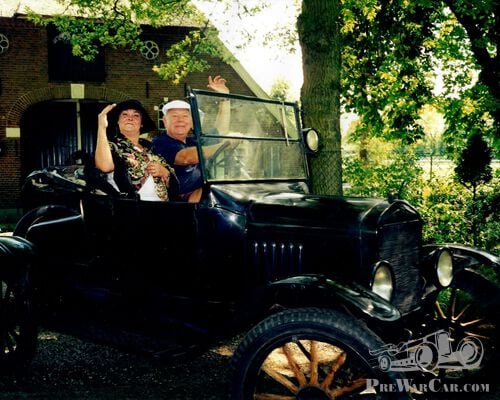
Zeer originele Ford Model T runabout
2 zits cabrio, motor is los, niet gerestaureerd, volledig orgineel, ingevoerd uit california in 1998, van de 2e eigenaar (m'n Oom) die hem van zn b..