The global magazine and marketplace for classic car enthusiasts, by enthusiasts.


Filter
Classic BSA, Calthorpe for sale - BSA, Calthorpe cars for sale
-

Bugatti Type 30 short chassis roadster. Fully restored on a replica chassis
This car has had a full restoration and is build from a lot of original parts on a replice chassis built in Germany, It has chassis number BC 189 from the UK Bugatti Owners Club. Car has done only about 500km since restoration but health problems dictate that it must go. Please email for fullest details of the source of all the parts and a vide.. -
1930 Bentley Speed Six
1930 Bentley Speed Six Chassis Number: SB2774 Engine Number: SB2772 Reistration Number: GH8974 New to market & freshly restored to perfection. This car has over the past two years been fully rebuilt & built up as a LeMans style tourer by noted Rolls Royce &.. -
1936 Cadillac Series 60 Convertible Coupe | RM Sotheby's | The Hershey Auction
To Be OFFERED AT AUCTION WITHOUT RESERVE at RM Sothebys' The Hershey Auction event, 7 - 8 October 2026. Offered Without Reserve | $50,000 - $70,000 USD Please check back soon as our dedicated cataloguing team is preparing the description for this lot. To view this car and others currently consigned to this auction, please visit the RM website a.. -
Renault NN Torpedo Commerciale (1926)
Highlights Complete, coherent, unmodified exampleExcellent base for a full restorationAttractive 1920s torpedo body styleVery accessible entry priceIdeal for workshops or enthusiasts looking for a rewarding project Restoration project – Complete car – Solid base but major work r.. -
Renault 12 HP Coupé de Ville Carrosserie Kellner Type CB – 1911
HighlightsExceptional original conditionRare Kellner coachworkComplete, authentic, coherent exampleOriginal paint and interiorMuseum‑grade preservationIdeal for concours preservation class Kellner Coupé de Ville – Exceptional original condition This.. -
De Dion‑Bouton Type D (1899)
HighlightsRare early De Dion‑Bouton, highly collectibleBeautiful presentation and coherent historyEligible for major international veteran eventsA centrepiece for any prestigious collection Vis‑à‑vis “La Petite Voiture” – High‑quality restoration – Veteran car eligible .. -
1940 Buick Super Convertible Coupe | RM Sotheby's | The Hershey Auction
To Be OFFERED AT AUCTION WITHOUT RESERVE at RM Sothebys' The Hershey Auction event, 7 - 8 October 2026. Offered Without Reserve | $50,000 - $60,000 USD Please check back soon as our dedicated cataloguing team is preparing the description for this lot. To view this car and others currently consigned to this auction, please visit the RM website a.. -
1938 Rolls Royce Wraith Gurney Nutting Sedanca Coupe
1938 Rolls Royce Wraith Gurney Nutting Sedanca Coupe Chassis number: WRB2 Registration number: FLH5 This car may be paid for in Bitcoin. Approx 3 BTC Simply the best of the best & a Pebble Beach/Villa D'Este quality car. This wrait.. -
1934 Aston Martin 1.5 Litre Mark 2 Long chassis sports tourer.
1934 Aston Martin 1.5 Litre Mark 2 Long chassis sports tourer. Chassis Number: D-4/417/L Engine Number: D-4/417/L Registration Number: WD7623 Stunning condition and the best one of these we have seen. This car had a full restoration including a massive engine rebui.. -
Citroen AC4 1929
WANTEDSOLEX CARBURETTOR MOVD 6240 PARTS REQUIRED - JET CARRIER / HOLDER - NEEDLE VALVE - JETS3 SPEED MANUAL GEARBOX PARTS REQUIRED -- INPUT SHAFT - 3RD GEAR - LAYSHAFT SPINDLE - LAYSHAFT BUSHES - GASKETS


B.S.A.
GB, 1907 – 1926, 1933 – 1936
Birmingham Small Arms Co Ltd, Sparkbrook, Birmingham, Coventry
In 1907 the famous Midlands arms manufacturers began to make cars as a sideline. They were not entirely new to the field, having made parts for the Roots in 1897. Neither then nor later did they show much originality in their BSA cars. E.E. Baguley, formerly of Ryknield, was in charge, and later produced in 1908, a copy of the successful 40hp Itala from Italy. Other conventional, medium-sized BSA fours followed in small quantities. The major change that followed in 1911, after the company’s takeover of Daimler, was the adoption of Knight double sleeve-valve engines, as used by the latter concern, in BSA cars. These differed from Daimlers in being generally smaller and lighter. The first, the BSA Twelve of about two litres, weighed only 1.232lb in chassis form. Open bodies were of pressed steel from 1912: a single, important innovation that went largely unregarded. BSA also made the Stoneleigh, which was a BSA except for name and radiator, from then until 1914. It should nog be confused with the better-known Stoneleigh light car of the 1920s.
The first post-war BSA was a light car – an attempt to cash in on the boom in popular motoring, but superior to a great many. The BSA Ten of 1921 was powered by an air-cooled V-twin engine of modern design, with overhead valves, coil ignition, aluminium crankcase, and aluminium pistons in iron liners. This BSA developed 18bhp from a cubic capacity of 1080cc, and was made by Hotchkiss of Coventry. This power unit was smooth and though, like all of its kind, it was noisy, it was eventually made quieter by improvements. The rear axle of the BSA Ten with its underslung worm drive on Lanchester patents, was always silent. This uncharacteristic quality helped to sell the BSA Ten well until it was dropped in 1924. The next BSA’s were in fact small Daimlers, with 6-cylinder Knight double-sleeve-valve engines of under two litres. They were discontinued in 1926. From 1933 to 1936, this policy was resumed. In 1931, BSA had taken over Lanchester and introduced a line of completely new Lanchesters as cheap Daimlers. In turn, a still cheaper range christened BSA’s followed from 1933, consisting of a machine basically similar to the Lanchester: a BSA Ten but with a side-valve engine, and a BSA Light Six identical to its Lanchester opposite number. These BSA cars were made in the Daimler factory at Coventry. After 1936, no more cars came from the motor car division of BSA.
GB, 1929 – 1940
B.S.A. Cycles Ltd, Small Heath, Birmingham
In 1924 Hotchkiss, makers of proprietary engines for other car firms, were taken over by their main customer, William Morris. They had also made an excellent 1100cc, V-twin, air-cooled engine with overhead valves for the Birmingham Small Arms Company, for use in that company’s BSA light car (this engine also powered the short-lived Hotchkiss light car itself). BSA Cycles Ltd (the motor cycle division of BSA) acquired manufacturing rights in the engine to drive, in 1-litre form, the front wheels of a 3-wheeler of very modern conception with independent front suspension. This, the famous BSA Beeza, first appeared in 1929, ready for the 1930 season. In 1933 flexibility was added to the BSA’s virtues when a water-cooled 1100cc 4-cylinder sv engine became available. In the previous year, the BSA manufacturers had already tried to attract a wider market by adding a solid axle and another wheel at the rear. This became the BSA Nine in 1933. The front wheel drive BSA 4-wheeler was dropped for a season, but reappeared as the 9hp BSA Scout in 1935. From 1936 to 1940 the Scout in 1200cc BSA Ten form was the only BSA sold, the 2- and 4-cylinder 3-wheelers having been dropped in the former year. There was talk in the early 1950s of resuming production of a small BSA car with a 2-cylinder air-cooled engine, but it came to nothing.
Source: Georgano, encyclopedia of motorcar; TRN
The information is written with the greatest of care. However, if you have any suggested amendments please contact us at office@prewarcar.com
Calthorpe
GB, 1904 – 1932
Calthorpe Motor Co Ltd, Birmingham
In 1904 G.W. Hands, a bicycle manufacturer, introduced the first Calthorpe car. It was a small, low-priced, 10hp 4-cylinder machine with shaft drive, continued as a Calthorpe 12/14hp. Bigger Calthorpe cars were made, of which the best-known was the Calthorpe 16/20, announced for 1907. The really large 28/40hp of that year was short-lived: light cars remained the Calthorpe company’s forte. Generally, they were powered by White & Poppe engines. Works teams of Calthorpe cars, based on the 12/14hp and its successor the Calthorpe 13.9hp, entered the Coupe de l’Auto races in France more consistently than any other British make, but with no success.
The car which made the Calthorpe firm’s name more than any other before World War 1 was the little Calthorpe Minor, a beautifully-made 10hp light car current from 1913 to 1915. Like all Calthorpe cars for sale, it was a conventional machine, with 4-cylinder side-valve engine and 3-speed gearbox. Hands left the Calthorpe company after the war to make the Hands light car, but the Calthorpe 10hp was continued. It was a notably good-looking and well-finished machine with a good performance, but the handsomest Calthorpe cars were its two- and four-seater sports variants, with polished aluminium bodies by Mulliner, a subsidiary company. Their alloy reciprocating parts were drilled for extra lightness and balance, permitting higher engine revolutions. These Calthorpe sports cars were good for over 60mph. A new Calthorpe for sale, the Calthorpe Twelve, followed in 1923, which was more refined but heavier and less attractive. An obscure Calthorpe 15hp six with overhead camshaft, which had been the last Hands model, was the company’s last new car. It was introduced in 1925, by which time G.W. Hands had returned to the firm. Very few Calthorpe cars were made after 1927, though motor cycle manufacture continued. The car factory was reopened in the same year as the Colmore Depot Ltd’s Morris service centre.
Source: Georgano, encyclopedia of motorcar; TRN
The information is written with the greatest of care. However, if you have any suggested amendments please contact us at office@prewarcar.com


Featured
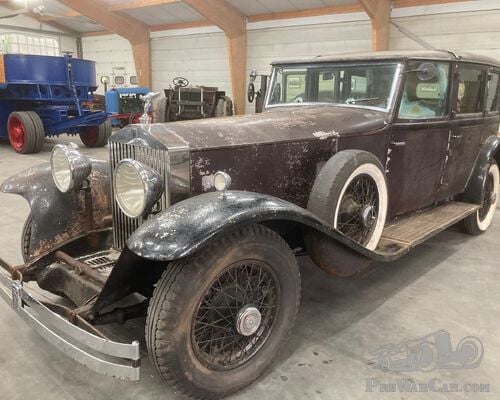
Rolls-Royce
Rolls-Royce Phantom ll chassisnummer 287 AJS. bouwjaar 1932, Links gestuurd, Brewster Keswick Sedance Towncar
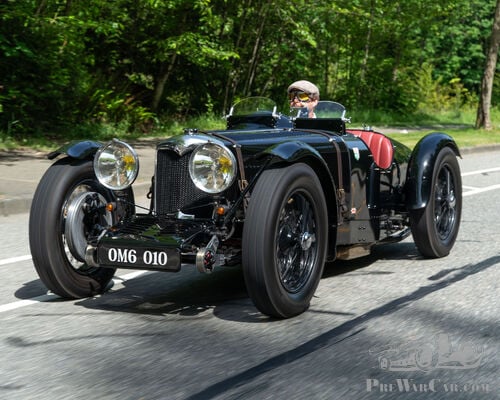
Riley 14/6 Special 1933
The ExperienceStep into the golden age of British motoring. This 1933 Riley 14/6 Special is a masterclass in pre-w..
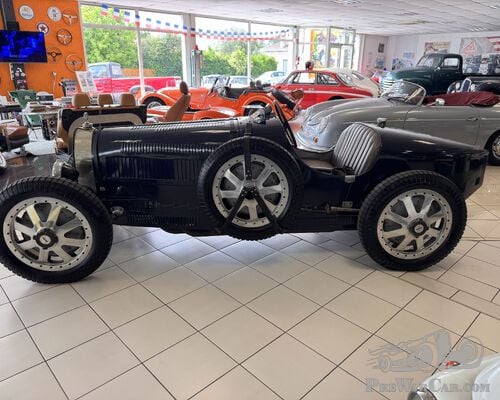
Bugatti 35 B Pur Sang
Bugatti 35 B Pur Sang,importée par un membre délégué de la FFVE il y’a une quinzaine d années.Participation à de nombreux Rallyes Bug..